Buying Guide
The best wastebaskets with handles are easier to compare when you separate the carrying feature from the rest of the design. A handle can be an integrated cutout, a widened built-in grip, a wooden side grip, or a pair of handles. Each arrangement affects how easily the bin can be lifted, emptied, and repositioned. The listings here document all of those approaches, but they do not establish how comfortable any handle feels in hands-on use.
Start with the available floor space
Measure the intended location rather than relying only on a product’s capacity label. A bin can be narrow in one direction and still need considerable length or height. The mDesign model is listed at about 10 inches high and is aimed at cabinets, counters, and under-sink locations. Tidita is about 6.1 inches wide, while the Coeusy basket is about 6.8 inches wide and offers a substantially larger stated capacity. Those examples show why width, height, and length should be checked together.
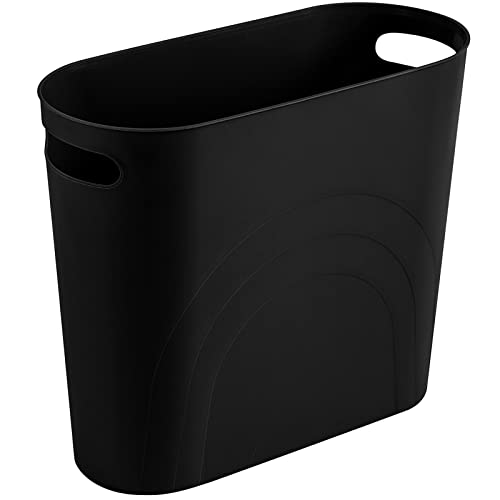
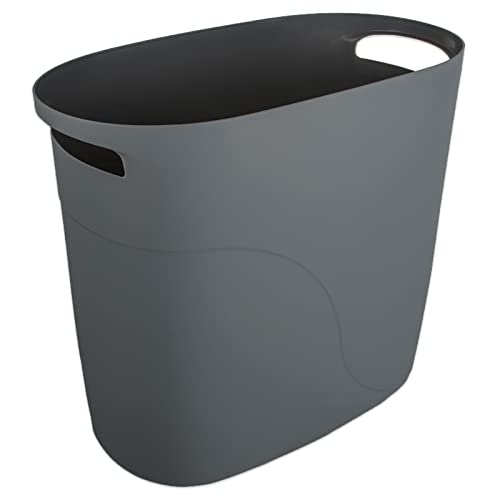
For a bathroom beside a toilet or vanity, narrow oval or rectangular shapes can make better use of an unused gap. JiatuA, ROYFACC, and the rejomiik models are all described for tight spaces. The supplied listing for the white rejomiik model does not provide complete dimensional fields, so it is less useful when exact clearance is critical. If the bin must slide into a particular cabinet, compare the full product dimensions with the opening and account for handles that may extend beyond the body.
Match capacity to the waste load
Capacity is a practical trade-off. The 1.5-gallon mDesign is appropriate when the available space is limited or waste volume is light. The 3- to 3.5-gallon plastic and woven models provide a middle ground for bedrooms, bathrooms, and offices. The Vrisa lists 5.3 gallons, and Coeusy lists 6 gallons, making them better suited to users who prefer a larger interval between emptying. A larger bin may also be heavier when full, which makes handle placement more important.
Do not interpret a capacity figure as a guarantee of how much material will fit in daily use. Liners, bulky packaging, and the shape of the opening can reduce usable space. A wide opening can make disposal easier, while a narrow body can be simpler to place. The rejomiik listing specifically describes a widened opening and handle, whereas the compact models prioritize their small footprint.
Choose plastic for simple care
Plastic is the most straightforward material in this comparison when easy routine cleaning is the priority. ROYFACC, JiatuA, rejomiik, and mDesign describe wipeable or easy-care surfaces. Plastic also avoids rust and is less vulnerable to the moisture concerns associated with wood or woven natural fibers. This does not make every plastic bin identical: surface texture, shape, and whether the bottom has raised features can influence how easy it is to reach corners.
The plastic models generally omit lids and liners in the supplied evidence. That open design is convenient for quick disposal but does not provide the additional containment features documented by Felthrith. For ordinary dry waste in a bedroom, office, or bathroom, an open plastic wastebasket may be the simpler specification match.
Consider woven or wood finishes
Woven water-hyacinth baskets and wood wastebaskets are useful when the bin will remain visible and should coordinate with the room. Coeusy and iEGrow document natural water hyacinth, while Felthrith adds a lid, liner, and reinforced steel frame. Vrisa uses paulownia wood, and Tidita uses acacia wood. These materials bring texture and decorative character, but a natural-fiber or wood exterior may call for more cautious care around liquid waste than a plain plastic body.
Look for a liner when the basket may encounter damp contents. Felthrith is the clearest example here because its removable waterproof plastic inner bin is specifically documented. A liner can also make emptying and cleaning more contained, although the listing does not establish leakproof performance under every condition. Coeusy, iEGrow, Vrisa, and Tidita do not document a removable liner in the supplied evidence.
Decide whether a lid matters
A lid changes the product’s role. It can conceal contents and provide a more finished appearance, but it may also add a step when disposing of small items. Felthrith is the selected model that explicitly documents a lid, and its listing also associates that feature with odor containment and limiting access by pets or children. Those are manufacturer-listed design claims, not independently tested results.
If you want the quickest access for tissues, paper, or desk waste, an open-top design may be preferable. If appearance and covered containment are more important, a lidded model deserves closer attention. Confirm that the lid’s opening and the basket’s placement work with the room before choosing it solely for appearance.
Check the base and frame
A reinforced frame can help a woven basket retain its shape. Felthrith and iEGrow document internal structural support, while the plastic models rely on molded bodies. Tidita lists non-slip protective pads, and several plastic listings describe heightened or protected bottoms. These details matter when the bin will be moved often or placed on finished flooring.
A stated material does not by itself prove long-term durability. The evidence supports comparing construction types and documented features, not predicting a service life. Also check assembly requirements: Huxitocan and Vrisa state that assembly is required. That may be acceptable for a larger decorative basket, but it is worth knowing before purchase.
Use handles as a selection filter
For occasional emptying, one integrated handle may be sufficient. For a larger or heavier basket, double handles can distribute the lifting action more naturally; Vrisa documents a built-in double-handle design. Felthrith and iEGrow document built-in handles on woven bodies, while Tidita uses smooth cutout side handles. The shape and position of the handle should be considered alongside capacity, because a 5.3- or 6-gallon bin presents a different carrying situation from a 1.5-gallon bin.
Final Recommendation
rejomiik 3.5-Gallon Slim Trash Can ranks first overall in this specification-based comparison under the published weighted criteria.
The final choice among the best wastebaskets with handles depends on the documented features that match your intended use.
Felthrith Wicker Trash Can with Lid is the first overall specification-based choice among these top wastebaskets with handles. Its documented combination of a 3-gallon capacity, built-in handles, removable waterproof liner, lid, and reinforced frame gives it the broadest feature coverage for a bathroom or bedroom. It is not the narrowest or simplest-care option, so choose mDesign for a very small cabinet location, Coeusy for the highest listed capacity, or ROYFACC when a matching two-bin set is more useful.
For decorative spaces, compare Felthrith, Tidita, Vrisa, Coeusy, and iEGrow according to material and capacity. For straightforward cleaning and compact placement, the plastic ROYFACC, JiatuA, rejomiik, and mDesign designs are more direct specification matches. Because this is a public-listing comparison rather than a hands-on test, verify current dimensions, package contents, and assembly details before ordering.
Frequently Asked Questions
What are the best wastebaskets with handles for a small bathroom?
The answer depends on the clearance and the amount of waste. mDesign is the smallest selected option by stated capacity and height, while JiatuA, ROYFACC, and rejomiik offer larger stated capacities in slim plastic designs. Tidita is another narrow option if a visible acacia-wood finish fits the room. Measure the available width, length, and height first, then confirm that the handle will not interfere with nearby fixtures or cabinet doors.
Are woven wastebaskets with handles practical for bathrooms?
They can be, especially when the design includes a liner. Felthrith documents a removable waterproof plastic liner, a lid, and a reinforced frame, making it the most containment-focused woven option in this comparison. Coeusy and iEGrow document water-hyacinth construction and reinforced support but do not list removable liners. Natural woven material may require more careful cleaning around liquids than plastic, so the intended waste type and liner availability matter.
Which selected wastebasket has the largest stated capacity?
Coeusy lists a 6-gallon capacity, the highest stated figure among the selected products. Vrisa lists 5.3 gallons, and Huxitocan lists 4.5 gallons. Larger capacity can reduce emptying frequency, but it may also make a full bin more demanding to move. Check the footprint as well: Coeusy is described as extra narrow at about 7 inches wide, while Vrisa has a wider rectangular profile.
Do all of these handled wastebaskets have lids?
No. Felthrith is the selected product that explicitly documents a lid. The other selected products are described as open wastebaskets or do not provide lid information in the supplied listing evidence. An open design is generally more direct for quick disposal, while a lid may better suit a visible bathroom or bedroom location where covered contents are preferred.
Are plastic or wood wastebaskets easier to maintain?
The supplied listings most directly support plastic as the easier-care choice because ROYFACC, JiatuA, rejomiik, and mDesign describe wipeable or easy-clean surfaces. Wood and woven materials offer more decorative texture but may require more care around moisture. Felthrith’s removable liner improves its maintenance specification, although no product in this comparison has been independently tested for cleaning performance.