Buying Guide
The best superspeed usb memory card readers are differentiated less by the USB label alone than by the card protocols, slot layout, and host connections they document. A USB 3.0 or USB 3.2 Gen 1 interface can provide a useful ceiling, but the card, computer port, and reader protocol all affect the practical transfer path. This comparison uses public listing specifications only; it is not a hands-on speed test.
Start with the cards you actually use. SD and microSD are covered by nearly every compact model here, including the SABRENT USB-C and USB-A SD Reader, Anker USB 3.0 2-in-1 reader, and UGREEN USB-C/USB 3.0 Dual-Slot Reader. These designs are suitable when your workflow centers on camera SD cards, drone or action-camera microSD cards, and routine file transfers.
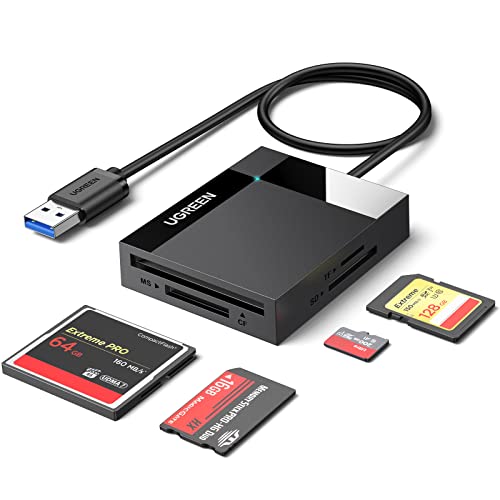
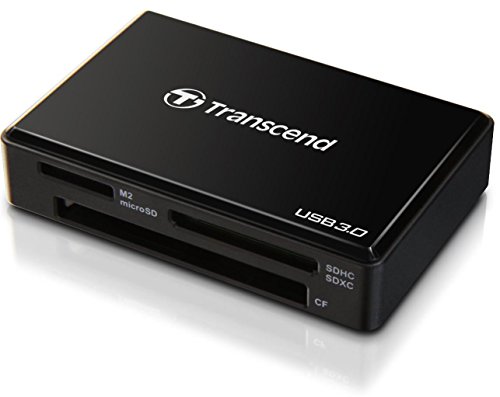
For mixed collections, a multi-format hub is more appropriate. The UGREEN 4-Slot USB 3.0 Card Reader Hub lists SD, microSD, Compact Flash, and Memory Stick support. The Rocketek 7-in-1 and Kxable 7-in-1 extend coverage to formats such as XD, M2, MS, CF, and TF. Transcend’s TS-RDF8K is another documented option for SD, CF, and Memory Stick users, including UDMA6/UDMA7 CF support. These products make sense when replacing several format-specific adapters is undesirable.
Understand UHS-I and UHS-II support
The card protocol matters when using newer high-performance SD media. The UGREEN USB-C SD 4.0 Card Reader and BENFEI SD 4.0 USB-C/USB-A Card Reader explicitly list UHS-II support and transfer speeds up to 312MB/s. That makes them the most clearly specified options for UHS-II cards in this group.
Other selected products document UHS-I support rather than UHS-II. The Transcend TS-RDF8K lists SDHC UHS-I and SDXC UHS-I, while the UGREEN 4-Slot Hub lists UHS-I. A reader with a USB 3.x label should not automatically be treated as a UHS-II reader; check both specifications before choosing one for a UHS-II card collection.
Consider simultaneous card access
Simultaneous operation can simplify transfers from multiple cards. The UGREEN 4-Slot Hub documents reading and writing four cards at the same time. Rocketek specifies simultaneous operation for five cards, and Kxable describes simultaneous read/write across its broad slot arrangement. The UGREEN USB-C SD 4.0 reader, Anker reader, and UGREEN dual-interface reader document two-card simultaneous access.
Not every multi-slot product has the same stated capability. The Transcend TS-RDF8K and IOGEAR GFR305SD list multiple card families, but the supplied evidence does not establish simultaneous operation for them. If copying between two cards is central to your workflow, prioritize a model whose listing explicitly describes that function.
Check the host connection
USB-A remains useful for many desktops, laptops, and older hubs. USB-C is more convenient for current laptops, tablets, phones, and other compatible devices. The BENFEI reader includes a USB-C/USB-A 2-in-1 cable design, while the Kxable reader supplies USB-A-to-micro and USB-C-to-micro cables. The SABRENT and UGREEN dual-interface models document both connector types in their designs.
The UGREEN USB-C SD 4.0 reader is aimed at USB-C hosts, and its listing also mentions supported iPhone and Android use, with OTG required for Android phones. Host compatibility should therefore be checked against the exact port and operating system in your setup. A USB-C-shaped connector alone does not establish compatibility with every phone or tablet.
Look at portability and daily handling
For a camera bag or laptop sleeve, compact two-slot readers generally take less room than multi-format hubs. The UGREEN dual-interface reader is described as slim and lightweight, while the UGREEN USB-C SD 4.0 reader uses an aluminum-alloy case and braided cable. The BENFEI listing likewise calls out a braided nylon cable and aluminum-alloy casing.
Multi-slot hubs trade some portability for format coverage and workflow flexibility. Also consider activity feedback: Transcend and SABRENT specify LED indicators, which can help show when a transfer is active.
How this comparison was scored
The editorial scoring uses five category-specific criteria: USB speed and card protocol, memory-card format coverage, simultaneous card access, host and operating-system compatibility, and portability or everyday usability. Each selected product reached at least 7.0 on the weighted specification assessment. No hands-on measurements or customer-opinion summaries were used.
Final Recommendation
UGREEN 4-Slot USB 3.0 Card Reader Hub ranks first overall in this specification-based comparison under the published weighted criteria.
UGREEN USB-C SD 4.0 Card Reader is the highest-scoring returned product and the first overall specification-based choice among the best superspeed usb memory card readers. Its documented UHS-II support, stated ceiling of 312MB/s, dual-card simultaneous operation, USB-C connection, and compact aluminum construction give it the broadest fit for a modern USB-C media workflow.
The BENFEI SD 4.0 USB-C/USB-A Card Reader is the better connection-flexibility alternative because its supplied evidence documents both USB-A and USB-C access while retaining UHS-II support. For users with older CF, MS, XD, or MMC media, the UGREEN 4-Slot Hub, Rocketek 7-in-1, Kxable 7-in-1, Transcend TS-RDF8K, and IOGEAR GFR305SD offer more relevant format coverage. The top superspeed usb memory card readers therefore depend on the cards and host ports already in your setup, not just the USB generation printed in a title.
Frequently Asked Questions
What should I check first when choosing the best superspeed usb memory card readers?
Check the exact card families and protocol first, then confirm the reader’s host connector. SD and microSD users can choose a compact two-slot reader, while CF, XD, Memory Stick, or MMC users should select a model that explicitly lists those formats. If you use UHS-II cards, choose a reader such as the UGREEN USB-C SD 4.0 or BENFEI SD 4.0 that specifically documents UHS-II support.
Does USB 3.0 automatically mean UHS-II support?
No. USB 3.0 describes the connection interface, while UHS-II describes the SD-card bus protocol. The UGREEN 4-Slot Hub and Transcend TS-RDF8K document USB 3.0 and UHS-I support, whereas the UGREEN USB-C SD 4.0 and BENFEI SD 4.0 explicitly list UHS-II. Check both specifications separately.
Which selected readers support more than SD and microSD?
The UGREEN 4-Slot Hub lists CF and Memory Stick in addition to SD and microSD. Rocketek and Kxable list seven card positions, including CF, XD, MS, M2, and TF-related formats. Transcend TS-RDF8K supports CF and MSXC, while IOGEAR GFR305SD adds several MMC variants.
Do any selected models document simultaneous card use?
Yes. UGREEN’s 4-Slot Hub documents four-card simultaneous reading and writing, while Rocketek documents five-card simultaneous access. Kxable also lists simultaneous read/write. The UGREEN USB-C SD 4.0, UGREEN dual-interface reader, and Anker reader document simultaneous operation for two cards.
Are USB-C readers suitable for Android devices?
Some selected listings document compatible Android use, but the phone or tablet must support the relevant connection mode. The UGREEN USB-C SD 4.0 listing notes that Android phones need OTG support. The SABRENT and UGREEN dual-interface readers also list compatible Android devices, so verify the specific host before relying on mobile access.