Buying Guide
Choosing the best sd card readers for laptops starts with the laptop connection, not the transfer-rate headline. A reader is useful only when its host connector fits an available port and its slots match the media used by your camera, phone, drone, recorder, or other device. The listed products document USB-A, USB-C, or both, along with different levels of SD-family and legacy-card support.
Match the reader to your laptop port
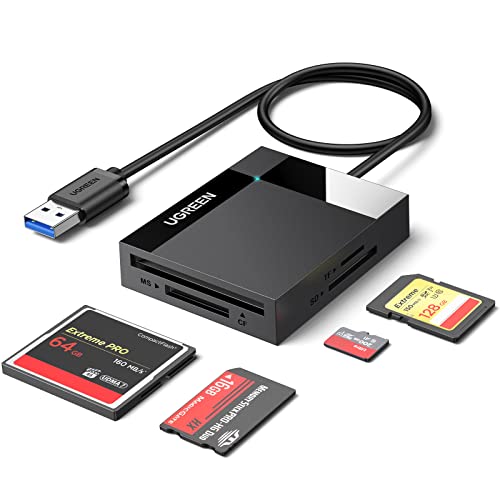
USB-A remains important for older and many budget laptops. The Anker USB 3.0 2-in-1 SD Card Reader and SmartQ C368 are USB-A-oriented options. Anker focuses on SD and microSD-family cards, while SmartQ adds MS and CF support. The UGREEN USB 3.0 Four-Card Reader Hub also uses USB-A and is aimed at users who need four card formats and simultaneous access.
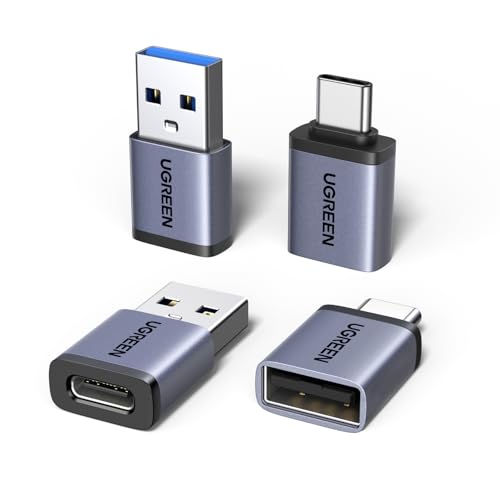
USB-C is common on newer laptops. The UGREEN USB C SD 4.0 Card Reader, Acer 3-in-1 reader, and several other selected models use USB-C. If you use both older and newer computers, a dual-interface product can avoid carrying a separate adapter. BENFEI, the UGREEN USB-C and USB-A reader, uni, and UANTIN all document two host connection options.
Most basic readers cover full-size SD and microSD cards, including SDHC and SDXC variants. That is enough for many cameras, action cameras, dash cameras, and portable devices. The UGREEN USB-C and USB-A reader, uni models, and UANTIN focus on this mainstream combination.
Users with older equipment may need more. CF support is listed for BENFEI, SmartQ, UGREEN’s four-card hub, and Rocketek. MS support appears on BENFEI, SmartQ, UGREEN’s four-card hub, and Rocketek. Rocketek also lists XD, while BENFEI covers MS and CF in addition to SD and microSD. These formats should be treated as a selection requirement rather than an assumption.
Capacity claims vary. UGREEN’s four-card hub and uni USB 3.0 reader list support up to 2TB cards. The Acer listing focuses on SD, SDHC, SDXC, and UHS-I compatibility without making the same capacity claim. Check the reader against your card’s capacity and format before buying.
Understand speed specifications
The best sd card readers for laptops are not automatically the models with the largest advertised number. Actual transfers depend on the memory card, laptop port, host connection, and files being moved. The supplied specifications still help separate reader classes.
The UGREEN USB C SD 4.0 Card Reader is the only selected model that documents SD 4.0 UHS-II support and a transfer capability up to 312MB/s. It has UHS-II SD and TF slots, making it the clearest fit for a compatible high-speed card. BENFEI lists UHS-I transfer rates up to 160MB/s. Many USB 3.0 models list up to 5Gbps at the interface level, including UGREEN, uni, Acer, UANTIN, SmartQ, and Anker.
A USB 3.0 or USB-C interface does not provide UHS-II support by itself. If your card uses UHS-II, look for explicit UHS-II documentation, as provided by the UGREEN USB 4.0 model. For ordinary SDHC, SDXC, and microSD transfers, a USB 3.0 reader may be a suitable specification match.
Decide whether simultaneous access matters
Single-slot readers are adequate when moving files from one card at a time. Dual-slot designs can help when transferring between full-size SD and microSD cards or when keeping two cards inserted. The UGREEN USB-C and USB-A reader, uni dual-slot reader, UANTIN, and Anker document simultaneous reading and writing on two cards.
Multi-card readers take that workflow further. BENFEI documents four-card simultaneous read/write, UGREEN’s four-card hub documents four-card simultaneous operation, and Rocketek lists five-card simultaneous read/write. These products suit users who regularly handle several media types, although their larger slot arrays may be less convenient than a simple travel adapter.
Consider portability and setup
Plug-and-play operation is documented across the selected range, reducing the need for driver installation. USB-powered designs such as Anker do not require a separate power supply. Cable-based products can be easier to position beside a laptop, while compact integrated designs take less room in a bag. UANTIN adds a keychain attachment, the uni dual-slot model lists protective covers, and the UGREEN UHS-II reader uses an aluminum case with a braided cable.
A hub-style reader can provide more than card access. Acer is the selected option when a card reader and one extra USB-A peripheral port are useful together.
Final Recommendation
BENFEI 4-in-1 USB 3.0 and USB-C Card Reader ranks first overall in this specification-based comparison under the published weighted criteria.
BENFEI 4-in-1 USB 3.0 and USB-C Card Reader is the highest-scoring returned product under the published weighted criteria.
The UGREEN USB C SD 4.0 Card Reader is the first overall specification-based choice among the best sd card readers for laptops when UHS-II support is important. Its documented UHS-II support, stated transfer capability up to 312MB/s, dual UHS-II slots, and simultaneous SD and TF operation give it the most relevant high-speed feature set in this comparison.
For the top sd card readers for laptops with broader legacy-card coverage, BENFEI 4-in-1 and Rocketek 7-in-1 are useful starting points. BENFEI combines USB-C and USB-A with SD, microSD, MS, and CF support. Rocketek adds XD and other listed formats. UGREEN’s four-card hub is another option for USB-A systems and simultaneous multi-card work.
If connector flexibility is the priority, choose the UGREEN USB-C and USB-A reader, uni dual-slot reader, or UANTIN dual-interface model. For a straightforward USB-A purchase, Anker and SmartQ cover different needs: Anker emphasizes SD-family transfers and two-card use, while SmartQ adds MS and CF support. Acer is suitable when an extra USB 3.0 port is useful alongside SD and microSD access.
Frequently Asked Questions
What should I check before buying the best sd card readers for laptops?
Confirm the laptop port first, then compare the reader’s slots with your media. USB-A-only products suit laptops with USB-A ports, while USB-C models suit newer systems. Dual-interface readers such as BENFEI, UGREEN’s dual-interface model, uni, and UANTIN offer more connection flexibility. Also check whether you need UHS-II, CF, MS, XD, or only standard SD and microSD support.
Is a USB-C reader faster than a USB-A reader?
Not necessarily. The connector shape alone does not determine the complete transfer rate. The UGREEN UHS-II reader documents up to 312MB/s with SD 4.0 UHS-II, while several USB 3.0 readers document an interface rate up to 5Gbps. The card’s speed, laptop port, and reader standard also affect transfers.
When is simultaneous card reading useful?
It is useful when copying between two inserted cards, moving files from multiple cameras, or avoiding repeated insertion and removal. Dual-slot readers such as Anker, UGREEN’s dual-interface model, uni, and UANTIN document simultaneous two-card use. BENFEI, UGREEN’s four-card hub, and Rocketek document larger simultaneous workflows.
Do I need CF or XD support?
Only if your equipment uses those formats. Standard SD and microSD users can choose a simpler reader. CF support is documented by BENFEI, SmartQ, UGREEN’s four-card hub, and Rocketek. Rocketek also lists XD support, making it the most extensive format option among the selected products.
Can a card reader work without installing drivers?
Several selected listings describe plug-and-play operation and no required drivers, including UGREEN, uni, Acer, UANTIN, and Anker models. Compatibility still depends on the laptop, operating system, card, and connection type, so review the product’s stated compatibility before relying on it for a particular device.