Buying Guide
Choosing among the best telescope tripods starts with the connection between the telescope and the support. A tripod can be tall, portable, and well built yet still be a poor match if its attachment hardware or mount design does not fit the telescope. The products above fall into four practical groups: dedicated alt-azimuth systems, telescope-specific bases, smart-telescope mini tripods, and general-purpose tripods that explicitly list telescopes as compatible equipment.
Match the tripod to the telescope mount
Dedicated systems usually provide the clearest compatibility. The SVBONY SV225 Alt-Azimuth Mount and Tripod is built around the SV225 mount and includes fine adjustment and variable-speed controls on both axes. The CELTICBIRD Heavy-Duty AZ Telescope Mount Tripod also uses an astronomical alt-azimuth design, with dual worm gears and built-in altitude and azimuth scales. These are the most relevant designs when controlled movement across the sky matters.
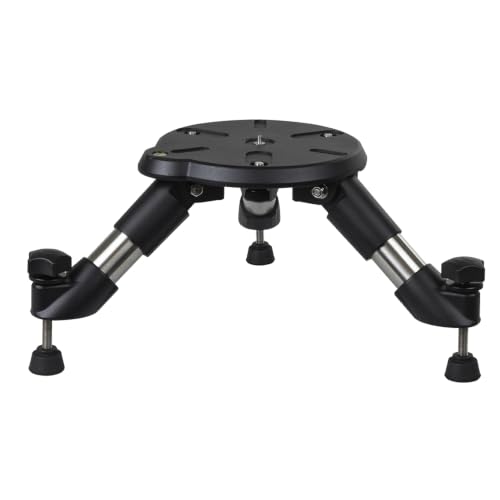
The Celestron Tabletop Tripod for NexStar SE and Evolution is different: it is a dedicated base for named Celestron computerized telescope systems rather than a universal tripod. The Celestron Tripod for StarSense Explorer Tabletop Dobsonians follows the same principle for that Dobsonian family. A system-specific base can be a better fit than a universal camera plate, but it should be purchased only after confirming the telescope model.
The DWARFLAB Mini Tripod with Hydraulic Head is similarly specialized for DWARF mini and DWARF 3 smart telescopes. It has altitude markings intended to work with DWARF 3 and a 3kg stated maximum load. Its short 25–53cm height range suits tabletop or low-position use, not conventional standing observation.
Prioritize stability for long optical tubes
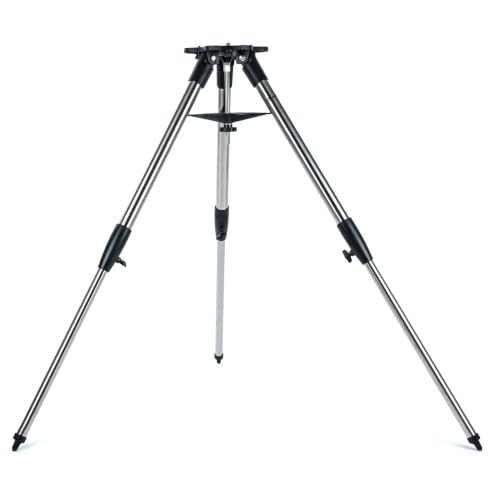
Stability depends on more than a stated load number. Leg construction, bracing, foot design, and the head or mount all affect how confidently a telescope can be positioned. The CELTICBIRD model lists 32mm anodized aluminum legs and a reinforced all-metal mount body. The Celestron Heavy-Duty Alt-Azimuth Tripod adds a center brace and a metal accessory tray, features that support a more structured setup.
The JOILCAN H80 lists a 35-pound maximum load, 30mm leg tubes, rubber feet, and independent leg angle adjustment. Those details make it an attractive multipurpose support on paper, but its ball head is designed for general positioning rather than astronomical slow-motion tracking. The stated load should not be treated as a guarantee that every telescope will feel equally stable at maximum extension.
Tabletop designs can be stable because they keep the support low and use a compact footprint. The Celestron tabletop models use captured screws for their intended telescope systems. They are sensible when the observing site has a sturdy picnic table, tailgate, or similar elevated surface, but they do not replace a full-height tripod for every observer.
Consider movement and tracking controls
For astronomy, movement controls can be more useful than maximum height. The SVBONY SV225 includes variable-speed gears and slow-motion control on both axes. The CELTICBIRD tripod lists dual worm-gear slow-motion controls with a 126:1 reduction ratio. The Celestron Heavy-Duty Alt-Azimuth Tripod also includes two slow-motion controls. These designs are the most specification-aligned choices when you want controlled manual adjustments while following the Moon or planets.
The Celestron Ultima Pan Tilt Tripod uses two directional adjustments and a center column. It is suitable for scanning horizons and changing viewing angles, and its quick-release plate makes equipment changes convenient. However, pan-and-tilt movement should not be assumed to provide the same fine tracking behavior as a dedicated alt-azimuth mount.
The DWARFLAB hydraulic head offers 360-degree panning and a broad vertical tilt range. That can be useful for a compact smart-telescope setup, while the Sky-Watcher Star Adventurer Tripod is most compelling when paired with one of the compatible Star Adventurer, GTi, AZ-GT, or AZ5 mounts. In both cases, the surrounding system matters as much as the three legs.
Balance portability with usable height
A tripod that travels easily may not provide the standing height you prefer. The SVBONY SV225T uses two-stage telescoping legs and folds into a compact size. The Celestron Ultima uses three leg sections and includes a carrying case. The Sky-Watcher Star Adventurer Tripod is listed at 36 inches, while the JOILCAN H80 reaches 81 inches and converts to a monopod.
The DWARFLAB mini tripod is the lightest and most compact style represented here, with an 850g listed weight and a 25–53cm height range. It is well suited to portable smart-telescope use, but its short height is a trade-off. Conversely, tall general-purpose tripods can be convenient for standing users but may require more careful leveling and leg adjustment, especially when fully extended.
Check the mounting hardware and setup process
Before ordering, verify the telescope’s attachment method. The Celestron Heavy-Duty Alt-Azimuth Tripod lists a 1/4-20 mounting plate with a slot for forward and aft adjustment. The Celestron Ultima includes a quick-release plate, while the JOILCAN H80 lists a 1/4-inch quick-release plate. These details are helpful, but a standard thread does not automatically confirm a secure fit for every telescope.
Look for leveling assistance when the mount requires a flat base. The SVBONY SV225 and SV225T listings describe a level top platform, and the DWARFLAB tripod includes a bubble level. The Celestron tabletop tripod for NexStar SE and Evolution includes adjustment knobs and a bubble level. These features can simplify setup, but the guide does not treat them as evidence of field-tested performance.
Final Recommendation
SVBONY SV225 Alt-Azimuth Mount and Tripod ranks first overall in this specification-based comparison under the published weighted criteria.
The SVBONY SV225 Alt-Azimuth Mount and Tripod is the highest-scoring returned product and the first overall specification-based choice among these best telescope tripods. Its stated 10kg payload, dual-axis fine adjustment, variable-speed controls, two-stage legs, and level platform provide the most complete astronomy-oriented feature set in the comparison.
The CELTICBIRD Heavy-Duty AZ Telescope Mount Tripod is a close alternative for larger optical tubes because its listing names larger Newtonian and refractor examples and documents a 126:1 worm-gear system. Choose the Celestron Heavy-Duty Alt-Azimuth Tripod when a braced, versatile platform for small telescopes and shared viewing is more useful.
For dedicated systems, the Celestron Tabletop Tripod for NexStar SE and Evolution, Celestron Tripod for StarSense Explorer Tabletop Dobsonians, DWARFLAB Mini Tripod, and Sky-Watcher Star Adventurer Tripod should be matched carefully to the named telescope or mount family. The SVBONY SV225T is a practical portable companion for the SV225 system, while the Celestron Ultima and JOILCAN H80 are broader-use options for telescope owners who also use spotting scopes, binoculars, or cameras. Together, these are the top telescope tripods for different mounting, height, and portability priorities rather than a single universal design.
Frequently Asked Questions
What should I look for in the best telescope tripods?
Start with compatibility between the telescope, mount, and tripod attachment. Then compare stability features such as braced legs, leg diameter, foot design, and any documented load figure. For astronomy, slow-motion controls can be especially useful for controlled manual tracking. Height, folded size, leveling aids, and quick-release hardware are secondary considerations that become more important for travel or mixed equipment use.
Are tabletop tripods suitable for telescope observing?
They can be suitable when the telescope is designed for a tabletop base and the observing surface is sturdy and level. The Celestron Tabletop Tripod for NexStar SE and Evolution is made for named computerized systems, while the Celestron Tripod for StarSense Explorer Tabletop Dobsonians is made for that Dobsonian family. Both are compact, but neither is a substitute for full standing height.
Is a camera tripod suitable for a telescope?
A general-purpose tripod may work when its listing explicitly supports telescopes and its attachment hardware matches. The JOILCAN H80, for example, lists telescopes among compatible equipment and provides a 1/4-inch quick-release plate. However, a camera ball head or three-way head may not provide the same controlled tracking as the slow-motion systems on the SVBONY SV225, CELTICBIRD, or Celestron Heavy-Duty Alt-Azimuth Tripod.
Which selected tripod is easiest to carry?
The DWARFLAB Mini Tripod is the most compact style in this selection, with a listed 850g weight and adjustable 25–53cm height. The SVBONY SV225T also emphasizes two-stage retraction and compact storage. The Celestron Ultima includes a carrying case, while the JOILCAN H80 folds for travel and adds monopod functionality. Portability should be weighed against the height and stability needed for your observing position.
Do all telescope tripods include a telescope mount?
No. Some products are complete mount-and-tripod systems, such as the SVBONY SV225 and CELTICBIRD models. Others are dedicated bases for named telescope families, while general-purpose products may provide only a standard thread or quick-release plate. Confirm whether your telescope requires a separate adapter or mount before choosing a tripod.