Buying Guide
The best fully multi-coated telescope eyepieces are not necessarily the ones with the shortest focal length or widest advertised field. A useful choice depends on the telescope’s focal length, the focuser or diagonal size, the targets you observe, and how much eye relief you need. The products above are compared from public specifications, so the scores describe documented features rather than hands-on optical results.
Start with barrel size
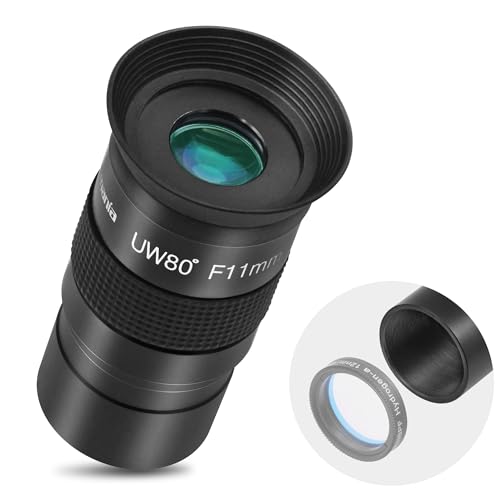
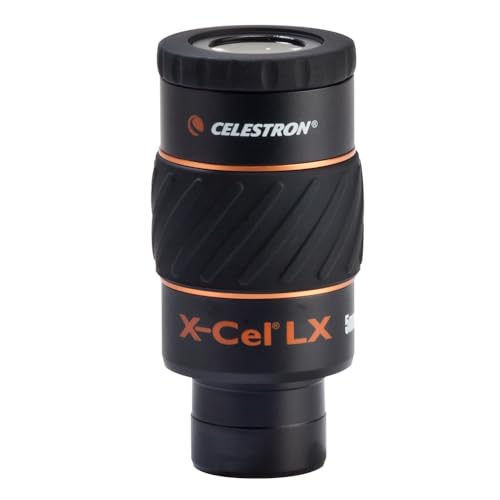
First confirm whether your telescope accepts 1.25-inch eyepieces, 2-inch eyepieces, or both. Most selected models use the common 1.25-inch format, including the Celestron X-Cel LX 12mm, Celestron X-Cel LX 5mm, SVBONY SV190 10mm, SVBONY 20mm, Starboosa 6mm, Astromania 11mm, and SVBONY 40mm. These models also document standard filter-thread features, although thread specifications can differ between products.
The Celestron Luminos 19mm and Celestron Omni 56mm use 2-inch barrels. That larger format is relevant when your telescope has a 2-inch focuser or diagonal. The Luminos emphasizes an 82-degree field, while the Omni 56mm uses a long focal length and 52mm eye relief for low-power viewing. Neither should be selected solely because the barrel is larger; compatibility must come first.
Match focal length to the observing task
Focal length affects magnification through the telescope’s focal length. Shorter eyepieces generally produce higher magnification, while longer eyepieces produce lower magnification. The Celestron X-Cel LX 5mm, Starboosa 6mm, and Celestron X-Cel LX 12mm therefore serve different roles even though all are fully multi-coated designs.
The 5mm Celestron is positioned for high-power planetary viewing. The 6mm Starboosa adds a 68-degree field, 17mm eye relief, and a polarizing filter. The 12mm Celestron is a more balanced medium-power choice, with a 60-degree field and a six-element optical system. Very short focal lengths can be demanding because usable magnification also depends on the telescope and observing conditions, so a 5mm or 6mm model may not be the best first purchase for every setup.
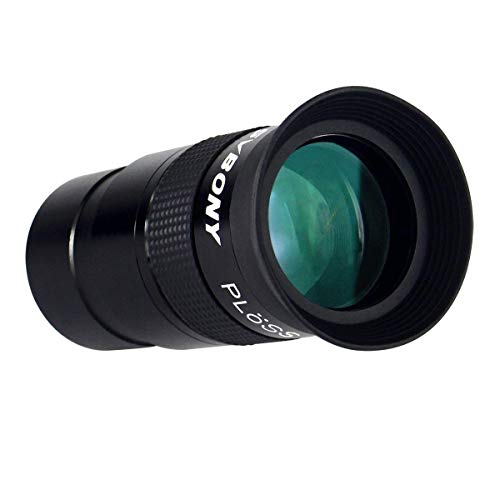
Longer focal lengths are useful for locating objects and framing extended targets. The 20mm SVBONY offers a 66-degree field, while the 40mm SVBONY and 56mm Celestron Omni are more specialized for low-power views. The 40mm has a four-element Plossl design and a 40-degree field. The 56mm Omni goes further toward low power and documents 52mm eye relief, but its 2-inch format limits compatibility.
Compare field of view carefully
Apparent field of view describes how wide the view appears through the eyepiece. A wider number can make framing feel more expansive and may provide more time before a manually tracked object reaches the edge, but field width alone does not establish optical quality.
The Astromania 11mm has the broadest stated field among the selected 1.25-inch models at 80 degrees. The Starboosa 6mm lists 68 degrees, and the SVBONY 20mm lists 66 degrees. The Celestron X-Cel LX models and SVBONY SV190 list 60 degrees. For a large 2-inch view, the Celestron Luminos 19mm lists 82 degrees. These figures are useful for comparison, but actual framing also depends on the telescope’s focal length and the target.
Treat eye relief as a comfort specification
Eye relief is especially important if you observe while wearing glasses. The Celestron Omni 56mm lists 52mm, making it the standout documented option for generous viewing distance. The Starboosa 6mm lists 17mm, while the SVBONY 20mm and SVBONY SV190 list 16mm. The Astromania 11mm lists 14mm.
Eyecup design also matters. Fold-down eyecups appear on the SVBONY SV190, Celestron Omni 56mm, and SVBONY 40mm. The Celestron X-Cel LX 12mm and 5mm use pop-up rubber eyeguards. The Celestron Luminos 19mm has a retractable eyecup, and the Starboosa 6mm has a foldable eyecup. These features can help position the eye and block stray side light, but the listing data does not establish how comfortable any model will feel for every observer.
Understand what full multi-coating contributes
Fully multi-coated optics mean the listing identifies multiple coatings on every optical surface. The supplied products describe this as improving transmission, brightness, contrast, or reflection control. Several also document blackened lens edges or interiors, which are intended to reduce stray reflections. The SVBONY 20mm, SVBONY SV190, and Astromania 11mm explicitly pair full multi-coating with blackened optical surfaces or interiors.
Coating language should still be read precisely. A listing may say multi-coated, fully multi-coated, or describe a coating system without giving transmission measurements. This guide uses the supplied wording and does not infer laboratory performance. The Celestron Luminos 19mm is included for its field and 2-inch design, but its supplied feature list does not explicitly state a full multi-coating system, so buyers who require documented coating language should prioritize another selection.
Check handling and accessory features
A rubber grip can help when handling eyepieces in the dark or with gloves. The Celestron X-Cel LX 12mm and 5mm, Celestron Luminos 19mm, Celestron Omni 56mm, and Starboosa 6mm all document grip-related features. Filter threads are also common, but the exact thread standard varies. Verify the eyepiece and filter specifications before assuming accessories will interchange.
The Celestron 8-24mm Zoom is the most flexible option for observers who want to experiment with magnification. It covers 8mm to 24mm and fits standard 1.25-inch telescope eyepiece holders. Its advantage is convenience and range rather than a single specialized focal length. A fixed eyepiece may be preferable when you already know the magnification you need.
Final recommendation
Astromania 11mm 80-Degree Eyepiece ranks first overall in this specification-based comparison under the published weighted criteria.
The final choice among the best fully multi-coated telescope eyepieces depends on the documented features that match your intended use.
Celestron X-Cel LX 12mm is the highest-scoring returned product and the first overall specification-based choice. It combines explicit six-element fully multi-coated optics, a practical 12mm focal length, a 60-degree field, an adjustable eyeguard, filter support, and a rubber grip. For a flexible collection, add the Celestron 8-24mm Zoom rather than immediately buying several focal lengths.
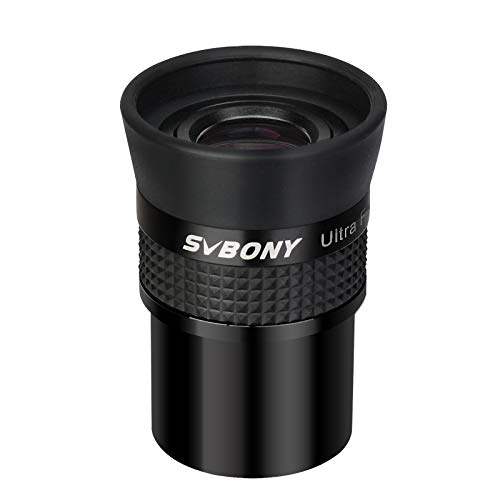
Among the top fully multi-coated telescope eyepieces, the SVBONY SV190 10mm is the clearest choice when the documented ultra-flat-field design and 16mm eye relief are priorities. The Astromania 11mm is the wide-field 1.25-inch pick with an 80-degree field. For low-power observing, the SVBONY 40mm is a simple 1.25-inch option, while the Celestron Omni 56mm is the more specialized 2-inch choice with unusually generous eye relief.
Planetary observers can compare the Celestron X-Cel LX 5mm and Starboosa 6mm. The Celestron emphasizes its six-element fully multi-coated system and planetary positioning; the Starboosa adds a wider 68-degree field, 17mm eye relief, all-metal housing, and a polarizing filter. The right choice depends on your telescope’s focal length, available magnification, and whether the supplied filter is useful to your observing routine.
Frequently Asked Questions
What makes the best fully multi-coated telescope eyepieces different from multi-coated models?
A fully multi-coated listing identifies multiple coatings on every optical surface, while a multi-coated listing may not specify that every surface receives the treatment. The supplied descriptions associate full multi-coating with light transmission, brightness, contrast, and reflection control. They do not provide laboratory transmission measurements, so coating terminology should be treated as a documented specification rather than a guarantee of a particular view.
Should I choose a 1.25-inch or 2-inch eyepiece?
Choose the barrel size supported by your telescope, focuser, diagonal, and accessories. The selected 1.25-inch models are broadly compatible with standard 1.25-inch systems. The Celestron Luminos 19mm and Celestron Omni 56mm require a 2-inch-compatible setup. A 2-inch barrel does not automatically mean a better image; it is a compatibility and design consideration.
Is a zoom eyepiece better than fixed focal lengths?
A zoom can be more convenient because the Celestron 8-24mm Zoom covers a range without changing eyepieces. A fixed model gives you a defined focal length and may be easier to select when your observing targets and telescope are already familiar. The supplied data supports flexibility as the zoom’s main benefit, but it does not establish a universal optical advantage over fixed designs.
What eye relief should eyeglass wearers look for?
Longer eye relief generally gives more space between the eye and the eyepiece, but comfort also depends on the eyecup and the observer. The Celestron Omni 56mm lists 52mm, the Starboosa 6mm lists 17mm, and the SVBONY 20mm and SV190 list 16mm. Fold-down or adjustable eyecups may also help with positioning. Treat these figures as specifications, not promises of identical comfort for every user.
Can I use these eyepieces with filters?
Many selected models document filter threads, including the Celestron X-Cel LX 12mm and 5mm, Celestron 8-24mm Zoom, SVBONY SV190, Astromania 11mm, and SVBONY 40mm. The Starboosa 6mm listing also identifies filter support and includes a polarizing filter. Confirm the stated thread size and barrel format before purchasing a filter, since not every accessory standard is interchangeable.