Buying Guide
Choosing among the best zipper safety vests starts with the job’s visibility requirement, not simply the number of pockets or the color shown in a listing. A vest can be suitable for general construction or traffic work while being inappropriate for a task that specifically requires flame resistance, Class 3 apparel, or another employer-defined specification. Treat the stated standard and class as a starting point, then confirm the rules that apply to your workplace.
Match the visibility class to the task
The selected products cover Class 1, Class 2, and Class 3 designs. The Dib Safety Heavy Duty Class 3 Vest is the clearest choice in this group when its Class 3 specification matches the work environment. Its description refers to complex backgrounds and extreme conditions, along with reflective details around the arms, sides, and pockets. That makes it more specialized than a basic mesh vest.
Many other best zipper safety vests in this comparison are Class 2 products. These include the Kishigo Premium Black Series Surveyors Vest S5002, XIAKE 9-Pocket Class 2 Safety Vest, Dib Safety Reflective Class 2 Vest, Pioneer Hi Vis Mesh Class 2 Vest, TICONN Class II Mesh Safety Vest, and Ekkosafety EK175 Reflective Mesh Vest. Their listings describe reflective strips across the shoulders, chest, waist, back, or other body areas. Do not assume that bright color alone establishes compliance; look for the stated standard and class.
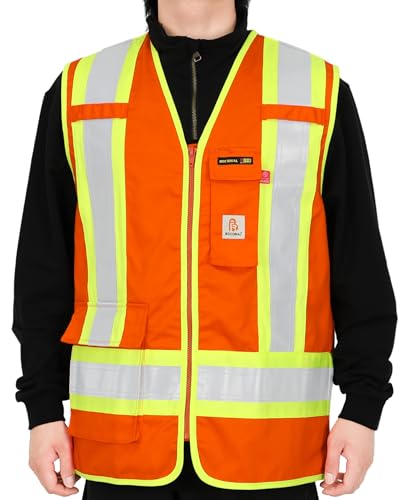
The BOCOMAL FR Vest ANSI Class 1 CAT 2 occupies a different position. Its listing describes Class 1 visibility but adds flame-resistant fabric, an FR zipper, aramid threads, and industrial safety references. If FR or arc-related protection is required, compare the garment’s documented specifications with the employer’s policy rather than substituting a standard polyester mesh vest.
Check the zipper and layering details
A full-front zipper makes a vest quick to put on over work clothing and can make removal easier during breaks or transitions. The Kishigo and Dib Safety Heavy Duty listings add reinforcement language, which may matter for repeated field use.
A zipper does not determine fit by itself. Review the size chart and consider whether the vest will go over a shirt, sweatshirt, rain shell, or winter jacket. The Dib Safety Heavy Duty listing specifically discusses ordering larger for jacket wear, and the XIAKE listing advises sizing up for a looser fit. Those notes are more useful than relying on the nominal letter size alone. A vest that is too tight can restrict layering, while one that is too loose may interfere with pockets or equipment.
Decide how much storage you need
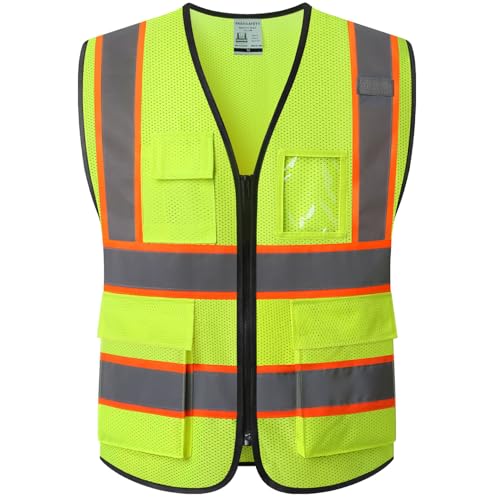
Pocket count is useful only when the layout matches the equipment carried. The Kishigo S5002 is the most specialized storage design in this selection, with surveyor-oriented pockets for stakes and spray paint as well as chest and lower pockets. The XIAKE vest provides nine front pockets, and the JKSafety JK220 offers eight compartments with an ID area and expandable waist pockets. These are suited to people who carry several small tools, markers, credentials, or devices.
For a structured workwear layout, the Dib Safety Reflective Class 2 Vest includes phone and ID storage, pencil divisions, cargo pockets, and mic tabs. The A-SAFETY vest adds an ID window, D-rings, microphone tabs, zipper compartments, and expandable pockets. The TICONN model documents a transparent ID pocket, pen holder, radio pocket, and two large pockets. These details help separate equipment, but they may also add front bulk.
The Pioneer vest and Ekkosafety EK175 use simpler storage arrangements. That can be preferable when the wearer needs a phone or a few essentials but does not want a heavily pocketed front. Before buying, list the items that must remain accessible and check whether the documented pocket types accommodate them.
Choose mesh or a specialized fabric
Mesh is common among the selected top zipper safety vests because it supports airflow and keeps the garment lightweight. The Pioneer listing specifically describes breathable tricot polyester mesh for hot conditions. Ekkosafety, TICONN, JKSafety JK220, and A-SAFETY also describe mesh-based construction or ventilation benefits. Mesh can be suitable for warm work areas, active outdoor duties, and layering over normal clothing.
Mesh is not automatically appropriate for every setting. The BOCOMAL vest uses treated cotton twill and is built around FR-related specifications, while the Kishigo S5002 combines a solid polyester front with a lightweight mesh backing and a more durable lower section. These constructions illustrate the trade-off between airflow, structure, and specialized protection. Use the fabric information to match the garment to the task rather than treating one material as universally preferable.
Review special compliance claims carefully
The supplied listings use several standards and protection terms. ANSI/ISEA 107 class claims describe high-visibility apparel categories, but they do not mean every vest meets every workplace requirement. The BOCOMAL listing says it is not simply a conventional visibility vest; it adds FR and arc-related claims. Conversely, the JKSafety JK220 listing explicitly says it is not designed for anti-static or FR standards. That limitation matters for jobs requiring those properties.
Also distinguish a listing’s stated standard from assumptions about performance. This comparison does not verify certification, conduct durability testing, or assess real-world visibility. Confirm the current product label, size, color, class, and required standard before using a vest for regulated work. The same model family may have different configurations, so check the exact listing details for the selected size and color.
Consider care and daily practicality
For the selected products, mesh and polyester descriptions suggest practical everyday workwear, but care instructions should still come from the garment label. Reflective material, pocket closures, and zippers can require gentler handling than ordinary clothing.
Consider whether you need one vest or a team-oriented design. This list focuses on individual workwear formats and ranks products by documented features rather than pack quantity. For crews, confirm that the chosen color, class, pocket arrangement, and sizing are available consistently across the needed order.
Final Recommendation
Dib Safety Heavy Duty Class 3 Vest ranks first overall in this specification-based comparison under the published weighted criteria.
Dib Safety Heavy Duty Class 3 Vest is the first overall specification-based choice among the best zipper safety vests because its listing combines Class 3 compliance, 3M reflective tape, extra reflective trim, reinforced zipper construction, and extensive storage. For surveyors, the Kishigo Premium Black Series Surveyors Vest S5002 is the more task-specific alternative. Choose BOCOMAL when documented FR features are central, Pioneer when breathable traffic-oriented simplicity matters, or XIAKE and JKSafety JK220 when organized tool storage is the priority. These top zipper safety vests should still be checked against the employer’s required class, protection type, and fit guidance before purchase.
Frequently Asked Questions
What should I look for in the best zipper safety vests?
Start with the required ANSI/ISEA class or other workplace specification, then check reflective coverage, zipper construction, fabric, storage, and fit. A Class 3 listing may be more appropriate for complex backgrounds than a Class 2 model, while an FR requirement calls for a specialized garment such as BOCOMAL rather than ordinary polyester mesh.
Are all zipper safety vests suitable for construction work?
No. Many selected products list construction as an intended use, but requirements vary by site. The JKSafety JK220 listing, for example, states that it is not designed for anti-static or FR standards. Confirm the worksite’s required visibility class, protection properties, and color before relying on any vest.
Is a mesh zipper vest suitable for hot weather?
Mesh may support airflow, and the Pioneer, Ekkosafety, TICONN, JKSafety JK220, and A-SAFETY listings describe breathable mesh construction. However, ventilation is only one consideration. A specialized fabric may be necessary when flame resistance or a more structured garment is required.
Which selected vest has the most storage?
The Kishigo Premium Black Series Surveyors Vest S5002 documents ten pockets and surveyor-specific storage. The XIAKE vest lists nine front pockets, while the JKSafety JK220 lists eight compartments. More pockets can improve organization but may also add bulk, so match the layout to the tools you carry.
How should a zipper safety vest fit over work clothes?
Use the manufacturer’s size chart and account for the layers worn underneath. The Dib Safety Heavy Duty listing advises sizing up when wearing the vest over a jacket, and XIAKE advises sizing up for a looser fit. Check the exact selected configuration rather than assuming all sizes fit the same way.