Buying Guide
The best instant film cameras with selfie mirrors differ less in their basic purpose than in how much control they give you around the instant print. Every selected model documents a mirror or reflective viewfinder for self-portraits, but the surrounding feature set ranges from simple automatic cameras to hybrid models with smartphone support. Start by deciding whether you want uncomplicated analog shooting, more creative control, or the smallest possible camera and print format.
The Fujifilm Instax Mini models in this guide print approximately 2 x 3-inch photos and use Instax Mini film. That includes the Mini EVO, Mini 41, Mini 13, Mini 12, Mini 11, and Mini 9. The small rectangular format is consistent across those cameras, but film is sold separately for several listings, so check the package contents before ordering.
The Polaroid Go Generation 2 and Generation 3 use the smaller Polaroid Go format. The Go Generation 2 listing describes pocketable Polaroid Go film, while the Generation 3 listing explicitly says that Polaroid Go film is the only compatible format. This creates a clear system choice: Instax Mini for the Fujifilm group or Polaroid Go for the smaller Polaroid option. Film compatibility is not interchangeable between those systems.
A built-in selfie mirror helps you estimate framing before pressing the shutter, but close-up support varies. The Mini 12, Mini 41, and Mini 13 document close-up modes with parallax correction. That is useful when the subject is near the camera because the viewfinder framing and lens perspective can differ at short distances.
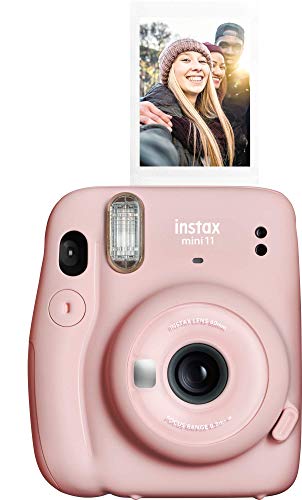
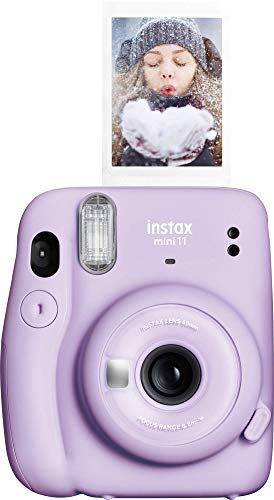
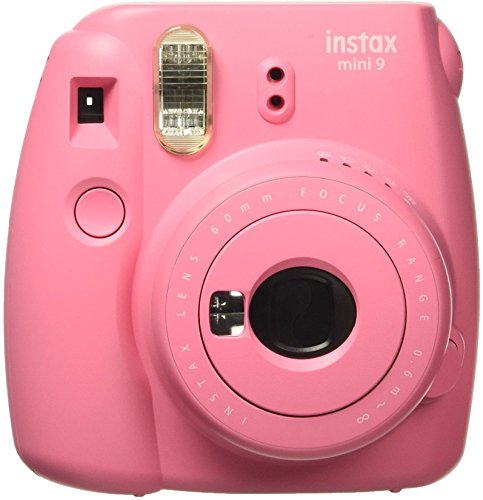
The Mini 11 listings describe a one-touch selfie mode that combines a built-in macro mode and mirror. The Mini 9 instead includes a macro lens adapter and a selfie mirror. If you prefer an integrated mode, the Mini 11 is the more direct design on paper. If you want exposure guidance and do not mind a separate close-up adapter, the Mini 9 offers a different operating approach.
The Polaroid Go cameras use a reflective viewfinder or front-facing selfie mirror. Both Go selections also document a self-timer, which can be more useful than holding the camera at arm’s length when taking a solo portrait or joining a group. The Generation 3 adds wording about a powerful built-in flash, while the Generation 2 lists a precise light sensor and exposure settings.
Consider automatic exposure and flash behavior
Automatic exposure and flash control are central to the easiest point-and-shoot experience. The Mini 12, Mini 13, and Mini 41 all document automatic exposure and flash control. The Mini 11 documents automatic exposure and an automatic flash, making it another straightforward option for casual portraits and everyday snapshots.
The Mini 9 takes a more guided approach. Its automatic exposure measurement signals a recommended aperture with a flashing LED, and the user switches to the indicated setting. It also lists a constant-firing flash with automatic light adjustment and a high-key mode. This may appeal to someone who wants a little more involvement than a fully automatic camera, but it is not the same operation as newer models that select exposure automatically.
The Mini EVO listings emphasize creative effects and hybrid functions rather than a specific automatic exposure system in the supplied evidence. For that reason, they are most specification-aligned for users prioritizing expression, saving, and connectivity rather than the simplest possible exposure workflow.
Decide whether digital features matter
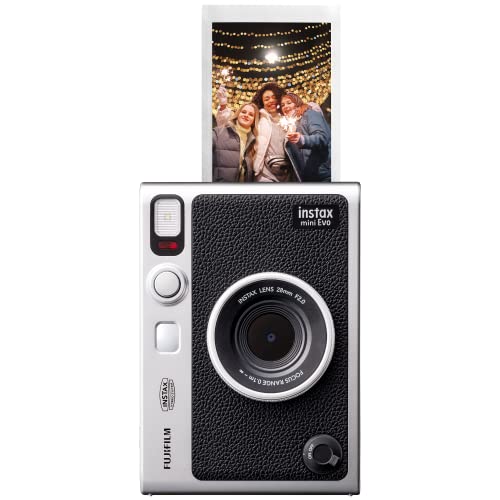
The Mini EVO is the clear choice if you want an instant camera that also interacts with a phone. It can save images to a microSD card, save printed images to a smartphone, print smartphone photos through Bluetooth, and support remote shooting through the Instax Mini EVO app. Its 10 lens effects and 10 film effects provide 100 listed combinations, giving it a substantially broader creative toolset than the basic analog models in this comparison.
The other selected cameras are presented as direct instant-print cameras. Their supplied evidence does not document smartphone control, microSD storage, or digital image saving. That simpler design can be preferable if the main goal is to press the shutter and receive a physical print without managing files or an app.
Think about portability and power
The Mini 11, Mini 12, Mini 13, and Mini 41 are compact cameras designed around everyday carrying. The Mini 12, Mini 13, and Mini 41 listings include two AA batteries, while the Mini 11 and Mini 9 evidence also points to compact, lightweight bodies or AA-battery operation. Check the exact listing contents because renewed and bundle configurations can differ.
The Polaroid Go models emphasize portability even more. The Generation 2 is described as fitting in many bags, totes, pockets, and packs, and its listing specifies rechargeable operation. The Generation 3 is also described as small enough to wear or take anywhere. These cameras make the most sense when body size and the smaller Go print are more important than using the broader Instax Mini ecosystem.
Compare package and warranty details
Package contents vary. The Mini 12, Mini 13, and Mini 41 listings include a hand strap and two AA batteries. The Polaroid Go Generation 3 bundle lists 16 color photos. The Mini EVO listings mention that film is sold separately, and the renewed Mini EVO listing specifies a 90-day limited warranty. The renewed Mini 11 listing also specifies a 90-day limited warranty, while several new-condition listings document one-year manufacturer coverage.
These details do not establish product quality or customer experience, but they do affect setup. Confirm whether film, batteries, a strap, or a warranty are included in the particular listing you intend to buy.
Final Recommendation
Fujifilm Instax Mini EVO Instant Camera (Renewed) ranks first overall in this specification-based comparison under the published weighted criteria.
The final choice among the best instant film cameras with selfie mirrors depends on the documented features that match your intended use.
Fujifilm Instax Mini EVO Instant Camera - Brown is the highest-scoring returned product and the first overall specification-based choice. It documents the broadest combination of creative controls, selfie framing, storage, smartphone printing, and remote shooting. Among simpler analog cameras, the Fujifilm Instax Mini 41 is a strong fit for automatic exposure, flash control, and corrected close-ups, while the Mini 13 is the better match for users who specifically want timed self-portraits.
The Polaroid Go Generation 2 and Generation 3 are the top instant film cameras with selfie mirrors for buyers who prioritize a tiny camera and the Go film system. Choose the Generation 3 bundle when included color photos are useful. Choose the Mini 12 or Mini 11 when uncomplicated Instax Mini shooting matters more than digital features. The Mini 9 remains a reasonable documented option for exposure guidance and high-key portraits, but its operation is less automatic.
Frequently Asked Questions
What should I look for in the best instant film cameras with selfie mirrors?
Look for a clearly documented built-in mirror or reflective viewfinder, then check whether the camera adds a close-up mode, parallax correction, or a self-timer. Automatic exposure and flash control can simplify everyday shooting. Also confirm the film format, since Instax Mini and Polaroid Go film are different systems.
Which selected camera offers the most creative control?
The Fujifilm Instax Mini EVO offers the most documented creative flexibility in this comparison. Its evidence lists 10 lens effects and 10 film effects, for 100 combinations, along with dual shutter buttons for portrait and landscape shooting. It also supports smartphone-related functions and microSD storage.
Are Polaroid Go cameras compatible with Instax Mini film?
No. The selected Polaroid Go listings specify Polaroid Go film, and the Generation 3 listing says it is only compatible with that format. The Fujifilm models listed here use Instax Mini film. Check film compatibility before buying because the formats are not presented as interchangeable.
Which camera is simplest for close-up selfies?
The Fujifilm Instax Mini 12, Mini 13, and Mini 41 document close-up modes with parallax correction. The Mini 11 documents a one-touch selfie mode that combines a macro mode and selfie mirror. These designs provide a more integrated close-up workflow than the Mini 9, which uses a macro lens adapter.
Do these cameras save digital copies automatically?
The supplied evidence documents digital saving for the Fujifilm Instax Mini EVO models, including microSD storage and smartphone-related functions. The other selected cameras are described primarily as instant-print cameras, and their evidence does not document digital storage or smartphone connectivity.