Buying Guide
The best 1080p camcorders in this comparison are defined by their documented recording format and supporting controls, not by a hands-on test. Every selected model lists Full HD 1080p video, but the surrounding specifications vary substantially. The right choice depends on whether you need optical reach, night recording, a rotating screen, external audio, or a lightweight body.
Start with the recording specification
Look for the frame rate as well as the 1080p label. The Sony HDR-CX160 is the standout on the supplied evidence because it records 1920x1080 at 60p. The ORDRO B320, ORDRO HDV-V12, VETEK A01, Rawiemy HDV-8162P, and DEGIPO HDV-P12 document 30fps 1080p recording. That distinction matters when you want to compare motion handling on paper, although this guide does not independently test image quality.
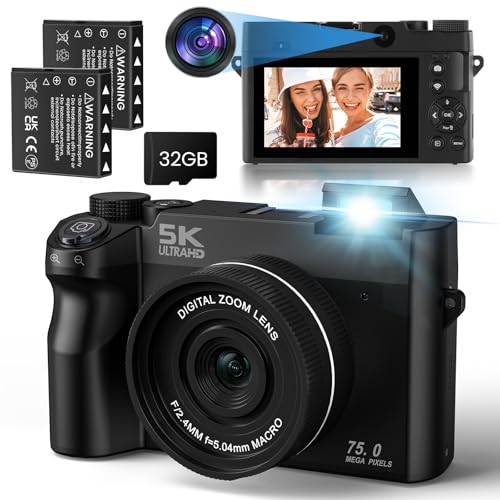
Still-image numbers are separate from video resolution. The Minolta MN88NV and MN80NV list 24MP stills, while the ORDRO B320 and HDV-V12 list up to 30MP still-image specifications. Those figures describe photo capture, not the detail level of recorded video, so they should not be used as a substitute for a video specification.
Choose optical or digital zoom carefully
Zoom type is one of the clearest differences in this group. The Sony HDR-CX160 lists 30x optical zoom and 42x extended zoom, while the Canon VIXIA HF R600 lists 57x Advanced Zoom. These traditional camcorder designs are appropriate choices when the subject may be far away, based on the supplied zoom descriptions.
Digital zoom can be convenient, but the listings do not provide independent measurements of detail retention at the maximum setting. Treat the number as a framing feature rather than a direct equivalent to optical reach.
Consider the screen and control layout
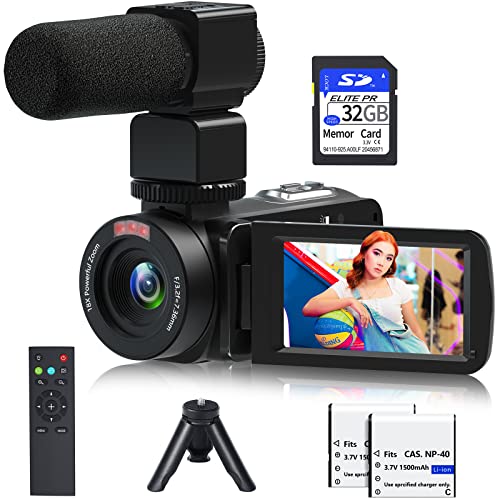
A rotating or flip screen is useful when the camera is pointed toward its operator. The ORDRO B320 has a 3-inch flip screen. The ORDRO HDV-V12 has a 3-inch rotating LCD, while the ALSONE, VETEK, Rawiemy, and DEGIPO models list 270-degree rotating or flip screens. These designs support self-framing and unusual angles according to their product descriptions.
The Sony HDR-CX160 and both Minolta models use 3-inch screens, with the Sony and Minolta listings specifically identifying touchscreen operation. The Canon also lists a 3-inch touchscreen. Touch controls may be preferable for direct menu navigation, while a rotating display is more relevant when you need to see yourself during recording.
Remote controls appear with the ORDRO B320, ORDRO HDV-V12, VETEK A01, ALSONE, and DEGIPO HDV-P12. A remote can start or control recording from a distance, but the supplied evidence does not establish its range or response time.
Match low-light features to the scene
Infrared night vision is explicitly listed for the ORDRO B320, ORDRO HDV-V12, Minolta MN88NV, Minolta MN80NV, VETEK A01, and DEGIPO HDV-P12. The Minolta MN88NV provides the most specific listing detail, stating infrared illumination up to 35 feet. The DEGIPO listing states low-light support within 16 feet or 5 meters. Infrared output is commonly described as black-and-white in the supplied listings, so it should not be confused with normal full-color low-light recording.
The Sony HDR-CX160 takes a different specification route by listing a back-illuminated Exmor R CMOS sensor for low-light video. The ALSONE lists an LED fill light, and the Rawiemy listing does not document infrared night vision. If nighttime recording is central to your use, prioritize a model with an explicitly stated night mode or sensor feature rather than assuming every 1080p camcorder performs similarly.
Check audio and connection options
For more control over sound, the VETEK A01 and ALSONE clearly list external microphone support. The Rawiemy HDV-8162P lists external and built-in microphones. These are the most suitable selections here for setups where microphone placement matters. The VETEK also lists a hot shoe and external LED-light support.
Among the selected products, that makes the ORDRO B320, ALSONE, Rawiemy, VETEK, and DEGIPO useful for computer video calls or streaming workflows described in their listings. HDMI output is explicitly listed for the Sony, Minolta MN88NV, Minolta MN80NV, and VETEK A01. Confirm the required cable and computer compatibility before relying on any connection mode.
Plan storage and power
The Sony HDR-CX160 has 16GB embedded Flash Memory. The ORDRO B320, ORDRO HDV-V12, Minolta MN88NV, Minolta MN80NV, Rawiemy HDV-8162P, and VETEK A01 listings identify included memory cards. By contrast, the Canon uses SD memory cards, and the DEGIPO listing supports cards up to 128GB but says the card is not included. Check whether a card is supplied and whether it must be formatted before first use.
Two batteries are listed for the ORDRO B320, ORDRO HDV-V12, ALSONE, Rawiemy, VETEK, and DEGIPO models. Battery capacity alone does not establish runtime, so use the supplied runtime claims only where the listing states them and avoid assuming comparable endurance between models.
Use the evidence appropriately
This is a specification-based comparison using public listing data. The scores reflect only the six category-specific criteria above: video capture, framing and controls, zoom and stabilization, low-light capability, audio and connectivity, and portability and power. They are not lab measurements, hands-on results, or a summary of user experience. Missing specifications were treated conservatively rather than filled with assumptions.
Final Recommendation
Sony HDR-CX160 Full HD Camcorder ranks first overall in this specification-based comparison under the published weighted criteria.
The Sony HDR-CX160 is the first overall specification-based choice among these best 1080p camcorders because its listing combines 60p Full HD recording, 30x optical zoom, built-in memory, a wide-angle lens, and a back-illuminated sensor. Choose the Canon VIXIA HF R600 instead if its 57x Advanced Zoom and touchscreen are more important than having more documented supporting features.
For night scenes, the Minolta MN88NV, ORDRO B320, and ORDRO HDV-V12 provide clear infrared-oriented feature sets. The Minolta MN88NV has the most specific stated infrared distance, while the ORDRO models add compact formats and dual-battery configurations. The Minolta MN80NV is another touchscreen option with infrared night vision and HDMI accessories.
Among the top 1080p camcorders for self-recording, the VETEK A01, Rawiemy HDV-8162P, and ALSONE are the most connection-focused selections because their listings identify rotating screens, webcam modes, and external audio support or microphone options. The DEGIPO HDV-P12 is an alternative when a rotating screen, infrared night vision, and remote control matter more than external microphone input.
Frequently Asked Questions
What should I look for in the best 1080p camcorders?
Start with the stated frame rate, then check zoom type, screen movement, low-light mode, audio inputs, storage, and battery configuration. A 1080p label alone does not tell you whether a model has optical zoom, infrared recording, a rotating display, or an external microphone jack. The Sony HDR-CX160 is the clearest optical-zoom example, while the VETEK A01 and Rawiemy HDV-8162P document external-audio flexibility.
Is optical zoom better for distant subjects?
Optical zoom is the more relevant specification when you need to frame a distant subject without relying on digital enlargement. The Sony HDR-CX160 lists 30x optical zoom, and the Canon VIXIA HF R600 lists 57x Advanced Zoom. Most other selected models list digital zoom, including the 16x systems on the Minolta MN88NV and ORDRO HDV-V12. The supplied listings do not provide independent image-quality tests at maximum zoom.
Which selected camcorders document night vision?
The ORDRO B320, ORDRO HDV-V12, Minolta MN88NV, Minolta MN80NV, VETEK A01, and DEGIPO HDV-P12 list infrared night vision. The Minolta MN88NV states a range of up to 35 feet, and the DEGIPO listing states operation within 16 feet or 5 meters. The descriptions indicate that infrared footage may appear in black and white. The Sony HDR-CX160 instead lists a back-illuminated sensor for low-light video.
Are rotating screens useful for vlogging?
They can make self-framing easier because the screen can face the operator. The ORDRO B320 lists a flip screen, and the ORDRO HDV-V12 lists a rotating LCD. The ALSONE, VETEK A01, Rawiemy HDV-8162P, and DEGIPO HDV-P12 list 270-degree rotating or flip screens. Remote control and webcam modes can add convenience, but the listings do not establish independent performance results.
Which models support external microphones?
The VETEK A01 and ALSONE listings explicitly identify external microphone support, while the Rawiemy HDV-8162P lists external and built-in microphones. The VETEK also identifies a hot shoe and external LED-light support. The selected listings for the Sony, Canon, Minolta, ORDRO, and DEGIPO models do not clearly document an external microphone input, so verify the connection requirements before choosing one for a dedicated audio setup.