Buying Guide
The best 4-ohm car tweeters should be selected by matching electrical load, driver design, power figures, protection, and physical fit. The products above are ranked from supplied listing evidence only. They were not auditioned, measured independently, or evaluated through customer sentiment. A high position means the listing provides a stronger overall specification package for this category, not a guarantee of a particular sound in every vehicle.
Confirm the 4-ohm match
Every selected product explicitly identifies a 4-ohm design in its title or supplied feature data. That matters because the tweeter’s nominal impedance should be compatible with the amplifier channel or crossover network feeding it. A 4-ohm replacement is not automatically a direct replacement for every factory speaker system, so confirm the vehicle’s wiring, amplifier requirements, and any existing passive crossover before connecting it.
The listings describe both individual drivers and pairs. Rockville RT6, PRV AUDIO TW150SD-4, Timpano TPT-ST1, WDiYA GYLB-001, STINGER HC-35CT, AudioControl EPICPRO4T, DS18 PRO-TWX1, and RECOIL TW250 are presented as pairs. Sundown Audio GT-R1 is listed as a single unit, while PRV AUDIO TW400Ti-Nd-4 is supplied as two tweeters. Check the package contents when planning a left-and-right installation.
Choose dome or bullet construction
Soft- and silk-dome models are represented by Rockville RT6, PRV AUDIO TW150SD-4, Timpano TPT-ST1, and WDiYA GYLB-001. Their listings emphasize silk or soft-dome construction, and the PRV model specifically describes response above 2KHz. This type can be a sensible direction for an installation that prioritizes a dome format or a factory-style placement approach.
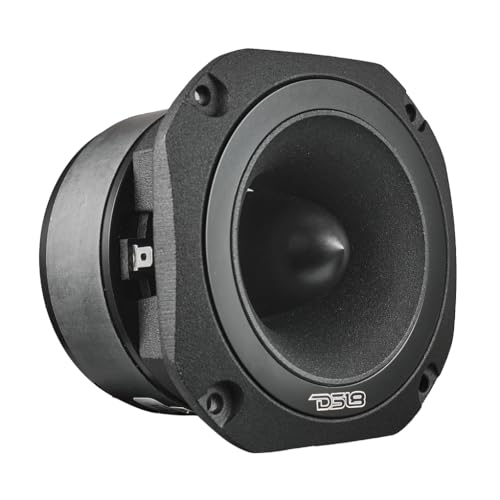
Bullet and compression designs dominate the high-output side of the list. Sundown Audio GT-R1, PRV AUDIO TW400Ti-Nd-4, STINGER HC-35CT, AudioControl EPICPRO4T, DS18 PRO-TWX1, and RECOIL TW250 use bullet or super-bullet terminology. These listings emphasize efficiency, projection, or high-SPL use. That does not establish how any model will sound in a particular cabin, but it does identify the intended design direction from the supplied specifications.
Power ratings are not presented consistently. Rockville RT6 lists 60W RMS and 240W peak per pair. Timpano TPT-ST1 lists 70W RMS and 180W maximum per pair. STINGER HC-35CT lists 150W RMS and 250W peak for the pair. RECOIL TW250 lists 200W RMS and 400W maximum for the pair. By contrast, PRV AUDIO TW400Ti-Nd-4 lists up to 120W RMS per tweeter, and DS18 PRO-TWX1 lists 120W RMS and 240W maximum for the pair.
For that reason, do not compare a pair-level number directly with a per-driver number without converting the context. Also verify whether your amplifier’s output is appropriate and whether a high-pass filter is available. The highest published power figure is not automatically the right match for a lower-powered factory system.
Look for filtering and protection
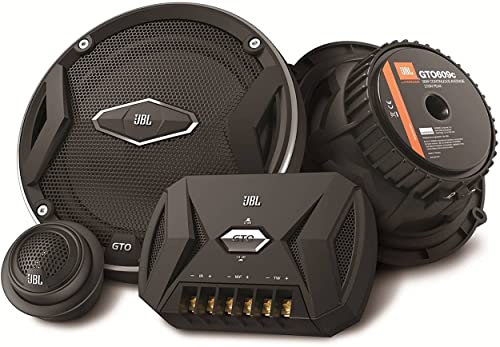
A tweeter should not receive unsuitable low-frequency energy. Several selected products document some form of protection: Rockville RT6 and WDiYA GYLB-001 include crossover or bass-blocking features; PRV AUDIO TW150SD-4 and DS18 PRO-TWX1 identify a built-in capacitor; RECOIL TW250 and AudioControl EPICPRO4T include an inline capacitor or capacitor crossover; PRV AUDIO TW400Ti-Nd-4 specifies a 12dB/octave crossover at 6,000Hz.
The evidence is not equally detailed for every model. Sundown Audio GT-R1 and Timpano TPT-ST1 do not document an included crossover in the supplied fields. That does not prove they cannot be used safely, but it means the buyer should pay particular attention to the existing crossover, amplifier high-pass filter, or a separately specified bass blocker.
Measure the mounting location
Physical fit is one of the most important practical checks. Rockville RT6 includes flush, surface, and angle hardware. WDiYA GYLB-001 also documents flush, angle, and surface mounting, while Timpano TPT-ST1 includes angle and surface components. PRV AUDIO TW150SD-4 is described as shallow and suitable for standard 2-inch factory tweeter locations.
The larger bullet models need more planning. STINGER HC-35CT lists a 2.80-inch cutout and 2.70-inch mounting depth. AudioControl EPICPRO4T lists a 3.86-inch overall diameter, a 2.79-inch cutout, and a 1.65-inch mounting depth. RECOIL TW250 and DS18 PRO-TWX1 provide less complete fit information in the supplied fields, so measure the intended location rather than relying on the product name alone.
Match the design to the system
For a compact or factory-oriented installation, start with the dome models or the PRV AUDIO TW400Ti-Nd-4 Slim. For a high-output system, compare the sensitivity and power documentation of Sundown Audio GT-R1, STINGER HC-35CT, RECOIL TW250, and the other bullet designs. Material choice also differs: the list includes silk and soft domes, aluminum diaphragms, titanium diaphragms, and PEI in an unselected candidate that is not discussed here. Staying with the selected products keeps this guide grounded in the returned evidence.
Final recommendation
Rockville RT6 1-Inch Silk Dome Tweeters ranks first overall in this specification-based comparison under the published weighted criteria.
Rockville RT6 is the first overall specification-based choice among these best 4-ohm car tweeters because it combines 4-ohm fit, a silk dome, ferro-fluid cooling, crossover protection, and three mounting formats. Its 60W RMS-per-pair rating and 1.3KHz-24KHz stated response make the specification set easy to interpret, while the hardware helps with varied vehicle locations.
Buyers wanting a shallow soft-dome direction should consider PRV AUDIO TW150SD-4. For a high-sensitivity bullet, Sundown Audio GT-R1 has especially clear documentation, including 100dB sensitivity and 100W RMS. PRV AUDIO TW400Ti-Nd-4 Slim stands out for its titanium diaphragm and specified crossover slope. STINGER HC-35CT is useful when cutout and depth measurements are important, while RECOIL TW250 is aimed more directly at high-SPL systems.
The top 4-ohm car tweeters are not interchangeable in installation requirements. Before choosing, verify whether you need a pair, compare RMS ratings in the same per-pair or per-driver context, measure the mounting opening, and confirm how low frequencies will be filtered. These checks are more dependable than selecting solely by a maximum-wattage claim.
Frequently Asked Questions
No. A 4-ohm specification indicates the intended nominal load, but compatibility also depends on the amplifier, factory wiring, crossover arrangement, and available mounting space. Confirm the system requirements before installation. The selected listings identify 4-ohm compatibility, but they do not establish compatibility with every vehicle.
Some do. Rockville RT6 includes an in-line crossover, WDiYA GYLB-001 lists a built-in crossover and bass blocker, and AudioControl EPICPRO4T includes an in-line capacitor. PRV AUDIO TW400Ti-Nd-4 specifies a 12dB/octave crossover at 6,000Hz. PRV AUDIO TW150SD-4, DS18 PRO-TWX1, and RECOIL TW250 also document capacitor-based filtering. The supplied evidence does not document an included crossover for every selected model, so check the individual listing and your existing system.
PRV AUDIO TW150SD-4 is explicitly described as shallow and suitable for standard 2-inch factory tweeter locations. PRV AUDIO TW400Ti-Nd-4 is described as a slim 3-inch design for tight spaces, and Rockville RT6 offers flush mounting. Measure the cutout and depth before choosing; a product’s diameter alone does not determine whether it will fit.
Choose based on the documented design and installation goal. Rockville RT6, PRV AUDIO TW150SD-4, Timpano TPT-ST1, and WDiYA GYLB-001 use soft- or silk-dome terminology. The bullet models, including Sundown Audio GT-R1 and STINGER HC-35CT, emphasize efficiency, projection, or high-SPL applications. The supplied data supports those design distinctions, but it does not provide a hands-on sound comparison.
It varies. Several listings state power for the pair, while PRV AUDIO TW400Ti-Nd-4 identifies up to 120W RMS per tweeter. Read the rating context carefully before matching an amplifier. Comparing a per-driver figure with a pair-level figure without adjustment can lead to an inaccurate system match.