Buying Guide
Choosing among the best 4-inch roof flashings starts with the penetration, not the brand name. A product described as a 4-inch opening may suit a nominal pipe, while a trim-to-fit boot may cover a wider range of outside diameters. Confirm the pipe’s actual outside diameter and compare it with the manufacturer’s stated range before selecting a flashing.
Fixed openings versus adjustable collars
A fixed-opening design, such as the Oatey 11891 or Oatey No-Caulk 4-Inch Roof Pipe Flashing, is most direct when the pipe size is known and closely matches the listed opening. These products can reduce sizing decisions, but their usefulness depends on the opening and pipe being compatible.
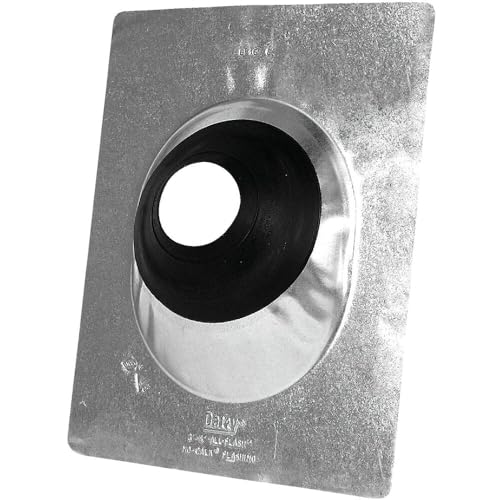
Adjustable products offer more flexibility. The Oatey All-Flash covers 3-inch to 4-inch pipe sizes, while the Water-Tite 81576 is listed for 4-inch pipes and uses a conical form with pitch adjustment. The Oatey Master Flash extends from 1/4 inch to 5-1/4 inches. Silicone and EPDM boots such as the Flashers #3, Aothotop #3, and Aothotop two-pack also use broad ranges that can be trimmed or fitted around different penetrations.
Match the flashing to the roof surface
Roof surface is a major selection factor. The Aothotop silicone boots and Flashers #3 are specifically presented for metal-roof applications. The Aothotop #3 listing mentions corrugated roofs, while the Flashers #3 uses an aluminum base and flexible EPDM cone. These designs may be more appropriate where the base must conform to metal roofing profiles.
The Oatey products, Water-Tite, and Ultimate Pipe Flashing are presented as conventional roof pipe flashings rather than metal-roof-only boots. That does not establish universal compatibility with every roofing material, so verify the installation instructions and roof covering before buying.
Consider pitch range
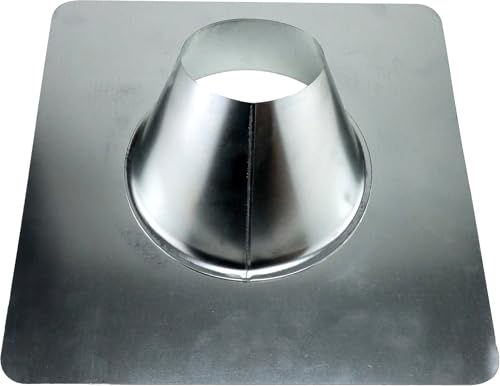
Pitch information is not equally documented across every listing. The Ultimate Pipe Flashing has the broadest stated pitch coverage, from flat roofs to 18/12-plus. The Oatey All-Flash is listed for 0-to-40-degree pitches, and the Oatey 11891 is stated to slide over the pipe for pitches up to 45 degrees. Water-Tite documents adjustment from 0/12 to 8/12, with a separate steep-pitch range to 12/12.
The remaining products may still be suitable for particular roofs, but the supplied evidence does not provide comparable pitch limits. Avoid assuming that a flexible boot automatically fits every roof slope. A base may need to follow ribs, seams, or a sloped surface, and the product’s instructions should control the final installation.
Compare materials and temperature specifications
Material can influence how a flashing is selected for the environment. The Oatey 11891 uses rigid thermoplastic, with the base and collar described as non-fading and non-cracking. The Ultimate Pipe Flashing and Water-Tite use galvanized metal bases, while the Flashers #3 combines EPDM with aluminum.
Silicone models provide the most explicit high-temperature claims in this comparison. The Aothotop two-pack lists a range from -165.2°F to 446°F, and the Aothotop #3 lists -100°F to 500°F. Flashers #3 lists continuous service from -65°F to 250°F. These are supplied listing specifications, not independent test results, so use them as comparison data and confirm suitability for the actual vent or pipe.
Review installation and sealing details
No-caulk designs appear in the Oatey 11891, Oatey No-Caulk 4-Inch Roof Pipe Flashing, and Oatey All-Flash listings. The Ultimate Pipe Flashing uses a proprietary PVC compression collar, while the Flashers #3 and Aothotop products use flexible or accordion-style cones that can be cut to fit. The Aothotop two-pack includes screws and a hex socket; the Aothotop #3 listing also states that screws are included.
Included hardware can simplify parts planning, but it does not replace checking the roofing manufacturer’s fastening and sealant requirements. The Aothotop two-pack listing notes that sealant is not included. Water-Tite specifically warns against petroleum-based mastics, sealing compounds, or paints on the collar portion. Such restrictions should be treated as important installation information.
How this comparison was scored
The scoring criteria were selected for this category: pipe-size fit, roof-pitch adaptability, material and weather suitability, and sealing and installation design. Each product received a 0.0-to-10.0 score for every criterion using only the supplied title, features, and specifications. Pipe-size fit received the greatest weight because an incorrect opening cannot be corrected by a strong material specification. No customer ratings, review totals, purchase activity, marketplace labels, or hands-on test results were used.
Final Recommendation
Flashers #3 EPDM Metal Roof Pipe Flashing ranks first overall in this specification-based comparison under the published weighted criteria.
The final choice among the best 4-inch roof flashings depends on the documented features that match your intended use.
Oatey All-Flash 3-to-4-Inch Galvanized Roof Flashing is the highest-scoring returned product and the first overall specification-based choice. It combines a useful 3-to-4-inch range with a galvanized base, a documented 0-to-40-degree pitch range, Type B approval, 180°F continuous heat rating, and a self-sealing collar.
For a fixed 4-inch opening, Oatey 11891 is a simpler choice when the roof is not hot-mopped or built-up. For steep-pitch coverage, The Ultimate Pipe Flashing has the clearest stated range. Metal-roof projects should focus on Flashers #3 or one of the Aothotop silicone boots, while Water-Tite is a strong option when galvanized steel and pitch adjustment are priorities. These are the top 4-inch roof flashings in this specification-based set, but the correct choice still depends on pipe outside diameter, roof surface, pitch, and installation requirements.
Frequently Asked Questions
What should I measure before choosing the best 4-inch roof flashings?
Measure the pipe outside diameter rather than relying only on a nominal label. Compare that measurement with the product’s stated opening or range. The Flashers #3, Oatey Master Flash, and Aothotop products list broad ranges, while the Oatey 11891 and Oatey No-Caulk 4-Inch Roof Pipe Flashing are more directly associated with a 4-inch opening.
The supplied listings specifically position the Aothotop #3, Aothotop two-pack, and Flashers #3 for metal-roof applications. Their flexible silicone or EPDM cones and metal bases may help accommodate roof profiles, but the installation instructions and roof-panel requirements should be checked before purchase.
Which selected flashing has the widest stated pitch coverage?
The Ultimate Pipe Flashing has the broadest stated pitch coverage, from flat roofs to 18/12-plus. Oatey 11891 is listed for pitches up to 45 degrees, while Oatey All-Flash covers 0-to-40-degree pitches. Water-Tite provides separate common- and steep-pitch ranges in its listing.
Does no-caulk mean no installation sealant or fasteners are needed?
Not necessarily. No-caulk describes the collar or sealing approach in the supplied Oatey listings, but the complete roof installation may still require appropriate fastening and roofing-compatible methods. Always follow the product instructions and the requirements of the roof covering.
Can a 4-inch roof flashing be used on a pipe larger than 4 inches?
Only when the product explicitly lists that larger size. The Oatey Master Flash reaches 5-1/4 inches, Flashers #3 reaches 5 inches, and the Aothotop two-pack reaches 5-3/4 inches. A fixed 4-inch opening should not be assumed to fit a larger pipe.