Buying Guide
Choosing among the best active subwoofers starts with the system around the subwoofer. An active model has its own built-in amplifier, but the rest of the design still determines how easily it will connect, where it can sit, and how well its stated capabilities match the room or venue. The products above cover home theater, stereo, studio monitoring, and PA applications, so comparing the use case is more useful than comparing driver diameter alone.
Match the subwoofer to the system
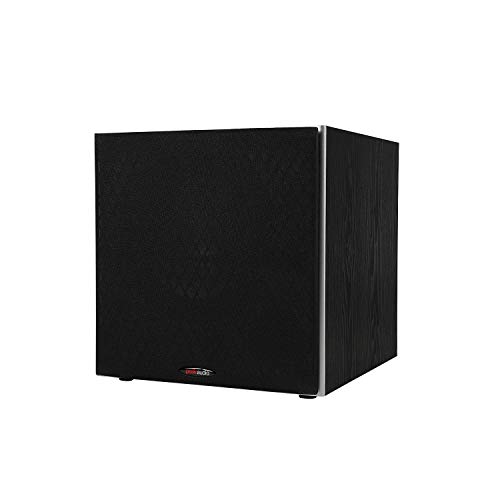
Home theater models such as the Klipsch Reference R-101SW, Klipsch R-120SW, Klipsch R-80SWi, Polk Audio PSW10, and Fluance DB10W are designed around receiver or home-audio integration. The R-101SW documents line/LFE inputs, while the PSW10 lists both line-level inputs and speaker-level outputs. That distinction matters if the existing receiver has a dedicated subwoofer output or if the system uses a more conventional stereo amplifier.
Studio and multimedia systems have different connection priorities. The PreSonus Eris Sub 8BT lists balanced 1/4-inch TRS inputs, RCA inputs, a front 1/8-inch aux input, Bluetooth 5.0, and a front headphone output. Those features are unusually specific for nearfield monitoring and make it easier to place the subwoofer into a mixed professional and consumer setup. The Audioengine S6 is a simpler compact home-audio design and documents compatibility with the Audioengine W3 wireless adapter.
PA models should be treated as a separate design type. The Alto TX12S and Behringer EUROLIVE B1200D-PRO document features for powered speakers, filtered outputs, and live-sound operation. The Alto adds selectable low-pass filters, DSP-based EQ, side handles, and a pole socket. The Behringer lists a built-in crossover, high-pass filtered outputs, and thermal and clip-limit protection. These are useful when the subwoofer is part of a portable or installed PA chain, but they are not the same connection priorities as a living-room receiver.
A larger driver is not automatically the right choice, but it usually changes the cabinet and system requirements. The selected group includes 6-inch, 6.5-inch, 8-inch, 10-inch, 12-inch, and PA-oriented 15-inch candidates from the wider pool. The Klipsch R-120SW documents a 12-inch woofer and a 29–120Hz ±3dB range, giving it the clearest low-frequency specification among the selected home-theater products. The PreSonus Eris Sub 8BT documents an 8-inch woofer and a 30Hz low end, while the Polk Audio PSW10 lists a 40–160Hz response.
Power figures also need context. The Rockville Rock Shaker 10 lists 300W RMS and 600W peak output. The Alto TX12S lists a 900W amplifier, and the Behringer is identified as a 500W active PA subwoofer in its title. By contrast, the PreSonus lists 100W and the Polk lists a 50W RMS amplifier. These figures describe different product classes and should be read alongside driver size, enclosure type, and intended application rather than used as a standalone performance guarantee.
Look for crossover and phase adjustment
Crossover controls help determine where the subwoofer takes over from the main speakers. The PreSonus Eris Sub 8BT documents both highpass and lowpass filter controls, and the Rockville Rock Shaker 10 lists adjustable crossover and phase controls. The Klipsch R-101SW, Klipsch R-80SWi, and Polk Audio PSW10 also document low-pass or crossover adjustment and phase-related controls.
These controls are particularly useful when the main speakers, room, and listening position differ from the original product assumptions. The supplied evidence does not establish a universal setting, so treat the adjustment range as an integration tool rather than a promise of a particular result. PA users should also note the Alto TX12S filter choices and the Behringer B1200D-PRO high-cut and high-pass functions.
Check cabinet style and placement
Cabinet construction affects where a subwoofer can reasonably go. The Klipsch R-120SW uses a rear-firing port, so its placement should account for clearance behind the cabinet. The Klipsch R-101SW and Audioengine S6 use front-firing designs, while the Klipsch R-80SWi documents a down-firing driver. The Fluance DB10W combines an engineered MDF cabinet with a tuned bass port, and the Rockville Rock Shaker 10 uses an MDF enclosure with a detachable grille.
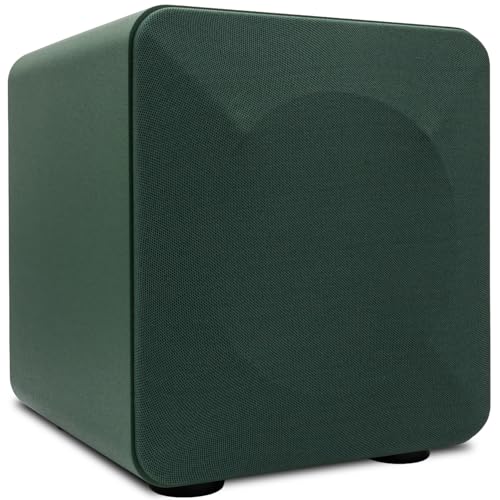
Dimensions are equally important. The Audioengine S6 lists dimensions of roughly 9.1 inches on each side, making it the most space-conscious selected home-audio model. The PreSonus Eris Sub 8BT is also compact at listed dimensions of 11.7 by 9.8 by 12.7 inches. Larger choices such as the R-120SW, Alto TX12S, and Behringer B1200D-PRO require more room and may be better suited to dedicated theater spaces or PA setups.
Understand the ranking method
This is a specification-based comparison, not a hands-on test and not a summary of customer opinions. The ranking uses six category-specific criteria: documented low-frequency extension, amplifier output, integration controls, connectivity, enclosure and driver design, and placement or system fit. Each selected product reached a weighted editorial score of at least 7.0 using only the supplied listing evidence. Missing specifications were not treated as proof of performance, and no unlisted measurements were added.
Final Recommendation
Rockville Rock Shaker 10 ranks first overall in this specification-based comparison under the published weighted criteria.
The final choice among the best active subwoofers depends on the documented features that match your intended use.
Rockville Rock Shaker 10 is the highest-scoring returned product and the first overall specification-based choice. Its 10-inch woofer, 300W RMS Class-D amplifier, adjustable crossover and phase controls, MDF enclosure, and RCA plus speaker-level connections create the most balanced documented feature set in this comparison.
For a home theater, the Klipsch Reference R-101SW offers a strong front-firing alternative with line/LFE inputs and phase control. The Klipsch R-120SW is the more driver-focused choice when its 12-inch bass-reflex design and stated 29Hz lower range suit the room. Polk Audio PSW10 remains a practical integration-oriented option because its inputs, outputs, variable crossover, and phase toggle are clearly documented.
The PreSonus Eris Sub 8BT is the most versatile studio-oriented selection, especially when balanced connections, Bluetooth, aux, and headphone connections are useful. Audioengine S6 is the compact option. For live sound, the Alto TX12S and Behringer EUROLIVE B1200D-PRO are the top active subwoofers to examine because their evidence centers on PA filtering, outputs, and protection. Fluance DB10W rounds out the home-theater group with a long-throw driver, tuned port, MDF cabinet, and signal-detecting auto power-on.
Quick selection checklist
- Choose a home-theater model if your system uses an AV receiver, LFE connection, or conventional home-audio inputs.
- Choose a studio model when balanced connections, Bluetooth, headphone monitoring, or room-tuning controls matter.
- Choose a PA model when you need filtered outputs, DSP or high-cut control, portable handling, or protection features.
- Compare cabinet dimensions and port or driver direction with the available placement area.
- Give priority to documented crossover, phase, and input options when the subwoofer must integrate with existing speakers.
Frequently Asked Questions
What should I check before choosing one of the best active subwoofers?
First identify the signal connection available on the receiver, amplifier, monitor controller, or powered speaker. Then compare the documented driver size, amplifier information, frequency range where available, crossover controls, phase adjustment, and cabinet dimensions. A model with more output is not automatically a better match if its connections or placement requirements do not fit the system.
Are home-theater and PA active subwoofers interchangeable?
They are both active subwoofers, but their documented features target different systems. Home-theater models such as the Klipsch Reference R-101SW and Polk Audio PSW10 emphasize line, LFE, or speaker-level integration. The Alto TX12S and Behringer EUROLIVE B1200D-PRO emphasize PA filtering, outputs, protection, and live-sound connections. Match the subwoofer to the signal chain and speaker type rather than assuming the categories are interchangeable.
Is a larger driver always better?
No. The selected products show why driver size should be considered with amplifier output, enclosure design, frequency information, and room or venue requirements. The Audioengine S6 uses a 6-inch driver in a compact cabinet, while the Klipsch R-120SW uses a 12-inch woofer and bass-reflex enclosure. The best fit depends on the available space and the system’s integration needs.
When are crossover and phase controls useful?
They are useful when the subwoofer must blend with main speakers whose size, position, or response differs from the subwoofer’s intended setup. Models including the Rockville Rock Shaker 10, PreSonus Eris Sub 8BT, Klipsch Reference R-101SW, and Polk Audio PSW10 document these types of controls. Use them to coordinate the transition between the main speakers and subwoofer, following the equipment manuals for the specific system.
Which selected model is most suitable for a compact room?
Audioengine S6 has the smallest listed footprint among the selected home-audio models, with dimensions of about 9.1 inches on each side. PreSonus Eris Sub 8BT is another compact option, with listed dimensions of 11.7 by 9.8 by 12.7 inches. The final choice should also account for connection type, driver size, and whether the system needs crossover, phase, or wireless features.