Buying Guide
Choosing among the best 600-watt car mono amplifiers starts with the relationship between the amplifier’s documented output and the subwoofer’s impedance. A product described as 600W maximum is not the same as one listing 600W RMS. RMS is the more useful comparison point for continuous system planning, but it must still be read alongside the load: several models reach 600W at 1 ohm, while Alpine lists 600W RMS at 2 ohms. Kenwood and JVC list 600W maximum output but provide lower RMS figures in the supplied evidence.
Match RMS output to the subwoofer
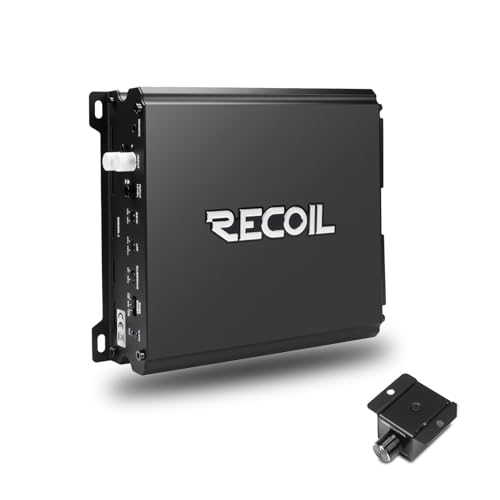
First, check the subwoofer’s recommended power range and final impedance. Jensen states 600W RMS at 1 ohm, 400W at 2 ohms, and 240W at 4 ohms. Recoil gives a similar load-dependent pattern, with 600W RMS at 1 ohm, 385W at 2 ohms, and 235W at 4 ohms. NVX states 600W RMS at 1 ohm. These figures show why a nominal “600-watt” label alone is not enough.
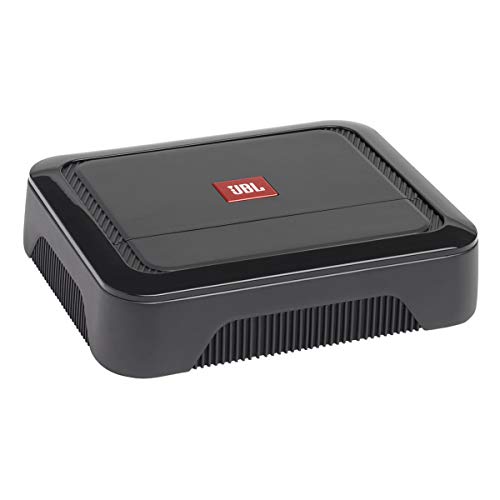
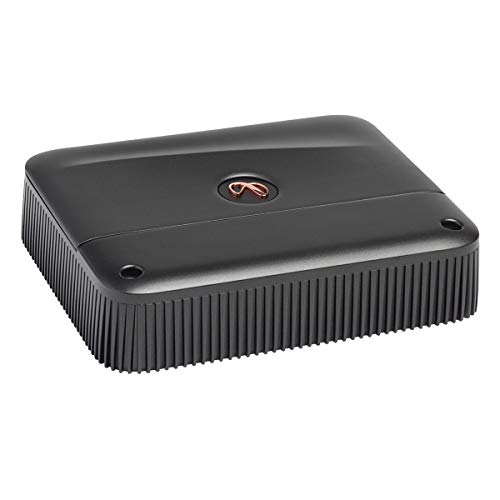
Rockville, Memphis, JBL, and Infinity are also positioned as 600-watt mono amplifiers, but the supplied listing details vary. Alpine is the clearest fit for a 600W RMS target at 2 ohms. If your subwoofer is wired to 2 or 4 ohms, do not assume that an amplifier’s 1-ohm rating will apply unchanged. Confirm the final wiring load and use the manufacturer’s stated figure for that impedance.
Compact Class D construction is common across this category. NVX describes its VADM1v2 as micro-sized, while Recoil lists a chassis less than 2 inches high. Jensen, Kenwood, and JVC also provide compact dimensions. These formats can help with under-seat or concealed mounting, but the available depth, width, wiring clearance, and ventilation still need to be measured before installation.
Kenwood and JVC document sealed or protected designs for marine, outdoor, UTV, motorcycle, and motorsport use. Kenwood lists IP67/IP66 protection, while JVC lists IPX6, IPX7, and IP6X certifications along with corrosion and vibration-related construction details. Those specifications are relevant when the amplifier may encounter spray, dust, salt, or vibration. For a typical dry passenger cabin, standard compact construction may be sufficient.
High-level input is useful when retaining a factory head unit without RCA preamp outputs. Kenwood lists speaker-level input, and JBL lists both high- and low-level input. NVX also lists high-level input, although its description says an adapter is required. Jensen identifies flexible input options but does not provide the exact input types in the supplied evidence. Verify the input arrangement before purchasing if the amplifier must connect directly to factory wiring.
For tuning, look for a variable low-pass filter and, when appropriate, a subsonic filter. Rockville specifies a 50–200Hz low-pass range and a 10–50Hz subsonic range. NVX lists 50–250Hz low-pass and 10–50Hz subsonic control. Recoil identifies gain, low-pass, subsonic, and bass-EQ adjustments. Memphis lists a variable crossover, selectable bass boost, and subsonic filter. These controls can help align the amplifier with the enclosure and the rest of the system, but the correct settings depend on the subwoofer and enclosure design.
Consider remote bass control
A wired remote level control is included with Kenwood, NVX, Rockville, Memphis, JBL, Infinity, and Recoil. This can make small bass-level adjustments from the driver’s seat more convenient than reaching the amplifier. Rockville’s remote additionally includes a clip indicator, and the Sundown bundle lists a remote with clipping indication. A remote does not replace correct gain setup; it is an adjustment interface rather than a substitute for system calibration.
Check protection and power requirements
Protection features are valuable specification points, especially in compact, high-current installations. NVX lists thermal, overload, short, and DC-offset protection. Recoil lists four-way protection, while Rockville identifies IC-controlled protection. Jensen describes Class D efficiency but provides fewer specific protection details in the supplied evidence. The marine-oriented Kenwood and JVC models emphasize environmental resistance rather than a long list of electronic protection modes.
The amplifier’s power rating also affects the vehicle’s electrical planning. The supplied listings do not provide a complete installation prescription for every model, so select the fuse, wire gauge, grounding method, and battery or alternator support according to the manufacturer’s installation instructions and the vehicle’s system. The Sundown bundle includes a 4-gauge wiring kit, but a bundled kit should still be checked against the final installation requirements.
Final Recommendation
NVX VADM1v2 Micro Class D Monoblock ranks first overall in this specification-based comparison under the published weighted criteria.
Alpine S2-A60M S-Series Mono Amplifier is the first overall specification-based choice among these best 600-watt car mono amplifiers because its listing directly documents 600W RMS at 2 ohms and a variable 50–400Hz low-pass crossover. It is the clearest match for buyers comparing a 2-ohm, 600W RMS target.
For a compact amplifier with broad integration and protection details, NVX VADM1v2 is a strong alternative. Rockville RD600.1 suits buyers who want extensive filter adjustment and a clipping-indicating remote. Jensen JA1CH is useful when a compact chassis and multi-impedance output table are important. Recoil DI600.1 provides similarly clear RMS figures in a small format.
Kenwood KAC-M5001 and JVC KS-DR2001D are the specialized choices for exposed or vibration-prone installations, though their supplied RMS figures are lower than 600W. JBL Club A600 and Infinity Reference 6001 are straightforward conventional options with remote controls and core tuning functions. Memphis SRX600.1V rounds out the top 600-watt car mono amplifiers with a 1-ohm rating, remote control, and aluminum heatsink.
Frequently Asked Questions
What should I verify before buying the best 600-watt car mono amplifiers?
Verify whether the 600-watt figure is maximum or RMS, then check the impedance at which that output is specified. Also confirm input type, enclosure compatibility, available mounting space, ventilation, and the required vehicle wiring. A 600W rating at 1 ohm may not equal 600W at 2 or 4 ohms.
Is a Class D mono amplifier suitable for a car subwoofer?
The selected products commonly use Class D designs and are described as mono or monoblock subwoofer amplifiers. Class D is a documented design type in this group, but suitability still depends on the amplifier’s RMS output, impedance range, wiring, enclosure, and the subwoofer’s requirements.
You may need one if the vehicle retains a factory head unit without RCA outputs. JBL lists both high- and low-level inputs, Kenwood lists speaker-level input, and NVX lists high-level input with an adapter requirement. If your head unit already supplies RCA outputs, low-level connection may be the simpler route.
Are marine-rated amplifiers necessary for ordinary cars?
Not usually. Kenwood and JVC document water, dust, corrosion, or vibration protection for harsher environments. Those features can be useful in boats, UTVs, motorcycles, or exposed mounting locations, but a standard dry cabin may not require that environmental specification.
Does a remote bass knob replace amplifier setup?
No. A wired remote provides convenient level adjustment, and some listed remotes include clipping indication, but the amplifier’s gain and crossover should still be configured for the subwoofer, enclosure, head unit, and vehicle system. Follow the installation and setup guidance supplied with the selected amplifier.