Buying Guide
The best crossover car mono amplifiers are not interchangeable simply because each has one channel. The listings in this comparison divide into two practical groups: full-range monoblocks that can feed subwoofers and other speaker types, and subwoofer-focused amplifiers that concentrate their controls on low-frequency systems. Start by deciding which design fits your signal chain and speaker plan, then compare output conditions, filters, inputs, physical dimensions, and electrical requirements.
Match the amplifier type to the speaker system
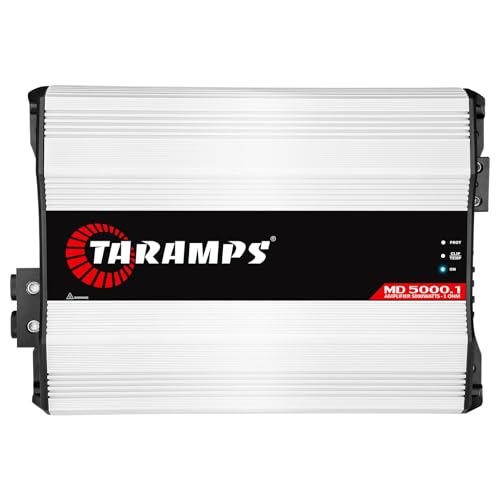
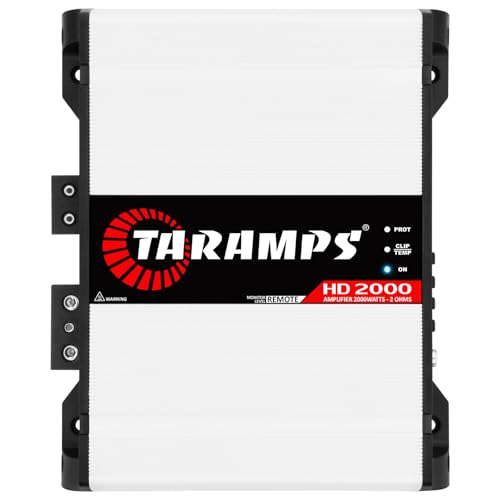
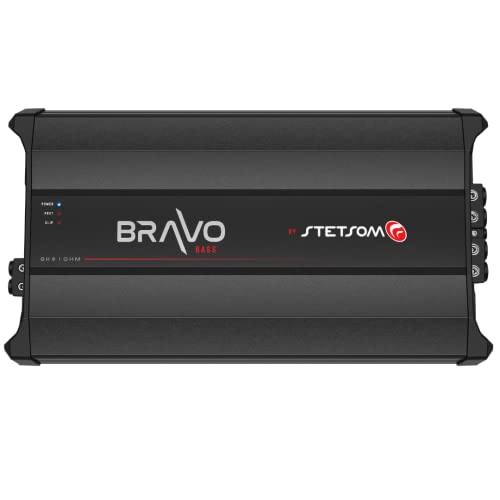
A full-range mono amplifier offers more flexibility when the same channel may serve subwoofers, mid-bass, mids, or other drivers. The Taramps MD 5000.1 documents a full-range response and both high-pass and low-pass crossover controls. The Taramps HD 3000 and HD 2000 likewise describe full-range use, with the HD 2000 listing both RCA and high-level inputs. The Stetsom Bravo Attack 3000 also describes full-range operation and provides broad filter ranges.
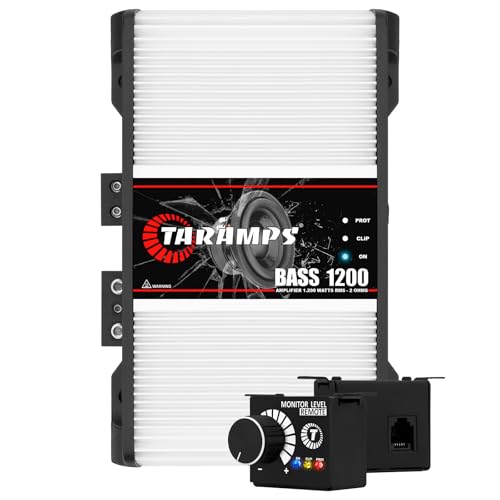
A subwoofer-focused model can be the more direct choice when the amplifier will only drive bass speakers. The Taramps BASS 1200 lists an 8Hz–250Hz response and variable low-pass control, while the Alpine S2-A60M lists a 50Hz–400Hz variable LPF. The Stinger Audio MT20001, Rockville dB14, Kicker CX1200.1, and Stetsom Bravo BASS 8000 also document low-pass or subsonic control intended for bass-system setup.
Check RMS output under the correct impedance
Do not compare headline wattage without checking the stated load and voltage. The Taramps HD 3000 and HD 2000 list their RMS output across 1-, 2-, and 4-ohm operation, while the Taramps BASS 1200 also states 1, 2, or 4 ohms. Those options can simplify matching, but the speakers and wiring still need to present a compatible final impedance.
The Stetsom Bravo BASS 8000 illustrates why electrical planning matters. Its listing states 8,200 watts RMS at 1 ohm and 14.4 volts, along with a 400A fuse and 00-gauge power connections. That is a specialized high-output installation, not a casual replacement for a smaller factory system. The Rockville dB14, by contrast, states 1,000 watts Dyno-Certified RMS at 2 ohms. Use the documented operating condition as the comparison point rather than relying on maximum or peak figures.
The Alpine S2-A60M is a lower-output alternative, listing 600 watts RMS at 2 ohms. The Kicker CX1200.1 and Taramps BASS 1200 sit closer to the middle of this group in their stated application profiles. The right choice depends on the subwoofer’s impedance and power requirements, not on the largest number in a product title.
Understand crossover controls
A low-pass filter keeps higher frequencies away from a subwoofer, while a high-pass filter can restrict lower frequencies in systems using full-range drivers. The Taramps MD 5000.1 and Stetsom Bravo Attack 3000 are especially versatile because their listings document both filter types. The HD 2000 also specifies variable HPF and LPF controls, with HPF from 10Hz to 80Hz and LPF from 80Hz upward.
For bass-only systems, a subsonic filter can be useful for managing very low frequencies below the intended enclosure range. The Rockville dB14 lists a 15Hz–55Hz subsonic filter, the Kicker CX1200.1 lists a 24dB subsonic filter, and the Stetsom Bravo BASS 8000 lists a 5Hz–40Hz range.
Bass boost is another form of adjustment, but it should be treated as a tuning control rather than a substitute for correct gain setting. The Stinger Audio MT20001 lists bass boost from 0dB to 12dB, while the Stetsom Bravo Attack 3000 documents multiple boost modes. The Taramps BASS 1200 also lists switchable bass boost and bass EQ. These features may be useful, but the supplied listings do not establish how any amplifier sounds in a particular vehicle.
RCA inputs are common in aftermarket systems, but a factory radio may require speaker-level input support. The Kicker CX1200.1 accepts speaker-level signals, and both the Taramps HD 2000 and Taramps BASS 1200 list RCA and high-level inputs. The BOSS model was not selected, so it should not be used as an example here.
The Stinger Audio MT20001 lists one set of RCA line-level inputs and is aimed at aftermarket sound systems. That can be sufficient for a straightforward subwoofer setup, but it provides less input information than the models that explicitly document high-level support. Confirm the head unit’s output type, required adapters, and remote-turn-on arrangement before ordering.
Plan for space, cooling, and wiring
Dimensions can change the practical ranking. The Taramps BASS 1200 is listed at 9.41 by 6.18 by 2.87 inches, and the Alpine S2-A60M is listed at 11 by 10 by 5 inches. The Stinger Audio MT20001 lists a 6.10-by-12.16-by-2.09-inch design. By comparison, the Kicker CX1200.1 and Stetsom Bravo BASS 8000 are each more than 15 inches long in the supplied specifications.
Allow room for connections and ventilation rather than treating the listed chassis size as the complete installation envelope. Several models identify Class D or digital designs, but that label alone does not determine how much clearance a particular installation needs. The Stetsom Bravo Attack 3000 and Bravo BASS 8000 list smart coolers, and the Taramps MD 5000.1 lists smart cooling. Those are documented design features, not guarantees of performance in every mounting position.
Power connections should also be sized to the amplifier’s stated demand. The Taramps HD 3000 lists 4 AWG power cable and a 150A fuse, the HD 2000 lists a 115A fuse recommendation, and the Taramps BASS 1200 lists 5 AWG power cable with a 65A fuse recommendation. Use the supplied requirements as a starting point and follow the installation instructions for fuse placement and wiring.
How this comparison was ranked
The editorial ranking uses five category-specific criteria: power and load capability, crossover and tuning controls, input and system flexibility, installation footprint, and protection and monitoring. The weighted scores reflect only the supplied public listing evidence. No hands-on listening, laboratory measurement, customer sentiment, review data, popularity information, or marketplace badges was used in the published scoring. A model with a lower output can still rank well when its control layout, input support, and physical design are clearly documented.
Final Recommendation
Taramps MD 5000.1 ranks first overall in this specification-based comparison under the published weighted criteria.
The final choice among the best crossover car mono amplifiers depends on the documented features that match your intended use.
Taramps MD 5000.1 is the highest-scoring returned product and the first overall specification-based choice. Its full-range design, 5,000-watt RMS listing, variable high- and low-pass controls, 1-ohm operation, smart cooling, and documented protection package give it the broadest stated capability for demanding systems. The Taramps HD 3000 is a strong alternative when 1-, 2-, or 4-ohm flexibility and full-range use matter, while the Stetsom Bravo Attack 3000 is attractive for buyers who want particularly detailed crossover and bass-boost controls.
Among the top crossover car mono amplifiers for subwoofer-only projects, the Taramps BASS 1200 offers a useful balance of output, input flexibility, and compact dimensions. The Kicker CX1200.1 is a practical fit for systems that may use speaker-level input, and the Rockville dB14 adds phase control and a documented subsonic range. For very large 1-ohm bass installations, the Stetsom Bravo BASS 8000 has the most specification-aligned stated output, but its length, fuse requirement, and electrical demands should be treated as central selection factors.
The Alpine S2-A60M is the most restrained choice in this group, with a clearly specified 600-watt RMS profile and variable LPF. It may suit a smaller subwoofer system better than a high-output model. Before purchase, verify the final speaker impedance, RMS target, source-unit connection, fuse plan, and available mounting space. Those checks are more useful than choosing by wattage alone.
Frequently Asked Questions
What should I compare first in the best crossover car mono amplifiers?
Compare the amplifier’s RMS output at the impedance your speakers will present. Then check whether the listing documents the crossover type and range you need, such as LPF for a subwoofer or both HPF and LPF for a full-range setup. Input compatibility and physical dimensions should follow closely because an amplifier that cannot connect to the source or fit the planned location will not be a practical match.
Are full-range mono amplifiers different from subwoofer mono amplifiers?
Yes. A full-range model is intended to cover a wider frequency range and may support subwoofers, mid-bass, mids, or other drivers. The Taramps HD 2000 and Taramps MD 5000.1 are documented full-range examples. A subwoofer-focused model, such as the Taramps BASS 1200 or Alpine S2-A60M, concentrates its stated design and filtering on low-frequency applications. Always follow the manufacturer’s connection and crossover guidance.
You may need them if the factory radio does not provide RCA outputs. The Kicker CX1200.1, Taramps HD 2000, and Taramps BASS 1200 explicitly list high-level input support. Models that only document RCA inputs may require an adapter or a different signal path. Confirm the head unit’s outputs and the amplifier’s installation instructions before buying.
Does a bigger wattage rating always mean a better amplifier?
No. Output must be matched to the speakers, impedance, electrical system, and enclosure. The Stetsom Bravo BASS 8000 has an extremely high listed output but also specifies a 400A fuse and large power connections. A smaller model such as the Alpine S2-A60M may be more suitable for a lower-output system. Treat wattage as one specification among several rather than as a complete performance prediction.
Why are crossover and subsonic controls useful?
A low-pass filter helps direct low-frequency content to a subwoofer, while a high-pass filter can restrict low frequencies for other speakers. A subsonic filter addresses very low frequencies below a selected point. The Rockville dB14, Kicker CX1200.1, and Stetsom Bravo BASS 8000 document subsonic-related controls. Their presence gives an installer more adjustment options, but the correct settings depend on the speakers, enclosure, and system design.