Buying Guide
The best portable shortwave radios with antennas differ mainly in how they handle frequency coverage, tuning, antenna connections, and power. A small radio can be convenient for travel, while a larger tabletop model may provide more direct controls and connection options. The comparison above uses listing specifications and feature descriptions only; it is not a hands-on performance test.
Start with the shortwave range
Shortwave coverage is not identical across these radios. The C. Crane CC Skywave SSB 2 lists 1711–29999 kHz, while the Raddy RF760 lists 2–30 MHz. The XHDATA D808 covers shortwave alongside LW and airband, but its supplied evidence does not state a precise shortwave range. The ZHIWHIS ZWS-878 documents 3.2–21.95 MHz, and the Raddy RF750 documents 5.7–17.9 MHz.
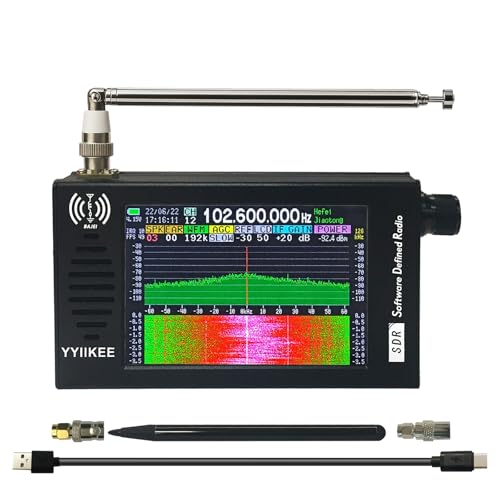
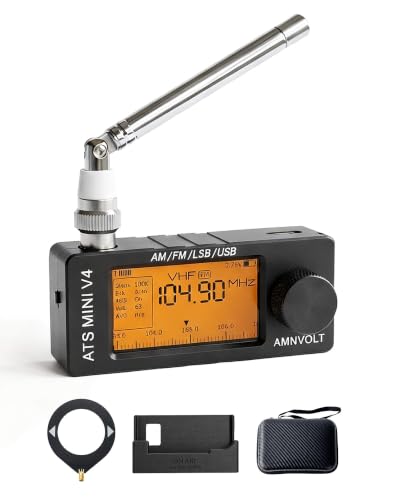
A wider stated range can matter when you want to explore more shortwave segments. However, frequency coverage is only one part of a receiver’s design. If your listening includes amateur signals, look for explicit SSB support. The CC Skywave SSB 2, Raddy RF760, XHDATA D808, and Aurichi ATS MINI V4 all document sideband reception. The SDR receiver also lists LSB, USB, and CW modes.
Compare tuning and signal controls
Digital tuning features vary significantly. The QODOSEN DX-286 offers direct frequency input, multiple tuning modes, SNR/RSSI displays, an attenuator, squelch, tone switching, and 1000 cross-band memories. This makes it suited to listeners who want detailed control over stored stations and signal handling.
The C. Crane CC Skywave SSB 2 provides direct entry, auto scan, fast or fine tuning, multiple bandwidths, and 400 memories. The Raddy RF760 uses automatic or manual search, up to 700 stored stations, adjustable SSB bandwidth, and a fine-tuning knob. The Raddy RF320 adds app-based frequency entry, recording, channel naming, and 955-station storage.
A control layout with physical knobs may still be preferable if you do not want to rely on menus or a phone app.
Examine the antenna setup
An antenna jack or supplied wire can be more useful than a generic claim about reception. The CC Skywave SSB 2 includes a shortwave antenna adapter and a 23-foot reel antenna. The RF760 and RF750 include wire antennas measuring about 9.7 and 9.85 feet, respectively. The ZHIWHIS ZWS-878 also includes a 9.85-foot wire antenna.
Some radios provide other antenna arrangements. The Aurichi ATS MINI V4 includes loop and telescopic antennas, while the Eton Elite Field has external AM, FM, and SW antenna connections plus a local/DX switch. The QODOSEN DX-286 documents an antenna switch, attenuator, low-noise amplifier, and external-antenna support.
Check the connection type and the physical space available before choosing a model with a long wire. A wire antenna may be convenient indoors or at a campsite, but it still needs a suitable place to extend. A built-in telescopic antenna is easier to carry, though it may offer fewer positioning options.
Match power to your routine
Battery design affects how portable a radio is in practice. The C. Crane CC Skywave SSB 2 uses two AA batteries. The QODOSEN DX-286 includes a rechargeable 18650 battery. The XHDATA D808 uses a replaceable battery and USB Type-C input. The ZHIWHIS ZWS-878 has a built-in 900mAh rechargeable battery, and the Raddy RF750 has a removable lithium battery with USB-C charging.
If you want replaceable cells, the D808 or RF750 may fit that requirement better than a built-in design. If you want a radio that can operate without a charging cable, check the documented battery type rather than assuming every rechargeable model supports the same backup method. The Eton Elite Field is more appropriate for a fixed listening area because its listed weight is 4.11 pounds.
Consider display, audio, and extra functions
A large display can help with frequency and preset information. The SDR receiver uses a 4.3-inch touchscreen and adds spectrum and waterfall views. The Eton Elite Field uses a rich LCD and includes treble, bass, RF gain, and bandwidth controls. The C. Crane and XHDATA models include illuminated displays, clocks, alarms, and headphone connections.
Some selections add functions beyond radio reception. The RF320 includes Bluetooth, TF-card playback, a flashlight, and SOS functions. The RF750 provides Bluetooth and SD-card playback. The ZHIWHIS ZWS-878 focuses on weather alerts, presets, a lanyard, and a backlit display. These features may be useful, but they should not replace checking the core shortwave range and antenna design.
Final recommendation
C. Crane CC Skywave SSB 2 ranks first overall in this specification-based comparison under the published weighted criteria.
The C. Crane CC Skywave SSB 2 is the first overall specification-based choice among these best portable shortwave radios with antennas. It documents a balanced combination of broad shortwave coverage, SSB, aviation and NOAA reception, selectable bandwidths, 400 memories, a shortwave antenna jack, and a supplied reel antenna in a 6-ounce body.
The QODOSEN DX-286 is the better fit for detailed signal management and extensive memories, while the portable SDR receiver is the distinct choice for touchscreen spectrum visualization and CW support. Choose the Raddy RF760 when an included wire antenna and compact SSB design are priorities. For weather-alert features, the ZHIWHIS ZWS-878 adds a lightweight format and long wire antenna.
Among the top portable shortwave radios with antennas, the right match depends on the documented design you will actually use. Confirm the listed band range, antenna connection, battery arrangement, and control method before making a final selection.
Frequently Asked Questions
What should I look for in the best portable shortwave radios with antennas?
Check four fundamentals: stated shortwave frequency range, tuning method, antenna connection or included wire, and power design. SSB support is also important if you plan to listen to sideband transmissions. The C. Crane CC Skywave SSB 2, Raddy RF760, XHDATA D808, and QODOSEN DX-286 document combinations of these features, but their specific controls differ.
Is an external wire antenna included with every selected radio?
No. The C. Crane CC Skywave SSB 2, Raddy RF760, Raddy RF750, and ZHIWHIS ZWS-878 explicitly list wire antennas. The XHDATA D808 lists an external antenna, while the Aurichi ATS MINI V4 lists loop and telescopic antennas. The Eton Elite Field documents external antenna connections, but its supplied evidence does not state that a wire antenna is included.
Which selected radio has the most memory capacity?
The QODOSEN DX-286 lists 1000 cross-band memories, followed by the Raddy RF320 with 955 station-storage capacity. The Raddy RF760 lists up to 700 stations, the C. Crane CC Skywave SSB 2 lists 400 memories, and the ZHIWHIS ZWS-878 lists 396 presets. Storage figures describe documented capacity, not reception quality.
Which model is easiest to carry?
The C. Crane CC Skywave SSB 2 lists a 6-ounce weight, the ZHIWHIS ZWS-878 lists 0.2 pounds, and the Raddy RF760 lists about 0.46 pounds. The QODOSEN DX-286, XHDATA D808, and Aurichi ATS MINI V4 are also compact. The Eton Elite Field is a tabletop model with a listed weight of 4.11 pounds, so it is less suited to pocket or bag carry.
Do all of these radios support NOAA weather alerts?
No. NOAA or weather-alert support is explicitly documented for the C. Crane CC Skywave SSB 2, C. Crane CC Skywave 2, Raddy RF760, Raddy RF750, and ZHIWHIS ZWS-878. Other selected radios focus on shortwave, airband, SSB, SDR, or tabletop listening features, so check the individual listing when weather alerts are a requirement.