Buying Guide
Choosing among the best outdoor radio antennas starts with identifying the radio service rather than comparing antenna shape alone. FM broadcast, AM, CB, GMRS, marine, satellite, and shortwave systems use different frequency ranges and connection standards. An antenna with excellent specifications for one service may be unsuitable for another.
Match the antenna to the radio band
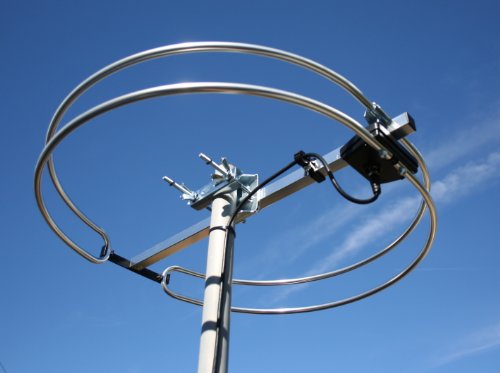
Start with the receiver or transceiver manual and confirm the supported frequency range. The Stellar Labs 30-2460 is explicitly designed for the 87.5–108 MHz FM band, while the Britta Products FM-10A is also a dedicated FM design. These are more relevant to home FM listening than a GMRS or CB base antenna.
For two-way radio, the operating band is more specific. The HYSHIKRA model covers 462–467 MHz for GMRS, and the TWAYRDIO Yagi covers the wider 400–470 MHz UHF range. The FMUSER CB100 is identified for 27 MHz CB radio. Do not treat these frequency descriptions as interchangeable: the radio, feed line, connector, and antenna should be selected as a matched system.
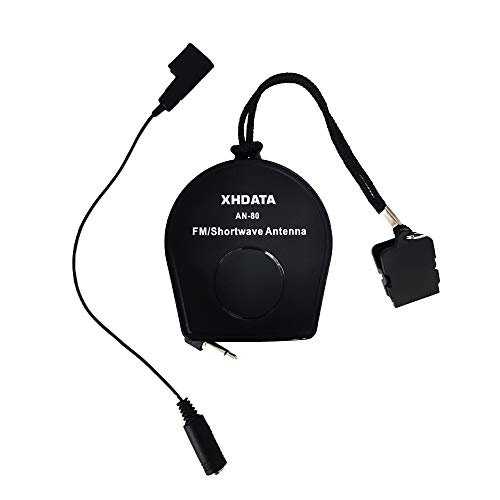
The Pixel Technologies AFHD-4 has the broadest documented broadcast-radio scope in this comparison, with listing claims for AM, FM, and HD radio reception. The XHDATA AN-80 instead targets FM and shortwave use in a portable format. For satellite radio, the Directed SSP1500 is a specialized option for compatible Sirius single-lead radios rather than a general AM/FM antenna.
Choose omnidirectional or directional reception
An omnidirectional antenna receives around its installation position without requiring the user to aim it at one known source. The Pixel Technologies AFHD-4 and Stellar Labs 30-2435 are listed as omnidirectional. That design can be convenient when stations or transmitters are located in different directions, although actual reception still depends on local terrain, building materials, interference, and antenna placement.
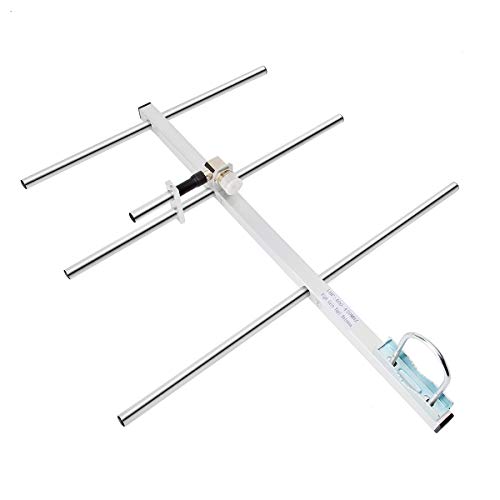
A directional antenna concentrates its design toward a preferred direction. The Stellar Labs 30-2460 is a four-element directional FM model, and the TWAYRDIO is a three-element UHF Yagi. Both are better suited to situations where the desired source or repeater direction is known. Directionality can also make installation more involved because orientation becomes part of the setup. The TWAYRDIO listing documents a front-to-back ratio above 15 dB, while the Stellar Labs FM model lists a maximum front-to-back ratio of 15 dB.
Check connectors, impedance, and power details
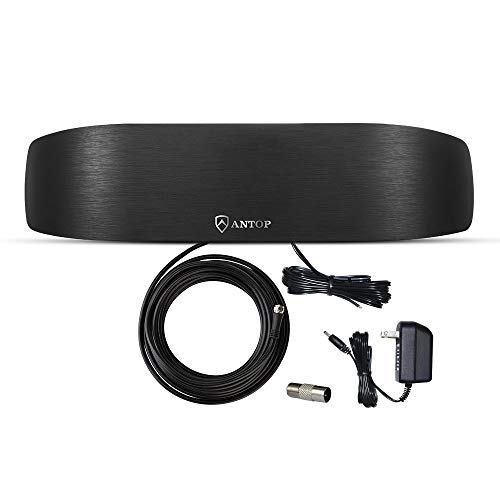
Connector compatibility should be confirmed before installation. The Britta Products FM-10A is intended for 75-ohm coax, the Stellar Labs 30-2460 lists a 75-ohm female F connector, and the Pixel Technologies AFHD-4 works with coaxial cable. These details are particularly helpful for home FM systems.
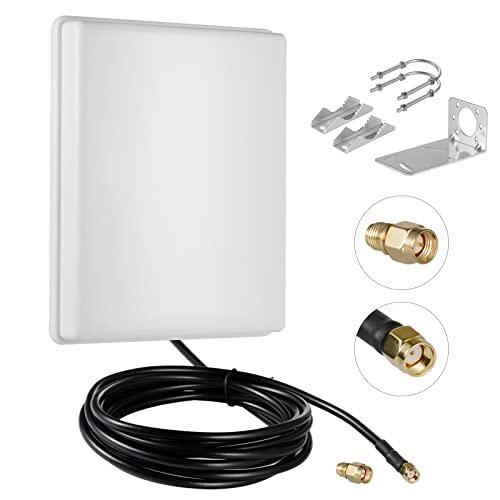
Two-way radio systems often use different standards. The HYSHIKRA model lists a UHF-female SO-239 connector, while the TWAYRDIO lists a UHF-female connector and 50-ohm impedance. The TWAYRDIO also specifies 100 watts maximum input, and the HYSHIKRA lists 200 watts maximum power. These are documented electrical limits, not a promise of a particular communication range.
Some products provide much less connection information. The Stellar Labs 30-2435, Directed SSP1500, and XHDATA AN-80 listings do not offer the same level of connector or impedance detail. That does not automatically disqualify them, but it means buyers should verify the receiver interface and any adapter or feed-line requirements independently.
Consider mounting and installation
Mounting hardware can change the practical complexity of an outdoor project. The Pixel Technologies AFHD-4 includes external wall and pipe mounting hardware. The Britta Products FM-10A includes stand-offs and attaching hardware, while the HYSHIKRA antenna includes a bracket. The TWAYRDIO listing identifies mounting hardware for 30–40 mm surfaces and a U-bracket.
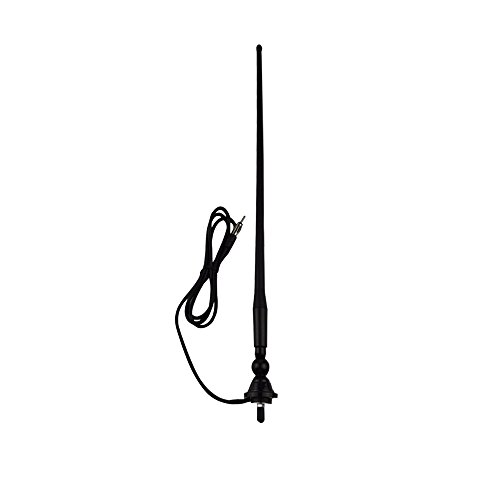
The Directed SSP1500 has four screw holes and padded feet, allowing either a secured installation or a stable placement option. The Herdio HMAT47B uses a 180-degree swivel base and supports angle mounting, which may be useful on boats, ATVs, and other mobile platforms. In contrast, the XHDATA AN-80 is designed to clip to a radio or hang from a high point, so it is better viewed as a deployable wire antenna than as a roof-mounted product.
Plan the cable route, support point, grounding, and weather exposure before choosing a model. The Britta listing specifically includes recommended grounding and safety details. For tall or extended antennas such as the FMUSER CB100, structural support and safe installation deserve particular attention.
Evaluate outdoor construction
Outdoor construction claims differ across the products. The TWAYRDIO listing describes aluminum alloy construction as waterproof, corrosion resistant, and suited to outdoor use, with a stated wind velocity rating. The HYSHIKRA uses fiberglass and includes a bracket. The FMUSER CB100 is described as weatherproof, while the Herdio model is described as waterproof and corrosion resistant for marine environments.
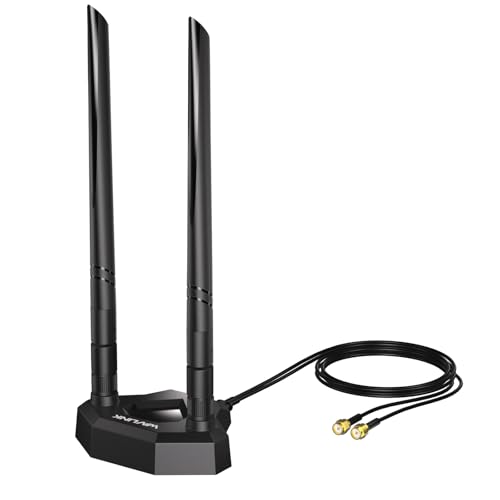
A marine antenna may be a better fit for saltwater exposure than a general-purpose FM antenna, but its radio-band compatibility still comes first. The Herdio HMAT47B is aimed at marine and vehicle applications and uses a flexible mast. The Stellar Labs FM models are more focused on broadcast reception and do not carry the same detailed marine-environment claims in the supplied evidence.
Fixed outdoor antennas can provide a more deliberate installation, while portable models trade permanence for convenience. The Pixel Technologies AFHD-4, Britta Products FM-10A, and Stellar Labs 30-2460 are sensible starting points for home FM or AM/FM projects because their installation or connection details are comparatively clear. The FMUSER CB100 and HYSHIKRA are specialized base antennas for CB and GMRS respectively.
For field use, the XHDATA AN-80 is easier to carry and deploy than a long fixed antenna. It extends to 720 cm and includes a clip, but the listing does not describe weatherproofing or permanent mounting. Buyers should select it for portability, not assume it is a substitute for an outdoor base installation.
Final recommendation
TWAYRDIO 400–470 MHz Three-Element Yagi ranks first overall in this specification-based comparison under the published weighted criteria.
Pixel Technologies AFHD-4 is the first overall specification-based choice among the best outdoor radio antennas in this comparison. Its documented AM/FM/HD scope, omnidirectional format, and wall or pipe mounting support make it the most broadly useful home-oriented option in the supplied evidence. The top outdoor radio antennas for more specific needs include the Britta Products FM-10A for a large FM loop, Stellar Labs 30-2460 for directional FM, FMUSER CB100 for 27 MHz CB, HYSHIKRA for GMRS, and TWAYRDIO for directional UHF. Confirm the radio band, connector, impedance, mounting location, and cable requirements before ordering.
Frequently Asked Questions
What should I check first when choosing the best outdoor radio antennas?
Check the radio service and frequency range first. FM broadcast antennas such as the Britta Products FM-10A and Stellar Labs 30-2460 are not substitutes for the 462–467 MHz HYSHIKRA GMRS antenna or the 27 MHz FMUSER CB100. Then confirm connector, impedance, mounting, and cable requirements.
Is an omnidirectional antenna better than a directional model?
Neither design is universally better. An omnidirectional model such as the Pixel Technologies AFHD-4 or Stellar Labs 30-2435 can receive from multiple directions without aiming. A directional model such as the Stellar Labs 30-2460 or TWAYRDIO can be more appropriate when the desired station or repeater direction is known, but placement and orientation matter more.
Which listed antenna is suited to GMRS?
The HYSHIKRA FB17UV is the clearest GMRS-specific choice because its listing identifies 462–467 MHz operation, 7.2 dBi gain, a maximum power figure, and a UHF-female SO-239 connector. The TWAYRDIO also covers the wider 400–470 MHz UHF range and is described for GMRS repeater systems, but its directional Yagi design requires aiming.
Can a portable antenna be used outdoors?
The XHDATA AN-80 is described for outdoor portability and can be clipped to a radio or suspended from a high point. It supports FM and shortwave radios, but it is not documented as a permanent weatherproof installation. Use it as a deployable field antenna and protect it from conditions not covered by the listing.
What is a good outdoor antenna for marine radio use?
The Herdio HMAT47B is the clearest marine-oriented option in this selection. Its listing describes a flexible mast, 180-degree swivel base, angle mounting, waterproof-oriented construction, and corrosion resistance for marine environments. Confirm that its connector and radio frequencies match the intended boat, ATV, UTV, or other vehicle system.