Buying Guide
Choosing among the best low-profile radio antennas starts with the radio system, not the antenna’s appearance. A compact body can be useful around garages, branches, roll cages, duty equipment, or boat hardware, but it must still cover the intended band and connect to the correct mount.
Match the operating band
Frequency compatibility is the first filter. The Uniden BCATPL259-19 is specified for 26–28 MHz CB and 10-meter radios. Marine choices such as the Eifagur 156–163 MHz antenna and TWAYRDIO TW-159V are aimed at the marine VHF band. The Browning BR2445 covers 450–465 MHz, while the HYS antenna is focused on 462–467 MHz within its stated UHF range.
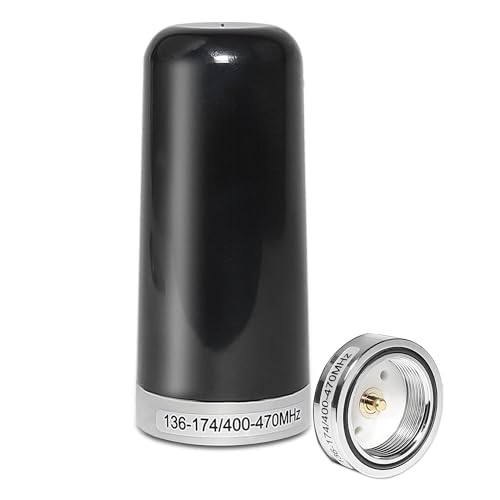
Dual-band models can serve more than one radio application when their frequency span matches the equipment. Eightwood EWUA0024 covers 136–174 MHz and 400–470 MHz, and Anina ANC-J255 lists the same broad VHF/UHF ranges. That does not mean every radio will accept either antenna: confirm the radio’s band, connector, and required mounting arrangement before installation.
Compare physical height and clearance
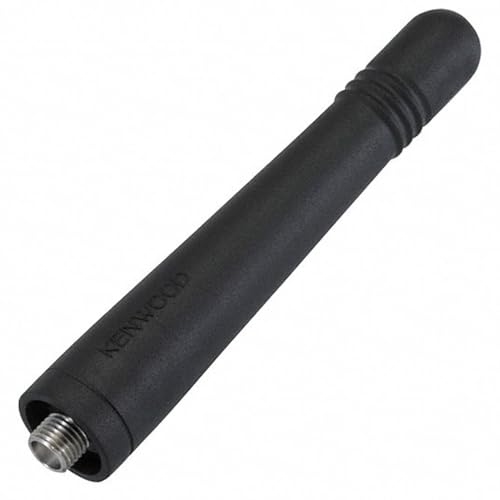
Low-profile designs solve a physical problem. The Uniden is 18 inches long, which is short for its stated CB application but taller than the 3.25-inch Browning or Rugged Radios Stealth models. HYS lists a 3.54-inch body, Anina is approximately 3.5 inches, and the Kenwood KRA-23M is 80 mm long.
Shorter does not automatically mean interchangeable. CB, marine VHF, UHF mobile, VHF mobile, and portable-radio antennas are engineered around different bands and connection systems. Use height as a clearance criterion after confirming frequency fit. For tight vehicle spaces, the Rugged Radios Stealth UHF and Stealth VHF models document compact 3.25-inch bodies and non-ground-plane use.
Check the mounting method
The mount is a major dividing line among the top low-profile radio antennas. NMO models, including the HYS, Eightwood, Browning, Rugged Radios, and Anina choices, require a compatible NMO base. The supplied evidence varies: HYS documents a trunk-lid mount and cable, while several other NMO listings describe the antenna but do not identify a supplied cable or base.
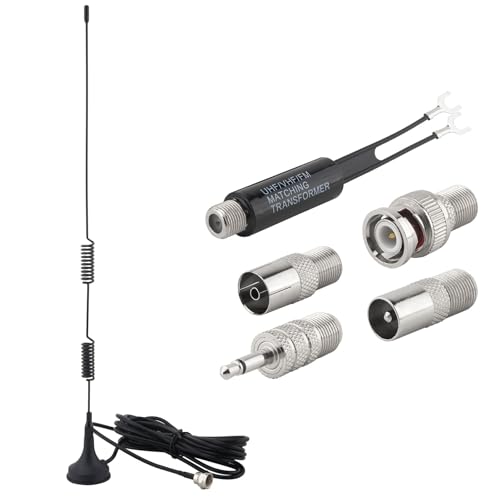
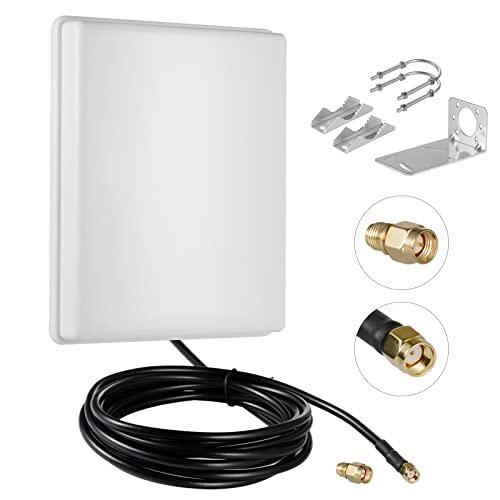
The Uniden uses a heavy-duty magnetic mount and includes a matched coaxial cable with a PL-259 connector. The Eifagur and TWAYRDIO marine antennas use stainless-steel bracket systems and PL-259 cables. The Kenwood KRA-23M instead uses a standard SMA female connector for specified Kenwood portable radios. These systems should not be treated as interchangeable.
Review cable and connector details
Cable length matters when the antenna is mounted away from the radio. Uniden lists 14.7 feet of coax, while Eifagur lists approximately 16.5 feet and TWAYRDIO includes 16.4 feet. Those details help with routing, but the radio-side connector still has to match. PL-259 is identified on the CB and marine models; SMA female is identified on the Kenwood portable antenna.
If a listing does not state that a cable or base is included, plan around the possibility that those parts must be sourced separately. This is particularly important for NMO antennas. A complete package can simplify installation, but compatibility remains the deciding factor.
Consider mounting surfaces and exposure
Mounting location changes the practical choice. Rugged Radios specifically documents non-ground-plane compatibility for plastic roofs and roll cages. HYS describes a trunk-lid installation and ABS construction, while Eifagur and TWAYRDIO specify stainless-steel marine brackets. Uniden includes a non-abrasive magnetic boot cover and describes an aerodynamic body for vehicle use.
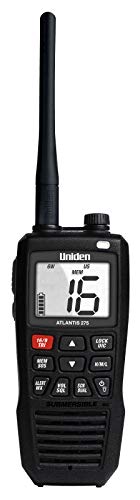
For handheld equipment, the Kenwood KRA-23M uses a short rubber-and-metal helical construction and is identified as water- and dust-resistant. That is a different design brief from a bracket-mounted marine antenna or an NMO vehicle antenna. Choose the antenna whose documented construction matches the environment and radio placement.
Use electrical specifications carefully
Gain, VSWR, impedance, and power handling are useful comparison points when supplied. HYS lists 2 dBi gain, less than 1.5 VSWR, and 50-watt maximum input. Uniden lists 1–2 dBi gain, 50-ohm impedance, 100-watt handling, and 1.5:1 maximum VSWR. Eifagur and TWAYRDIO list 2 dBi gain and 50-watt maximum input.
The figures describe the listed product specifications; they do not guarantee a particular range in every installation. Vehicle bodywork, cable routing, radio output, mounting position, and surrounding structures can all affect real-world results. Treat the documented figures as selection information rather than a promise of field performance.
Final Recommendation
Eifagur 156–163 MHz Marine Antenna ranks first overall in this specification-based comparison under the published weighted criteria.
The final choice among the best low-profile radio antennas depends on the documented features that match your intended use.
Uniden BCATPL259-19 is the highest-scoring returned product and the first overall specification-based choice for compatible CB and 10-meter vehicle radios. It combines a clearly stated band, pre-tuned design, magnetic mount, matched 14.7-foot coax, PL-259 connector, and electrical specifications in one listing.
For GMRS, the HYS 462–467 MHz antenna is the more focused fit because its frequency, NMO trunk-lid mount, cable, gain, VSWR, and power details are all documented. Eightwood EWUA0024 and Anina ANC-J255 are better suited to shoppers who need dual VHF/UHF coverage, while Browning BR2445 offers a short, pretuned UHF NMO format.
Rugged Radios Stealth UHF and Stealth VHF deserve attention where a non-ground-plane installation is required. Their 3.25-inch bodies and stated compatibility with non-metallic surfaces address a specific mounting challenge. For boats, Eifagur and TWAYRDIO provide marine-band coverage with brackets and coaxial cables. For compatible Kenwood handhelds, KRA-23M is the most specialized choice in this comparison.
These top low-profile radio antennas serve different radio systems, so the correct final choice depends on the band, connector, mounting surface, and cable arrangement documented for your equipment.
Frequently Asked Questions
What should I verify before choosing one of the best low-profile radio antennas?
Verify the radio’s operating band, connector, mount type, and required cable. Also compare the antenna’s stated frequency range with the radio system. An NMO antenna such as the Browning BR2445 is not a direct substitute for the SMA-connected Kenwood KRA-23M or a PL-259 marine antenna.
Are all short antennas suitable for GMRS?
No. The HYS antenna is specifically documented for 462–467 MHz and compatible 460–470 MHz radios. Eightwood EWUA0024 and Anina ANC-J255 also list UHF ranges that include common GMRS frequencies, but the radio, base, connector, and installation still need to match.
Which listed antennas include a cable?
The Uniden includes 14.7 feet of coax and a PL-259 connector. HYS includes approximately 13 feet of RG-58U with its trunk-lid mount. Eifagur includes approximately 16.5 feet of RG-58 with PL-259, and TWAYRDIO includes 16.4 feet of RG-58U with PL-259. The other listed products do not clearly identify a cable as included in the supplied evidence.
What does non-ground-plane compatibility mean here?
Rugged Radios Stealth UHF and Stealth VHF are documented for non-metallic surfaces such as plastic roofs or roll cages. That makes them relevant when a conventional metal vehicle roof is unavailable. The listing does not state that every mounting arrangement will perform identically, so check the required NMO base and installation location.
Are marine antennas interchangeable with mobile VHF antennas?
Not automatically. The Eifagur and TWAYRDIO antennas are documented for 156–163 MHz marine VHF systems and use bracket mounting with PL-259 cables. A mobile VHF antenna may use a different mount, frequency design, or installation method. Confirm both radio-band compatibility and the connector or bracket arrangement before substituting one type for another.