Buying Guide
The best canon professional video stabilizers in this comparison fall into two main groups: powered three-axis gimbals and mechanical handheld steadycams. A third workflow uses a gyroscope sensor to capture motion data for later processing. Start by identifying which approach fits the Canon body, lens, shooting movement, and post-production process you use.
Choose the stabilization design first
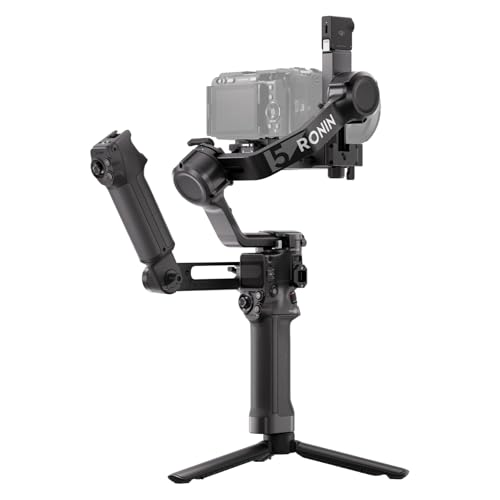
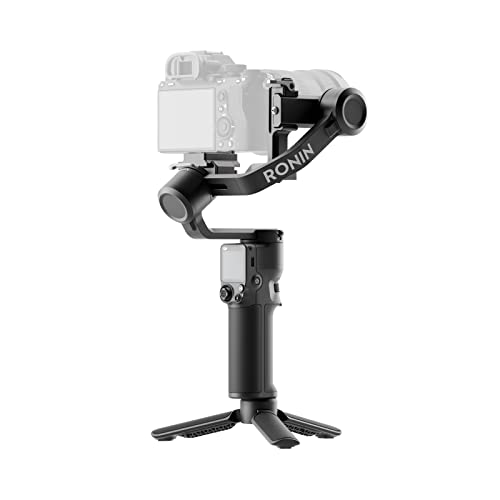
Motorized gimbals are the most feature-rich options here. The DJI RS 5 Combo, DJI RS 4, DJI RS 4 Mini Combo, DJI RS 3 Mini, ZHIYUN Weebill 3E, and FeiyuTech SCORP 2 document three-axis or gimbal-based stabilization. They add electronic controls such as follow modes, Bluetooth shutter control, tracking, screens, or automated locks.
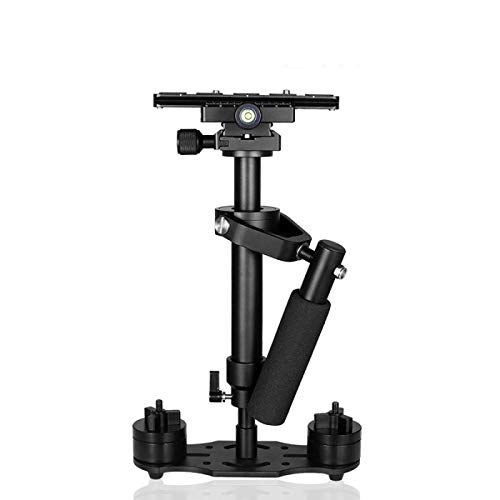
The mechanical alternatives use counterweights, bearings, joints, and manual balancing. The Wondalu S40 and VidPro SB-10 are counterweighted steadycams, while the AFUNTA Pro Handheld DSLR Stabilizer uses an adjustable balance nut and counterweight. These designs do not require the electronic setup described for powered gimbals, but the operator must balance the camera and lens physically.
The TOSICAM NiYienFX A1 is different again. Its listing describes gyro data, Gyroflow-compatible processing, and rolling-shutter correction. It suits a workflow in which stabilization is completed during editing rather than through a conventional three-axis handheld gimbal.
Match payload to the complete Canon setup
Use the combined weight of the Canon camera, lens, battery, card, and attached accessories when comparing payload. The DJI RS 4 and ZHIYUN Weebill 3E list 3 kg capacities. The FeiyuTech SCORP 2 lists 2.5 kg, while the DJI RS 4 Mini Combo, DJI RS 3 Mini, and Wondalu S40 list 2 kg. The AFUNTA model lists 2.1 pounds, and the VidPro SB-10 lists up to 5 pounds.
Payload is only one part of the fit. The DJI RS 4 documents an extended tilt axis for more balancing space. The DJI RS 5 lists fine-tuning knobs on each axis arm and Teflon interlayers for balancing heavier professional setups. The Weebill 3E lists a wide-axis arm for different camera sizes.
Do not treat broad Canon compatibility as confirmation for every camera function. The Weebill 3E listing says its included control cable is for Panasonic and that Canon users need an additional control cable. Verify the exact Canon model and required connection before filming.
Consider vertical and low-angle shooting
Native vertical shooting appears on the DJI RS 4, DJI RS 3 Mini, and ZHIYUN Weebill 3E. The DJI RS 4 Mini Combo documents a fast vertical switch, while the FeiyuTech SCORP 2 describes an upgraded quick-installation vertical setup. These features reduce the need to dismantle the stabilizer when changing orientation.
For low-angle work, the DJI RS 5 Combo includes an electronic briefcase handle, and the ZHIYUN Weebill 3E documents Sling Mode 2.5 with a wrist rest and telescopic sling grip. The Wondalu S40 explicitly lists high- and low-angle shooting.
Compare handling and portability
The DJI RS 3 Mini has a listed body weight of 795 g, making it the lightest of the full gimbal products in this selection. The DJI RS 4 Mini Combo is also positioned as a lighter option and lists a 2 kg payload. The Weebill 3E lists a 1.05 kg body and includes a grip configuration intended to reduce fatigue during longer handheld work.
The TOSICAM NiYienFX A1 lists a 0.066 lb body and more than 35 hours of continuous operation. That compact format may be attractive when carrying a full gimbal is impractical, but its workflow depends on motion-data processing and its listing includes shutter-speed, focal-length, and zoom limitations.
Mechanical models are not automatically light. The Wondalu S40 lists a 3.97 lb item weight, while the VidPro SB-10 lists 2.9 lb. Include the stabilizer, counterweights, camera, and lens when considering the complete handheld load.
Check control, battery, and setup requirements
The DJI RS 5 Combo lists automated axis locks, a one-hour charge time, and up to 14 hours of standby time. The DJI RS 4 lists a 12-hour battery grip runtime, with a separately sold BG70 grip specified at up to 29.5 hours. The Weebill 3E lists up to 16 hours and 14 W power-delivery fast charging. These figures are listing specifications, not independent runtime tests.
Tracking is included with the DJI RS 5 Combo and DJI RS 4 Mini Combo, while the FeiyuTech SCORP 2 lists an integrated AI tracking sensor. If you want a simpler accessory package, the integrated approach may be convenient; if you want a removable module, the DJI designs document that approach.
Final recommendation
DJI RS 5 Combo ranks first overall in this specification-based comparison under the published weighted criteria.
DJI RS 5 Combo is the highest-scoring returned product and the first overall specification-based choice among the best canon professional video stabilizers. Its included tracking module, electronic briefcase handle, automated locks, fine balance controls, and Z-axis feedback give it the broadest documented professional feature set in this comparison.
The DJI RS 4 is the better fit when a clearly stated 3 kg payload and RSA expansion port are priorities. Choose the ZHIYUN Weebill 3E for its 3 kg tested payload, sling configuration, and 16-hour maximum battery specification, while the FeiyuTech SCORP 2 suits users who want integrated tracking. For lighter Canon builds, the DJI RS 4 Mini Combo and DJI RS 3 Mini offer compact alternatives.
Among the top canon professional video stabilizers, mechanical choices still have a clear role. The VidPro SB-10 provides the highest listed support figure in that group, the Wondalu S40 offers adjustable extension and six counterweights, and the AFUNTA model targets lighter bodies with manual balance adjustment. The TOSICAM NiYienFX A1 is the specialist choice for gyro-data post-processing rather than conventional gimbal operation.
Frequently Asked Questions
What should I check before choosing the best canon professional video stabilizers?
Check the complete camera-and-lens weight, the stabilizer’s stated payload, the exact Canon model, and whether camera control requires a particular cable. Then decide whether you need native vertical shooting, tracking, low-angle handling, or a mechanical design. The DJI RS 4 and ZHIYUN Weebill 3E document 3 kg capacities, while the DJI RS 3 Mini lists 2 kg.
Are mechanical steadycams suitable for Canon professional video?
They can be suitable when the camera fits the stated support range and the operator is prepared to balance the rig manually. The Wondalu S40 lists high- and low-angle shooting and up to 2 kg support. The VidPro SB-10 lists up to 5 pounds, three counterweights, and a spirit level. Neither product lists electronic tracking or Bluetooth camera control.
Which selected stabilizers document vertical shooting?
The DJI RS 4, DJI RS 3 Mini, and ZHIYUN Weebill 3E list native vertical shooting. The DJI RS 4 Mini Combo documents a 10-second vertical switch, while the FeiyuTech SCORP 2 describes an upgraded quick-installation system for vertical filming. Confirm the fit and balance of the specific Canon body and lens before changing orientation.
Does the best canon professional video stabilizers choice need tracking?
No. Tracking is useful for subject-centered movement, but it is not required for every shot. The DJI RS 5 Combo and DJI RS 4 Mini Combo include intelligent tracking modules, and the FeiyuTech SCORP 2 lists an integrated AI tracking sensor. The DJI RS 3 Mini, Wondalu S40, and VidPro SB-10 emphasize other capabilities instead, such as portability or mechanical balancing.
How does the TOSICAM NiYienFX A1 differ from a gimbal?
The NiYienFX A1 is listed as a gyroscope stabilizer that supplies motion data for Gyroflow-compatible processing and rolling-shutter correction. A gimbal actively stabilizes the camera through motorized axes during operation. The NiYienFX A1 therefore fits a post-processing workflow and should be evaluated against its listed shutter-speed, focal-length, zoom, and software limitations.