Buying Guide
The best nikon professional video stabilizers in this comparison fall into two practical groups: motorized three-axis gimbals and manually balanced handheld stabilizers. A gimbal uses motors and electronic controls to manage camera orientation, while a steadycam-style product relies on counterweights, bearings, and operator technique. Neither category is automatically right for every Nikon camera. The camera body, lens, accessories, intended shooting angle, and tolerance for setup work should determine the choice.
Start with payload, not the camera name
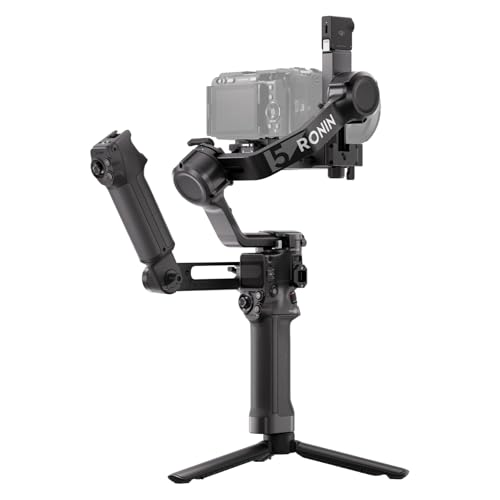
Payload is the first specification to check. Add the Nikon camera body, lens, battery, memory card, plate, microphone, monitor, and other attachments before comparing that total with the stabilizer’s published limit. DJI RS 5 and DJI RS 4 are listed for Nikon systems and offer balancing features for professional setups; RS 4 specifies a 3 kg payload. ZHIYUN CINEPEER Weebill 3E and ZHIYUN Weebill 3S also list 3 kg payloads.
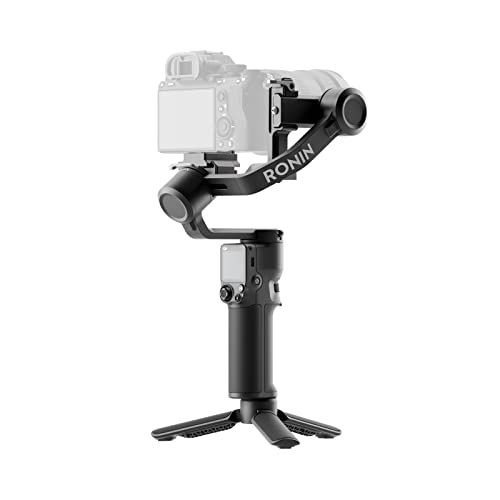
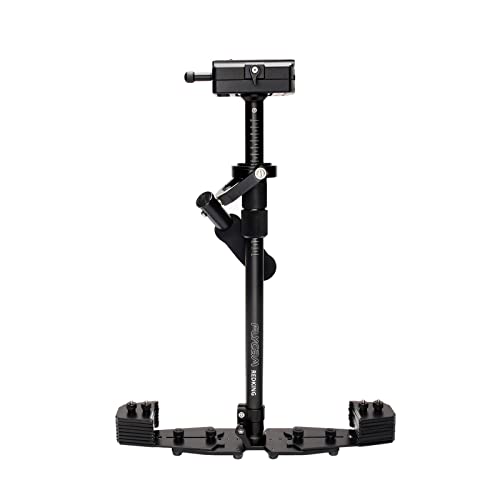
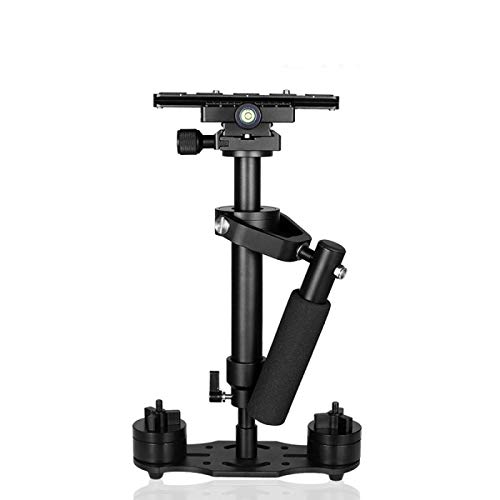
For heavier builds, FeiyuTech SCORP 3 and FeiyuTech SCORP-C2 list payloads of the current price and the current price, respectively. FLYCAM Redking lists support up to 7 kg, but it is a manual stabilizer rather than a motorized gimbal. That distinction matters: a capacity figure does not describe the same operating system across both designs. Wondalu S40 lists a 2 kg camera limit, and DJI RS 3 Mini lists up to 2 kg, making both better suited to lighter Nikon combinations.
Choose motorized or manual stabilization
Motorized models document three-axis operation, electronic modes, or algorithm-based stabilization. DJI RS 4 lists PF, PTF, and FPV modes, while DJI RS 5 adds axis locks, fine-tuning knobs, and a Z-Axis Indicator. FeiyuTech’s SCORP models emphasize integrated tracking and screen-based control. These features can make repeatable camera movement and solo operation more manageable, but the listing data does not establish real-world performance beyond the stated specifications.
Manual models use a different workflow. FLYCAM Redking lists a dovetail quick release, telescopic post, and calibration guide. Wondalu S40 uses adjustable length, removable weights, bearings, and low-friction joints. These designs avoid the motorized feature set and may appeal to operators who want a mechanical setup. They also require careful balancing and do not provide the electronic tracking or touchscreen controls documented on several gimbals.
Look for the shooting modes you actually use
Native vertical shooting is documented on DJI RS 4, DJI RS 3 Mini, FeiyuTech SCORP 3, FeiyuTech SCORP-C2, FeiyuTech SCORP 2, and both selected Weebill models. This can simplify switching between conventional landscape video and vertical social content. DJI RS 4 uses a horizontal plate that moves into a vertical position, while the SCORP and Weebill listings describe quick vertical installation.
For low-angle work, DJI RS 5 includes an Electronic Briefcase Handle, FeiyuTech SCORP 3 lists a detachable underslung handle, and Weebill 3E documents a sling grip and wrist rest. FLYCAM Redking and Wondalu S40 describe manual high- and low-angle use. Choose based on the camera position and handling style you expect rather than treating every vertical or low-angle feature as interchangeable.
Check camera-control and cable details
Camera control varies by Nikon body. DJI RS 3 Mini, DJI RS 4, ZHIYUN CINEPEER Weebill 3E, ZHIYUN Weebill 3S, and FeiyuTech SCORP 2 mention Bluetooth shutter or camera control. SCORP 2 also lists cable control. However, the Weebill 3E package specifically includes a Panasonic control cable and warns that Canon, Sony, and other camera users may need additional cables. Nikon owners should verify the exact camera model, cable, and supported functions before purchase.
The DJI listings also mention the Ronin app for activation or full functionality. The supplied evidence says the app is not available through Google Play and directs users to DJI’s website. This is a setup consideration for US buyers using Android devices.
Balance handling, size, and shooting time
A stabilizer’s own weight affects the complete rig. DJI RS 3 Mini lists a 795 g body weight, while FeiyuTech SCORP 3 lists a 3.02-pound body weight. The lighter model may be more comfortable for travel, but higher-capacity models are intended for heavier configurations. Weebill 3E lists a 1.05 kg design and adds sling-oriented handling features.
Runtime evidence is uneven across the candidates. RS 5 lists up to 14 hours of standby time, Weebill 3E lists up to 16 hours, Weebill 3S lists up to 11.5 hours, and RS 4 describes a separately sold battery grip that can extend runtime. The absence of a supplied runtime figure for a product should not be interpreted as a failure; it simply means this comparison cannot make a runtime claim for that model.
Some selected stabilizers add useful production features. Weebill 3S includes a built-in fill light with a listed 2600K-to-5500K adjustment range. The RS 5 Combo includes an intelligent tracking module, electronic briefcase handle, tripod, and battery grip. SCORP-C2 lists an open platform for monitors and fill lights, while SCORP 3 includes an AI tracking module and smart display.
These extras can reduce the number of separate accessories required, but they also affect the size and complexity of the rig. A creator who already owns lighting or monitoring equipment may prefer to prioritize payload, balance adjustment, or handle design instead.
Final Recommendation
DJI RS 5 Combo ranks first overall in this specification-based comparison under the published weighted criteria.
DJI RS 5 Combo is the highest-scoring returned product and the first overall specification-based choice among the best nikon professional video stabilizers. Its supplied evidence combines Nikon compatibility, balancing controls, automated axis locks, tracking hardware, low-angle handling, and a stated 14-hour standby figure. It is the broadest fit for a professional-style setup in this comparison.
The top nikon professional video stabilizers are not all aimed at the same workflow. Choose DJI RS 4 for native vertical production and accessory expansion, FeiyuTech SCORP 3 or SCORP-C2 for heavier builds, and ZHIYUN CINEPEER Weebill 3E for sling-style handling and stated long runtime. DJI RS 3 Mini is the lighter travel choice. For a non-motorized approach, FLYCAM Redking offers a high listed manual capacity, while Wondalu S40 suits lighter adjustable setups.
Before ordering, confirm the Nikon body and lens combination, total rig weight, required control cable, app requirements, and whether you need motorized tracking or a manual balancing system. Those checks are more useful than relying on a generic compatibility label alone.
Frequently Asked Questions
What should Nikon owners check before buying a video stabilizer?
Confirm the combined camera-and-lens weight, payload limit, plate system, camera-control method, and physical clearance for ports and controls. A listing may identify Nikon compatibility without confirming every Nikon model or every electronic function. The Weebill 3E is a clear example: its supplied cable is for Panasonic, so other camera users should verify cable availability.
Are the best nikon professional video stabilizers always motorized gimbals?
No. Motorized gimbals such as DJI RS 5, DJI RS 4, and FeiyuTech SCORP 3 list electronic stabilization features, tracking, or control modes. FLYCAM Redking and Wondalu S40 are manually balanced alternatives using mechanical components and counterweights. Manual models may suit operators who prefer a simpler mechanical workflow, while motorized models offer more documented electronic controls.
Which selected model is designed for a lighter Nikon setup?
DJI RS 3 Mini lists a 795 g body weight and a payload of up to 2 kg. That makes it the most clearly travel-oriented motorized option in this selection. The payload still needs to cover the complete Nikon camera, lens, plate, and accessories, not just the camera body.
Which stabilizers support vertical video?
The supplied listings document native vertical shooting for DJI RS 5, DJI RS 4, DJI RS 3 Mini, FeiyuTech SCORP 3, FeiyuTech SCORP-C2, FeiyuTech SCORP 2, ZHIYUN CINEPEER Weebill 3E, and ZHIYUN Weebill 3S. The exact switching method differs, so check the product’s mounting procedure before choosing one for a vertical-first workflow.
Does a higher payload guarantee better stabilization?
No. Payload describes the stated load the stabilizer is designed to support; it does not guarantee a particular result. Proper balance, camera compatibility, lens dimensions, operating technique, and the complete accessory configuration remain important. The supplied data supports comparing specifications, not predicting hands-on image quality.