Buying Guide
Choosing among the best carbon steel chef knives starts with separating a documented material specification from broad marketing language. In this comparison, carbon steel includes straight carbon-steel descriptions and high-carbon stainless formulations supplied in the listings. The knives range from straight 52100 carbon steel to Japanese high-carbon stainless grades such as VG-10, 10Cr15MoV, and 10Cr15CoMoV.
Match the steel description to your priorities
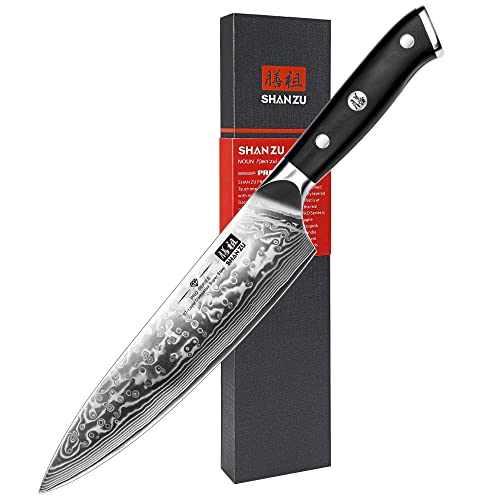
The ZWILLING KRAMER EUROLINE is the clearest traditional carbon-steel entry because its listing names straight 52100 carbon steel and 61 Rockwell hardness. It also states that the blade receives three-step hand finishing. Buyers who want a stainless formulation may prefer one of the Japanese-style models. The SHAN ZU Damascus and Atumuryou knives identify VG10 or 10Cr15MoV cores, while SANMEIHO, HOSHANHO, and Jingseiho identify high-carbon stainless or VG-10 constructions.
A named steel grade is useful, but it does not tell the whole story. Hardness is another relevant specification. Several selected knives state 62 HRC, including the SHAN ZU Damascus, Atumuryou, SHAN ZU nine-layer, and SANMEIHO nine-layer models. Hardness figures should be read as listing claims, not independent test results.
Compare edge angle and blade geometry
Edge angle can help explain how a knife is positioned. The SHAN ZU nine-layer and SANMEIHO nine-layer knives list 12-degree edges, while HOSHANHO lists 13 degrees per side. MOSFiATA lists 16 degrees per side, and the SHAN ZU Damascus model lists 15 degrees. These figures are not directly equivalent unless the listing describes the same measurement convention, so use them for comparison rather than as guarantees of cutting performance.
The ZWILLING KRAMER EUROLINE adds a double-tapered blade and tang to its description. MOSFiATA is described as taper-ground, and the Amazon Basics knife has a semi-bolster intended to provide weight and balance while preserving blade access. Jingseiho uses a symmetrical double-bevel edge, making its design suitable for left- and right-handed users according to the supplied listing.
Consider layered, forged, and full-tang construction
Layered options include the 67-layer SHAN ZU Damascus and Atumuryou knives, plus the nine-layer SHAN ZU and SANMEIHO models. Layer counts describe the stated steel structure; they do not independently prove toughness or edge life.
Forged and full-tang designs are also represented. ZWILLING KRAMER describes a double-tapered blade and tang. Atumuryou states full tang, MOSFiATA specifies full tang, Babish describes a full-tang ABS handle, and Amazon Basics lists forged construction with a full tang and three rivets. These details may appeal to shoppers seeking traditionally built chef knives, but the supplied evidence does not support claims about durability beyond the stated construction.
Choose a handle for control
Handle design is a practical differentiator. ZWILLING KRAMER uses micarta with brass rivets. SHAN ZU’s 8-inch nine-layer model uses a natural red sandalwood octagonal handle, while SANMEIHO combines G10 and rosewood. Jingseiho and MOSFiATA use Pakkawood or micarta-related designs, and HOSHANHO describes an ergonomic wood handle with a sloped bolster intended to encourage a pinch grip.
The right choice depends on the grip format you prefer. An octagonal handle can provide directional reference, a symmetrical double-bevel edge can suit either hand, and a textured or hybrid handle may offer a different tactile experience. The listings do not provide standardized handle dimensions or controlled comfort testing, so these are design distinctions rather than proven ergonomic outcomes.
Plan for carbon-steel care
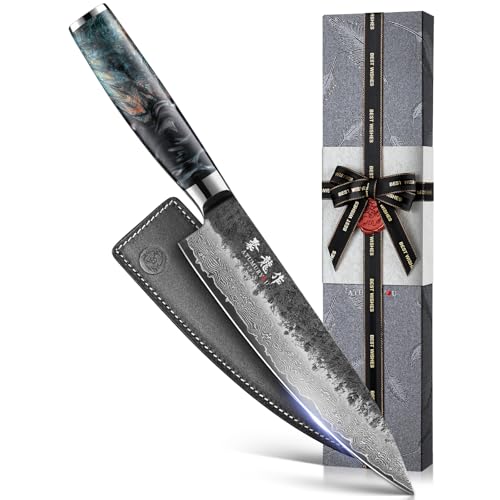
Maintenance is important when shopping for carbon steel and high-carbon stainless knives. The ZWILLING KRAMER listing says it is not dishwasher safe and recommends handwashing. Jingseiho also gives explicit instructions to handwash, dry immediately, avoid bones, frozen foods, and hard shells, and store the knife in a block or sheath. MOSFiATA includes a blade guard, and Atumuryou includes a leather sheath.
Even when a listing mentions corrosion resistance, handwashing and prompt drying remain sensible because these are sharp kitchen tools with detailed care requirements. Follow the individual product’s instructions. Jingseiho specifically advises using wood or soft plastic boards and avoiding twisting the blade.
Decide between a single chef knife and a set
This guide focuses on individual chef knives rather than sets. A single 8-inch knife is a straightforward choice when you want one multipurpose blade for chopping, slicing, dicing, and mincing. The selected models from ZWILLING KRAMER, SHAN ZU, Atumuryou, SANMEIHO, Jingseiho, HOSHANHO, MOSFiATA, Babish, and Amazon Basics all document an individual chef knife format.
A set may provide more blade types, but it also introduces additional knives and maintenance decisions. For a focused purchase, compare the individual knife’s steel, edge, construction, handle, and care requirements first. The best carbon steel chef knives are not interchangeable in maintenance or grip design, even when their blade lengths are similar.
Final Recommendation
ZWILLING KRAMER EUROLINE Carbon Collection 8-Inch ranks first overall in this specification-based comparison under the published weighted criteria.
The final choice among the best carbon steel chef knives depends on the documented features that match your intended use.
ZWILLING KRAMER EUROLINE Carbon Collection is the first overall specification-based choice. Its straight 52100 carbon steel, 61 HRC hardness, hand finishing, and double-tapered blade and tang give it the most complete technical profile in this comparison.
For a layered Japanese-style design, the SHAN ZU 8-Inch Japanese Steel Damascus Chef Knife offers a 10Cr15MoV core, 67 layers, 62 HRC hardness, and a G10 handle. Atumuryou offers a similar VG10-and-layered-steel direction with a leather sheath. The SHAN ZU nine-layer and SANMEIHO nine-layer models suit shoppers who want stated 12-degree edges and layered construction.
Among the practical everyday options, Jingseiho stands out for its symmetrical double bevel and explicit care guidance. MOSFiATA and Babish provide clear German high-carbon stainless and full-tang details, while Amazon Basics keeps the design comparatively simple with forged construction, a semi bolster, and three rivets. These top carbon steel chef knives differ in how much technical evidence they provide, so the best fit depends on whether you prioritize traditional carbon steel, layered construction, grip design, or straightforward daily use.
Frequently Asked Questions
What makes the best carbon steel chef knives different from ordinary stainless chef knives?
The selected products use either straight carbon steel or high-carbon stainless formulations. The main documented differences are named steel grade, carbon-related description, hardness, edge geometry, and care instructions. A carbon-steel description does not by itself establish better performance; compare the complete specification set.
Which selected knife has the clearest traditional carbon-steel specification?
The ZWILLING KRAMER EUROLINE is the clearest example because its listing specifically identifies straight 52100 carbon steel and 61 Rockwell hardness. It also describes a double-tapered blade and tang and three-step hand finishing. The listing recommends handwashing, so maintenance should be part of the decision.
Are 62 HRC knives automatically better?
No. Several selected knives state 62 HRC, but hardness is only one specification. Edge angle, blade construction, handle design, care instructions, and the completeness of the listing also matter. Hardness figures in these listings are not independent test results.
Is an 8-inch chef knife a practical general-purpose size?
The selected 8-inch models are described for common tasks such as chopping, slicing, dicing, mincing, vegetables, meat, fish, or herbs. The supplied evidence supports their multipurpose positioning, but it does not establish that one size suits every user or kitchen.
How should these knives be maintained?
Follow the individual listing’s care instructions. Handwashing and thorough drying are specifically recommended for some selected models, including ZWILLING KRAMER and Jingseiho. Jingseiho also advises avoiding bones, frozen foods, hard shells, twisting, and abrasive cleaning. Use suitable boards and store the blade in a block, guard, or sheath when those options are provided.