Buying Guide
A yanagiba is a long, narrow slicing knife intended primarily for boneless fish, sashimi, and sushi preparation. The best yanagiba knives are not general-purpose chef knives: their value comes from a controlled draw cut, a thin slicing profile, and an edge arrangement suited to delicate ingredients. Start by deciding whether you want a traditional single-bevel model or a more familiar double-bevel design, then compare steel, length, handle shape, and maintenance requirements.
Choose the blade geometry first
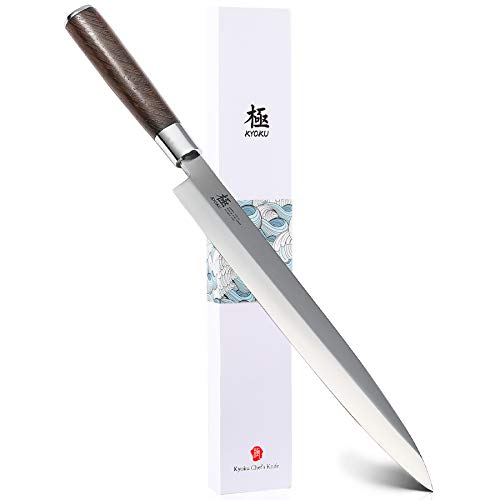
Traditional single-bevel construction appears throughout the selection. The Masamoto KS, Yoshihiro Kasumi, FINDKING Prestige, HEZHEN, Kai PRO, KEEMAKE 9.5-inch, and KYOKU listings all provide direct single-bevel or single-edge evidence. This geometry can help guide a long pull cut, but it also requires the user to understand which side of the knife contacts the food and how the edge should be maintained.
The Yoshihiro listing gives the most complete traditional grind description: shinogi on the front, a concave urasuki, and a flat uraoshi on the back. HEZHEN also documents urasuki and uraoshi processes. Those details are useful when a buyer specifically wants a traditional yanagiba construction rather than simply a long sushi knife.
Not every selected model documents the same geometry. Read the listing carefully rather than assuming that every product labeled sushi knife follows the same Japanese grind.
Match steel to maintenance habits
Carbon-steel options such as the Masamoto KS and Yoshihiro Shiroko Kasumi offer detailed White Steel #2 specifications. Their listings also make the care trade-off clear: Yoshihiro recommends hand washing, immediate drying, and water-whetstone sharpening, especially after working with acidic ingredients. These knives can suit cooks who are comfortable drying the blade promptly and maintaining a fine edge.
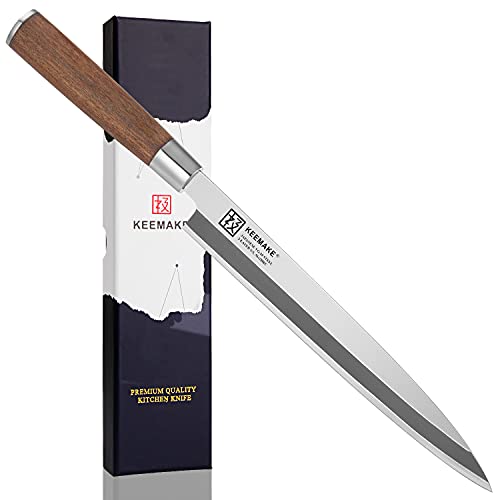
Stainless choices may be more convenient for routine kitchen use. The Shun Dual Core uses alternating VG10 and VG2 stainless layers, while the Kai PRO uses DIN1.4116 stainless steel and is described as corrosion and wear resistant. HEZHEN uses X7Cr17MoV, and KEEMAKE identifies VG10 high-carbon stainless steel. Stainless does not eliminate the need for care, but the supplied evidence positions these models as more resistant to corrosion or easier to manage than traditional carbon-steel alternatives.
Consider blade length and workspace
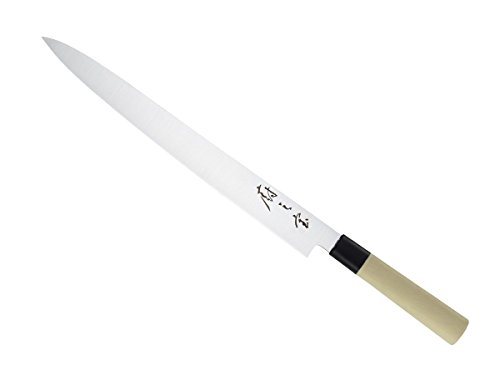
Longer blades can make a single draw through a fish portion more practical, provided the cutting board and technique accommodate them. Yoshihiro’s 300mm blade is the longest selected traditional yanagi, followed by HEZHEN at 270mm and Mercer at 12 inches. These formats may be useful for large salmon or halibut portions, but they also need more room for storage and movement.
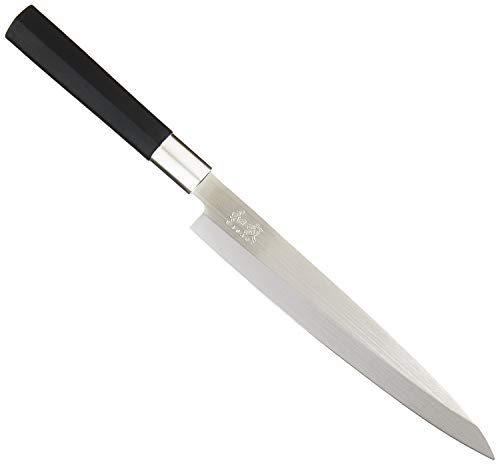
The Masamoto KS is listed at 210mm, while Kai Wasabi is the compact option in the group. Shorter knives can be easier to position in a small home kitchen. The Kai PRO and KEEMAKE models sit in a middle range at 9.5 inches, balancing reach with a less imposing overall format. Note that some listings use different blade-length and product-size references, so verify the retailer’s exact measurement before ordering.
Evaluate the handle and grip
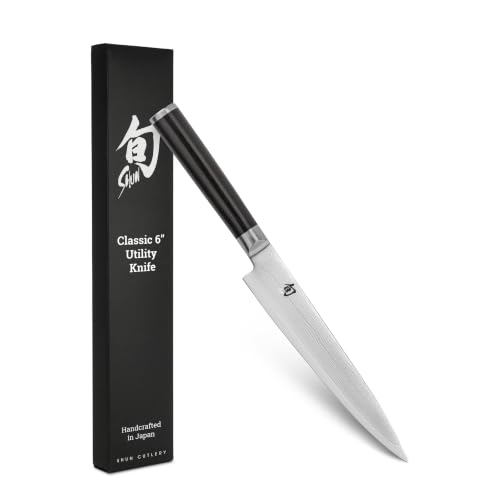
Handle design affects how confidently a user can guide a long slicing stroke. The Masamoto and Yoshihiro models use traditional D-shaped Wa-style handles. Shun uses an octagonal Pakkawood handle and describes it as suitable for both left- and right-handed users. FINDKING pairs an octagonal handle with ebony, sapele mahogany, and copper spacers, while HEZHEN uses an olive-wood D-shaped handle.
Synthetic handles have their own practical appeal. Kai PRO uses a contoured POM handle with rivets and a full tang. Kai Wasabi uses a D-shaped polypropylene handle. Mercer uses an ergonomic NSF handle that the listing says maintains grip with wet hands. These designs may be sensible for cooks who prioritize a familiar, sturdy handle over a traditional wooden Wa profile.
Do not overlook storage and care
A long, thin edge benefits from deliberate storage. Shun includes a sheath; FINDKING includes a walnut saya and wooden box; Yoshihiro includes a wooden saya; HEZHEN includes a sheath; and KYOKU includes both a sheath and a case. These accessories are particularly useful when the knife will be stored in a drawer, transported, or kept away from other utensils.
Care instructions vary by steel and design. Hand washing and thorough drying are the safe common denominator in the supplied evidence. Yoshihiro specifically advises water whetstones and warns against bones, nutshells, and frozen food. A yanagiba should be selected for slicing rather than chopping or cutting through hard objects. If you want the least complicated upkeep, stainless construction and an easy-to-sharpen description may be more suitable than a traditional White Steel #2 blade.
Final Recommendation
Masamoto KS 210mm Yanagiba ranks first overall in this specification-based comparison under the published weighted criteria.
The final choice among the best yanagiba knives depends on the documented features that match your intended use.
Shun Dual Core 10.5-inch Yanagiba is the highest-scoring returned product and the first overall specification-based choice. Its 71-layer VG10 and VG2 stainless construction, 10.5-inch length, 16-degree edge, ambidextrous handle description, sheath, and sharpening support give it the most specification-aligned all-around specification profile in this comparison.
For a more traditional route, the Masamoto KS 210mm Yanagiba is the clearest choice because it documents White Steel #2, HRC 62-63, single-bevel construction, a D-shaped Wa handle, and a water buffalo horn ferrule. Yoshihiro is better suited to buyers who specifically want a 300mm blade and fully described traditional grind. Among the top yanagiba knives, Kai PRO is the practical stainless option, while FINDKING and KYOKU stand out for included storage accessories.
Choose Kai Wasabi if a shorter, simpler format matters most. Choose HEZHEN when stainless steel, a 270mm blade, and explicit urasuki and uraoshi terminology are priorities. KEEMAKE offers a useful middle ground with VG10 steel and a rosewood handle, and Mercer provides a large 12-inch format with a practical NSF handle. These recommendations are based on supplied listing specifications, not hands-on testing or customer sentiment.
Frequently Asked Questions
What are the best yanagiba knives for traditional sashimi preparation?
The Masamoto KS and Yoshihiro Shiroko Kasumi are the most specification-aligned traditional choices in this comparison. Both use White Steel #2, and both listings describe Japanese-style construction. Yoshihiro provides the more detailed grind information with shinogi, urasuki, and uraoshi terminology, while Masamoto specifies a single-bevel narrow blade and HRC 62-63.
Is a single-bevel yanagiba necessary for sushi and sashimi?
Not necessarily, but it is an important design distinction. Several selected knives document single-bevel or single-edge construction, which is associated with traditional yanagiba slicing. A buyer should choose based on familiarity with the geometry and sharpening method rather than assuming one format is universally suitable.
Which selected knife may be easier to maintain?
The stainless-steel models are the more maintenance-oriented choices according to the supplied evidence. Kai PRO is described as corrosion and wear resistant, while Shun uses VG10 and VG2 stainless steel. Traditional carbon-steel models require more attentive drying and sharpening care; Yoshihiro specifically recommends hand washing, immediate drying, and water whetstones.
What blade length should a home cook choose?
A shorter blade such as the 210mm Masamoto KS or the Kai Wasabi format may be easier to maneuver in a smaller workspace. Longer options such as Yoshihiro at 300mm, HEZHEN at 270mm, and Mercer at 12 inches offer more reach for large portions but require more room and controlled technique. The right length depends on the fish portions, board size, and storage available.
Do these knives include protective storage?
Several do. Shun includes a sheath; Yoshihiro includes a wooden saya; FINDKING includes a walnut saya and presentation box; HEZHEN includes a sheath; and KYOKU includes a sheath and case. The Kai PRO, Kai Wasabi, KEEMAKE, and Mercer listings do not list a sheath among the supplied features, so confirm current contents before purchase.