Buying Guide
The best easy-clean chef’s knives are not defined by one material alone. Cleanup depends on the blade surface, corrosion resistance, handle construction, and care instructions supplied by the manufacturer. A dishwasher-safe claim can be useful, but it does not automatically mean machine washing is the preferred way to preserve an edge. Several listings explicitly recommend hand washing or hand drying even when a knife can go in the dishwasher.
Choose the blade material first
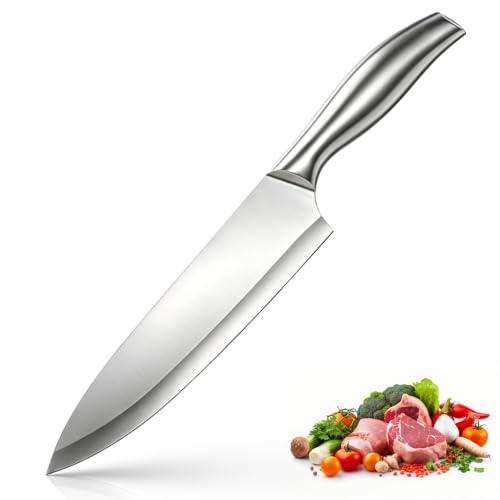
Steel remains the most familiar choice for an all-purpose chef’s knife. The Victorinox Fibrox Pro and Swiss Classic use stainless steel and are described for chopping, slicing, mincing, and dicing. HALSENX uses X50CrMoV15 steel, while BOPOTI and Amazon Basics describe high-carbon stainless steel. These products are appropriate when you want a conventional knife that can handle a wide range of ingredients.
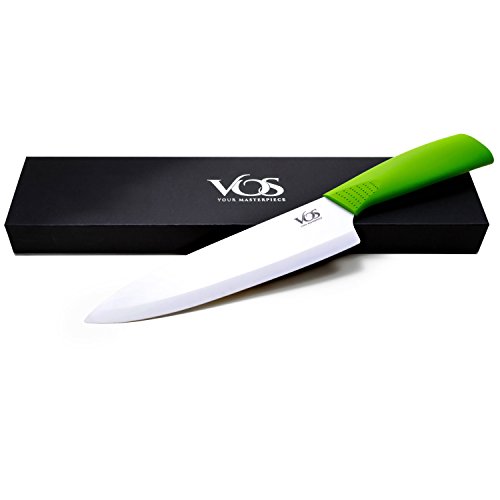
Ceramic takes a different approach. The Vos knife, Shenzhen Knives model, and KYOCERA set are described as rust-proof or resistant to rust, stains, odors, acids, or oils. Ceramic also does not absorb food according to the KYOCERA listing. Those characteristics can make wiping and rinsing straightforward. However, the supplied evidence also shows the trade-off: Shenzhen Knives cautions against bones, hard surfaces, cheese, and frozen foods, while KYOCERA recommends its knives for boneless meats, boneless fish, fruits, and vegetables. Ceramic is therefore best matched to the foods and cutting motions documented for the product.
Look for a smooth or treated surface
A smooth surface can reduce places where food residue collects. E-far describes its colored coating as non-stick and says it helps prevent food from sticking. OOU adds Cerablack and AgShield coatings, which the listing says help repel water and reduce stains. These claims are directly relevant to shoppers who want less residue during routine washing.
The finish is only one part of the decision. Amazon Basics lists a satin finish that is stain, rust, and pit resistant, while BOPOTI emphasizes corrosion resistance and recommends rinsing and wiping dry. These are useful material and care details, but they do not replace normal cleaning after every use. Acidic foods, moisture, and food particles should still be removed promptly.
Check the care instructions carefully
If dishwasher compatibility is important, Victorinox Fibrox Pro, Victorinox Swiss Classic, HALSENX, and OOU explicitly provide that information. HALSENX still recommends warm-water washing and towel drying for maintaining performance. OOU recommends hand-drying after dishwasher use. Those qualifications matter because they show the difference between technically dishwasher-safe construction and the maker’s preferred care routine.
Other selections are more clearly hand-care products. Amazon Basics says hand wash only. BOPOTI’s instruction is to rinse with clean water and wipe dry. E-far says its coating makes cleaning by hand easier. The easy-clean label should therefore be read alongside the actual care method rather than treated as permission to use any cleaning routine.
Match the knife to your preparation style
An 8-inch blade is a common all-purpose format in this group. OOU, HALSENX, Victorinox Fibrox Pro, Victorinox Swiss Classic, Amazon Basics, and Vos all document an 8-inch class knife, although Vos describes an 8-inch ceramic model and the Fibrox blade itself as 7.9 inches. These sizes offer a useful middle ground for vegetables, herbs, and meat when the listing supports those tasks.
Shorter options may feel more manageable for compact prep.
Sets can be practical when you need several shapes. KYOCERA includes four ceramic sizes, while E-far provides six knives and six guards. A set may reduce the need to buy separate tools, but it also requires more storage and more individual pieces to clean. If you mainly want one daily knife, a single model such as OOU, Victorinox Fibrox Pro, or HALSENX is simpler.
Prioritize grip and storage
A cleanable blade does not help much if the handle is difficult to hold during wet prep. Victorinox Fibrox Pro uses thermoplastic elastomer and describes a non-slip grip even when wet. HALSENX uses TPE and describes its handle as non-slip and easy to clean. Victorinox Swiss Classic specifies an ergonomic handle and balanced design. BOPOTI lists a three-rivet anti-slip handle and balance between blade and handle.
Storage is also part of maintenance. E-far includes a blade guard for each knife, and Vos includes a protective cover. These accessories can help protect the edge and make drawer storage more organized. The other single-knife products do not list a cover or block, so buyers should plan a suitable storage method separately.
Final Recommendation
KYOCERA Revolution 4-Piece Ceramic Knife Set ranks first overall in this specification-based comparison under the published weighted criteria.
KYOCERA Revolution 4-Piece Ceramic Knife Set is the first overall specification-based choice among these best easy-clean chef’s knives. Its documented rust-proof, easy-clean, non-absorptive ceramic blades and four useful sizes give it the most specification-aligned combination of cleaning convenience and coverage. Choose OOU if dishwasher-safe coated steel is more useful than a ceramic set, or select the Victorinox Fibrox Pro for a conventional stainless chef’s knife with a wet-grip handle.
The top easy-clean chef’s knives still require care matched to their materials. Use ceramic models within their stated food limitations, follow hand-washing guidance where supplied, and dry steel blades promptly. HALSENX and Victorinox Swiss Classic are sensible alternatives when you want dishwasher compatibility with an ergonomic profile. E-far is the better fit for shoppers who want multiple knives with individual guards, while Amazon Basics is a simpler full-tang option for buyers comfortable with hand washing.
Frequently Asked Questions
What makes the best easy-clean chef’s knives easier to maintain?
The most specification-aligned evidence in this comparison includes ceramic that is described as rust-proof or non-absorptive, coated steel that is described as reducing stains or food sticking, and stainless steel with explicit corrosion-resistance claims. Clear care instructions also matter. OOU, Victorinox Fibrox Pro, Victorinox Swiss Classic, and HALSENX provide dishwasher-related information, while BOPOTI and Amazon Basics specify hand-care instructions.
Are ceramic chef’s knives easier to clean than steel knives?
The supplied listings describe ceramic as rust-free, stain-resistant, non-reactive, or easy to clean. That can simplify surface care. Ceramic models also have usage limits: Shenzhen Knives says its knife is not for bones, hard surfaces, cheese, or frozen foods, and KYOCERA lists boneless foods and produce. Steel is usually the more flexible choice when your preparation includes a wider range of ingredients.
Can these knives go in the dishwasher?
Do not assume that every easy-clean knife is dishwasher-safe. OOU, both Victorinox selections, and HALSENX state dishwasher compatibility. OOU recommends hand-drying, and HALSENX recommends hand washing and drying for best performance. Amazon Basics says hand wash only. For products without a dishwasher claim, follow the supplied hand-care guidance instead.
Should I buy a single knife or a set?
Choose a single knife if you primarily need one general-purpose tool and want fewer parts to clean. Choose KYOCERA if several ceramic blade sizes are useful, or E-far if individual blade guards and six knife types appeal to you. Sets provide more coverage but require additional storage and upkeep. A single 8-inch model such as OOU or Victorinox Fibrox Pro is the simpler starting point.