Buying Guide
Choosing the best fine-grain film starts with confirming what your camera accepts. The selected products fall into two main groups: 35mm film for standard 135 cameras and 120 film for medium-format cameras. Ilford Delta Pro 100 is the only selected product whose supplied title clearly identifies 120 size. Ilford FP4 Plus and the Pincary, Segrehy, MOPFOL, Jiawu, Luqeeg, and VINGVO listings identify 35mm or 135 compatibility. The Ilford PAN F Plus listing identifies professional ISO 50 black-and-white stock but does not clearly state the camera format in the supplied specifications.
A 35mm camera generally needs 35mm or 135 film, while a medium-format camera may require 120 film. Do not treat the exposure count or pack size as the camera format: a two-pack or three-pack describes how much film is supplied, not which camera accepts it. The Delta Pro 100 120 listing is therefore a format-specific choice, while the Delta Pro 400 listing is explicitly a 35mm product. If format information is missing, verify the listing before ordering rather than relying on the product name alone.
Choose ISO speed for the shooting conditions
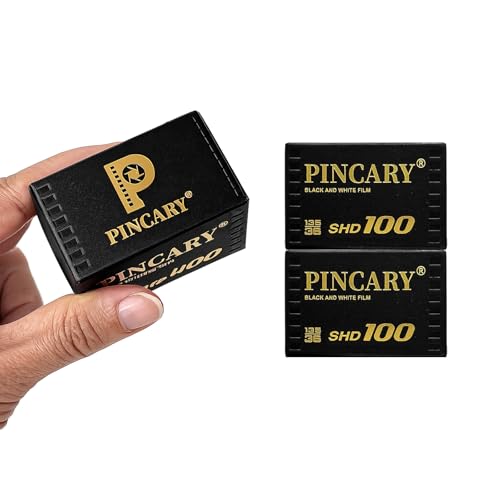
ISO is one of the most useful differences among these films. Ilford PAN F Plus is listed at ISO 50, which points toward deliberate work in brighter conditions when fine detail is the priority. Ilford Delta Pro 100 is a medium-speed ISO 100 option for 120 cameras. Pincary is also listed at ISO 100 and targets street, fashion, and lifestyle photography.
The Delta Pro 400, Segrehy, MOPFOL, Jiawu, Luqeeg, and VINGVO listings occupy the faster end of this comparison. Their stated ISO values or ranges run from ISO 320-400 or ISO 400, and several listings mention low light, fast action, fast shutter speeds, or extended flash distance. These claims describe intended use, not measured results. A faster film may be more practical when available light is limited, but the right choice still depends on the camera, lens, metering, and desired rendering.
Consider black-and-white versus color
The Ilford PAN F Plus, Delta Pro films, FP4 Plus, and Pincary are black-and-white options. That makes them the natural group for monochrome projects, and FP4 Plus has a wide supplied application list, including portraits, fashion, street, product photography, landscapes, and architecture. Pincary is more narrowly described around street, fashion, and creative lifestyle work.
The remaining selected options are color-negative or color-print films. Segrehy is described with medium contrast and a classic, warm look, while Luqeeg is described with vivid colors, higher saturation, and increased contrast. MOPFOL, Jiawu, and VINGVO describe medium contrast. These terms can help set expectations about the intended look, but they should not be read as a substitute for a controlled test.
Read grain and detail claims carefully
Fine grain is a central selection criterion, but the evidence varies in specificity. PAN F Plus is directly described as ultra-fine grain and is paired with high print quality. The Delta Pro listings use fine-grain wording, while FP4 Plus is described as especially suitable for highly detailed subjects. The color-film listings generally combine fine-grain language with high definition, sharpness, or resolution claims.
A direct fine-grain statement is stronger category evidence than a general statement about image quality. That is why PAN F Plus leads the fine-detail comparison, while the color products are separated by their format, speed, contrast, and exposure information. No product in this guide is presented as hands-on tested, and no claim here represents customer experience.
Check processing requirements before buying
Processing compatibility can be a practical deciding factor. FP4 Plus has the clearest supplied processing information: the listing says it can be processed by a wide range of developers using spiral tanks, deep tanks, and automatic processors. By contrast, most of the other selected listings do not identify chemistry or processing systems. That omission does not prove incompatibility; it simply means the supplied evidence cannot establish a specific workflow.
For every color film, confirm the required development process with the seller or processor before shooting. The selected listings use terms such as color negative and color print, but they do not consistently provide enough processing detail to make a chemistry recommendation. This is especially important when choosing a product for a lab workflow rather than occasional personal use.
Use the pack size as a planning detail
Pack size matters for project planning, but it should not dominate the technical ranking. The Ilford FP4 Plus listing identifies a three-pack of 36-exposure 35mm rolls. Pincary is also listed as a three-pack, and Delta Pro 400 appears in a two-pack listing with 36 exposures. The other products vary in how clearly they describe sheets, rolls, or total exposures. Treat unclear unit descriptions cautiously and confirm whether the stated quantity refers to rolls, sheets, or a multipack.
Final Recommendation
Segrehy Portra 400 Color Print Film, 35mm ranks first overall in this specification-based comparison under the published weighted criteria.
Segrehy Portra 400 Color Print Film, 35mm is the first overall specification-based choice in this comparison.
The best fine-grain film for a specific project depends on the documented features that match your intended use. Choose Ilford PAN F Plus when the most direct ultra-fine-grain and high-print-quality claims matter most. Its ISO 50 professional black-and-white specification suits deliberate work where detail is the priority, although the supplied listing does not clearly identify the camera format.
Choose Ilford FP4 Plus if you want broad documented subject use and explicit processing flexibility. Choose Ilford Delta Pro 400 when ISO 400 and 35mm compatibility better match your shooting conditions. For 120 cameras, Ilford Delta Pro 100 is the clearest format-specific selection.
Among color films, Segrehy has detailed supplied evidence for fine grain, resolution, exposure latitude, contrast, and varied subjects. MOPFOL, Jiawu, Luqeeg, and VINGVO offer similar 35mm and ISO 320-400 positioning, with different stated color and contrast directions. The top fine-grain film for your project is therefore the one whose format, speed, output type, and processing information align with your equipment and workflow rather than a single universal specification.
Frequently Asked Questions
What is the best fine-grain film for maximum documented detail?
Ilford PAN F Plus is the most specification-aligned specification-aligned match in this comparison because its listing explicitly says ultra-fine grain and high print quality, while also identifying ISO 50 professional black-and-white film. The supplied data does not clearly identify its camera format, so confirm compatibility before purchase.
Which selected film is for a 120 camera?
Ilford Delta Pro 100 is explicitly identified as 120 size in the supplied title. It is an ISO 100, medium-speed, fine-grain black-and-white film. The other selected products are primarily identified as 35mm or 135-camera films, so they should not be substituted for 120 film.
Which option is best suited to lower light or action?
Ilford Delta Pro 400 is the clearest black-and-white choice because it is listed at ISO 400 and described as fast fine grain. Among the color options, Segrehy, MOPFOL, Jiawu, Luqeeg, and VINGVO list ISO 320-400 ranges and mention low-light or fast-action uses. These are specification-based matches, not tested performance claims.
Should I choose black-and-white or color-negative film?
Choose black-and-white when the project calls for monochrome output, such as with PAN F Plus, FP4 Plus, Delta Pro, or Pincary. Choose a color-negative option when color is required. Segrehy emphasizes medium contrast and a warm look, while Luqeeg emphasizes vivid color and higher saturation. Also confirm the lab’s processing requirements before committing to a color film.
Does a fine-grain claim guarantee sharp photographs?
No. A fine-grain claim describes the film’s stated grain characteristic, but the final image also depends on exposure, focus, camera condition, lens, development, scanning, and printing. This guide compares listing specifications and does not present hands-on measurements or assured results.