Buying Guide
Choosing the best forged santoku knives starts with separating the shape from the manufacturing details. A santoku is generally shorter and broader than a traditional chef’s knife, with a profile suited to slicing, dicing, and mincing. The selected products range from compact 5.5-inch and 7-inch formats in the broader candidate pool, but the returned list is centered on approximately 7-inch blades because that size appears repeatedly in the supplied specifications and suits general kitchen prep.
How to read the forging claim
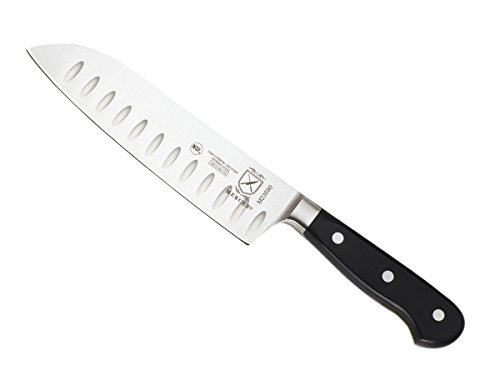
A forged knife is made from formed steel rather than simply being stamped from sheet stock, but listing language varies. The most specification-aligned evidence here is specific: Wüsthof says its blade is forged from a single piece, All-Clad identifies a fully forged construction, Dalstrong specifies a single-piece forged blade, and Mercer calls its knife precision-forged. Other entries document hand-forged or san-mai construction. These details are more useful than a broad “premium” label because they explain what kind of blade build is being offered.
Forging alone does not establish sharpness, durability, or comfort. The scoring therefore treats it as one category rather than the entire decision. A buyer should also check the steel, edge, tang, handle, and care instructions. For example, HOSHANHO, Atumuryou, and KAWAHIRO provide unusually specific hardness or edge details, while Wüsthof and Mercer provide stronger traditional construction descriptions but fewer numerical blade specifications.
Blade steel and hardness
Steel names help describe a knife, but the available evidence is uneven. HOSHANHO lists a 10Cr15CoMoV core tempered to 62 HRC. Atumuryou lists a Japanese VG10 core at 62 HRC, and KAWAHIRO lists VG10 at 60–62 HRC. Those numbers provide a clearer basis for comparison than descriptions that only call a blade sharp or durable. Dalstrong provides a 60+ Rockwell figure, while All-Clad identifies X50CrMoV15 German stainless steel and adds cryo-hardening.
Higher stated hardness can support edge retention, but it may also make sharpening and edge care more important. The supplied listings do not provide a controlled comparison of sharpening difficulty, chipping, or real-world longevity, so those outcomes should not be assumed. Buyers who want a more conservative, familiar stainless-steel format may prefer Wüsthof, All-Clad, HENCKELS, Mercer, or bloomhouse, each of which documents a German or high-carbon stainless blade type without relying solely on an acute hardness claim.
Edge angle and blade surface
Edge geometry is one of the most useful distinctions in this group. HOSHANHO lists a 12-degree V-angle, Atumuryou lists a 12-degree hand-sharpened edge, and KAWAHIRO gives a 12–15-degree range. Dalstrong lists 8–12 degrees per side. These are relatively detailed specifications, but they are not hands-on performance results. They indicate the intended geometry, not a guarantee of cutting behavior.
All-Clad lists a 26-degree total cutting edge, which is a different way of presenting the angle and should not be compared directly with a per-side figure without conversion. HENCKELS Premio, MITSUMOTO SAKARI, and bloomhouse emphasize hollow, hammered, or Granton-style surfaces. Those small gaps or textured areas are designed to reduce sticking, especially during vegetable or soft-food prep, but the supplied evidence does not establish how much food release a user will experience.
Handle, tang, and balance
Handle construction affects control as much as blade steel. HOSHANHO and MITSUMOTO SAKARI use octagonal rosewood handles, while KAWAHIRO uses an octagonal stabilized wood-and-resin handle. An octagonal shape can help identify grip orientation, but hand size and personal preference still matter. Atumuryou documents a full tang with a stabilized wood-and-resin handle, and All-Clad specifies a full tang, triple-riveted POM handle, and angled end bolster.
Wüsthof, Mercer, and bloomhouse also document full-tang or traditional handle construction. Dalstrong specifies a resin-and-stabilized-wood handle with a stainless bolster. These details support a more informed comparison than appearance alone. However, only KAWAHIRO supplies a listed weight of the current price, so the other products should not be described as lighter or heavier based on assumption.
Match the knife to your prep
For broad everyday use, HOSHANHO, KAWAHIRO, Atumuryou, and All-Clad explicitly cover combinations of vegetables, fruit, fish, meat, slicing, dicing, chopping, or mincing. MITSUMOTO SAKARI is especially well documented for vegetables and herbs, with a broad blade face and hammered surface. Mercer focuses on chopping, mincing, and cutting, while bloomhouse emphasizes slicing, mincing, and dicing.
A santoku is not automatically a cleaver or a boning knife. Keep the knife’s intended tasks in mind and avoid treating its versatility language as evidence for every possible kitchen job. A broad santoku blade can help move chopped ingredients, but the supplied listings do not support claims about cutting bones, frozen foods, or other demanding materials.
Care and storage
Care instructions differ. Wüsthof and Mercer specify hand washing, while HENCKELS Premio states that it is dishwasher safe. Hand washing and thorough drying are generally the more explicitly supported care approach for products with wood handles or decorative finishes, but the listings do not provide a universal care rule for every knife. Atumuryou and Dalstrong include leather sheaths, which can help with protected storage. Store any knife so the edge is not loose against other metal tools.
Final Recommendation
Atumuryou 7-Inch 67-Layer Damascus VG10 Santoku ranks first overall in this specification-based comparison under the published weighted criteria.
HOSHANHO is the first overall specification-based choice among these best forged santoku knives because it combines a documented 62 HRC 10Cr15CoMoV core, a 12-degree edge, and an octagonal rosewood handle. KAWAHIRO is the better fit for a lighter, tapered design, while Atumuryou is compelling for VG10, 67-layer Damascus construction, and included sheath storage. Dalstrong stands out for its very acute stated edge range.
For a classic German-style build, choose Wüsthof, All-Clad, Mercer, HENCKELS Premio, or bloomhouse according to your preferred handle and care routine. MITSUMOTO SAKARI is the focused pick for a hammered surface and broad vegetable-prep face. Together, these top forged santoku knives cover acute Japanese-style edges, conventional forged stainless construction, distinctive handles, and several blade-surface designs without relying on customer sentiment or hands-on claims.
Frequently Asked Questions
Among the best forged santoku knives, what size santoku is most versatile?
The selected products are predominantly around 7 inches, a size repeatedly described for slicing, dicing, chopping, and mincing. It offers a useful middle ground for general prep. A smaller blade may feel easier to control for compact tasks, but the supplied evidence does not establish a universal best size for every cook.
Is a harder steel always the better choice?
No. A higher stated hardness can indicate a blade designed for edge retention, but it does not by itself prove better cutting performance or easier maintenance. HOSHANHO, Atumuryou, KAWAHIRO, and Dalstrong provide numerical hardness information, while Wüsthof, All-Clad, Mercer, and bloomhouse emphasize material and construction. Consider sharpening habits and care alongside hardness.
What is the purpose of a hammered or hollow-edge santoku?
MITSUMOTO SAKARI’s hammered Tsuchime surface, HENCKELS Premio’s hollow edge, and bloomhouse’s Granton edge are presented as ways to reduce food sticking or support nonstick slicing. These are design intentions from the supplied listings, not independently measured results. They may appeal to cooks who frequently prepare moist vegetables or other foods that cling to a flat blade.
Should a forged santoku be washed in the dishwasher?
Follow the individual listing. HENCKELS Premio is identified as dishwasher safe, while Wüsthof and Mercer specify hand washing. For wood, resin, or decorative finishes, check the supplied care guidance before cleaning. Thorough drying and protected storage are sensible priorities, especially for knives supplied with a sheath or gift box.
Which handle style offers the most control?
There is no single documented winner for every hand. Octagonal handles appear on HOSHANHO, KAWAHIRO, and MITSUMOTO SAKARI; full-tang, riveted designs appear on All-Clad, Wüsthof, Mercer, and other selected models. Octagonal geometry may help with orientation, while bolsters and rivets can support a conventional grip. Personal fit remains important, and the listings do not provide standardized grip testing.