Buying Guide
Choosing among the best high-definition backup cameras starts with the vehicle’s existing display. A camera may advertise 1080P, but the screen, connector, and video standard still determine whether that signal can be used. The products in this comparison fall into two broad groups: standalone wired cameras that send video through RCA, and complete systems that include a monitor or use a dedicated wireless link.
Match the camera to the display
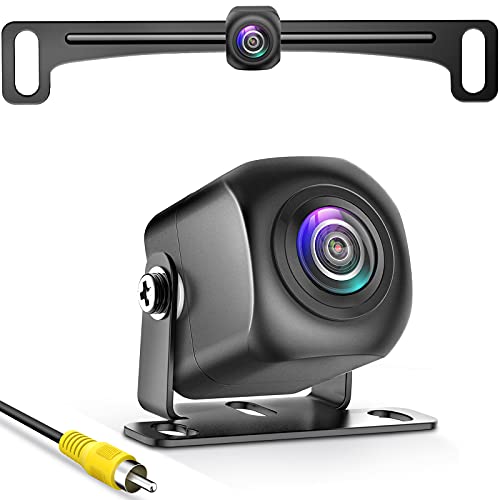
Check the head unit or monitor for an RCA video input before selecting a standalone camera. Jansite, GreenYi, PixelMan, vampolo, eRapta, and Jensen listings all describe RCA-based connections or standard connections. The eRapta AGQT01 is particularly explicit about CVBS and AHD support. CVBS is a common lower-resolution analog format, while AHD can provide a higher-definition image when the screen supports it.
AHD is not automatically interchangeable with every RCA display. The plug may look familiar while the display hardware supports only CVBS. Jansite, GreenYi, and the vampolo models describe wires or controls for changing formats. Follow the supplied instructions and confirm the display’s supported mode before changing a signal wire. The RAYOYASI camera goes further by documenting AHD 1080P, AHD 720P, NTSC, and PAL modes, which may help when matching different aftermarket systems.
A complete system can reduce compatibility uncertainty. The VECLESUS WM1 includes a 4.3-inch monitor, while Yakry supplies a 7-inch IPS monitor with the camera. For the selected products, VECLESUS and Yakry are the clearest dedicated alternatives to camera-only installation.
Choose the right resolution
1080P appears in the listings for RAYOYASI, Jansite, GreenYi, PixelMan, both selected vampolo cameras, eRapta, VECLESUS, and Yakry. That does not mean every installation will display 1080P: the display and selected signal must support it. Jensen is described as HD but does not provide a pixel figure in the supplied evidence, so it ranks lower on documented resolution rather than on an unsupported performance assumption.
Higher stated resolution is most useful when the complete system supports it. If a factory or aftermarket screen accepts only CVBS, a camera with AHD 1080P may need to operate in a lower compatible mode. For that reason, compatibility should be considered alongside resolution instead of treating the largest number in a title as the whole buying decision.
Consider viewing angle and adjustment
A wide lens can show more of the area behind the vehicle, but the listed angle is only one part of the installation. Several camera-only models specify a 170-degree view, including RAYOYASI, Jansite, GreenYi, PixelMan, and the vampolo units. eRapta does not state an angle in the supplied listing, so its compatibility and durability strengths carry more weight in the comparison.
Adjustment is useful when the mounting surface does not place the lens at the ideal height. RAYOYASI and Jansite document rotating bodies, and GreenYi describes a rotating metal camera body. RAYOYASI can be used for front, rear, or side views, while Jansite describes front, rear, and side positioning as well. GreenYi’s dynamic guideline is designed to move with the vehicle’s direction, but the listing says it works through the camera’s own feature and requires suitable wiring.
A non-fisheye design may appeal to users who prefer a less curved view. Yakry specifically describes its 150-degree camera as non-fisheye. Other products use fisheye or wide-angle terminology. Neither design should be treated as universally better from listing data alone; the important questions are whether the view covers the needed area and whether the image orientation can be adjusted.
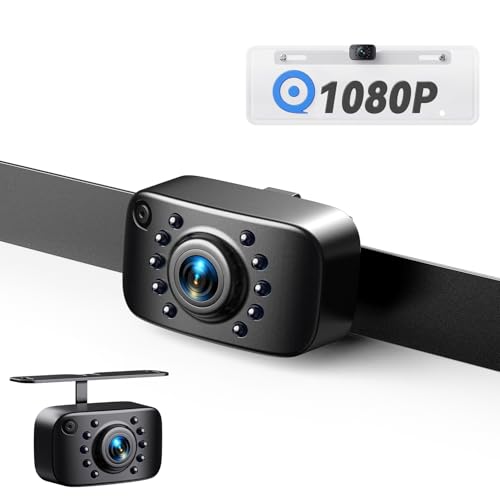
The most specification-aligned low-light documentation comes from the RAYOYASI, Jansite, and vampolo VP-N2 listings. RAYOYASI specifies an F1.8 aperture, starlight sensor, WDR, 3D-DNR, and a stated night-visibility distance. Jansite lists an F2.0 aperture, six-glass lens, and WDR. The VP-N2 lists starlight night vision, an F1.8 lens, automatic dimming, and 3D noise reduction.
GreenYi describes a 0.01-lux specification and night vision, while PixelMan describes clear night vision and a large sensor. Yakry lists true infrared night vision, and VECLESUS describes night vision without the same level of hardware detail. Jensen states day-and-night visibility and night vision but does not provide a numerical sensor or aperture specification. These distinctions explain the scoring without claiming that any camera was independently tested.
Check weather protection and housing
Exterior cameras face rain, road spray, dust, temperature changes, and car-wash exposure. IP ratings provide a documented design signal, although they are not a substitute for installation care. RAYOYASI, PixelMan, the vampolo VP-N2, and eRapta list IP69K protection. GreenYi and VECLESUS list IP68, while Jensen lists IP67. The rating differences are reflected in the weather-durability scores, not as a guarantee of service life.
Metal or alloy housing is another recurring feature. PixelMan, both selected vampolo models, eRapta, and GreenYi describe metal or alloy construction. RAYOYASI describes a solid build and IP69K protection. When comparing a compact exterior camera, examine how the bracket, cable exit, and seal will be positioned, because the housing rating alone does not confirm that every installation detail is protected.
Plan installation before ordering
Standalone cameras generally require power from the vehicle and a video route to the screen. The eRapta listing specifies a 26-foot AV cable and 12-24V support, making it a practical option for longer vehicles. Jansite also documents 12-24V compatibility. The VECLESUS system avoids dependence on an existing screen by including its own monitor, while Yakry uses a wired camera and a large monitor.
License-plate-area models can provide a relatively direct mounting location. The PixelMan PMD2A-S includes a license-plate bracket, and the vampolo VP-N2 and eRapta listings describe license-plate-oriented installation. RAYOYASI offers bolt, metal, and adhesive back-cover options. Read the mounting instructions carefully, especially if drilling, adhesive, cable routing, or camera orientation is involved.
Final Recommendation
RAYOYASI AHD 1080P Rotatable Backup Camera ranks first overall in this specification-based comparison under the published weighted criteria.
RAYOYASI AHD 1080P Rotatable Backup Camera is the first overall specification-based choice among these best high-definition backup cameras. It leads because its listing combines AHD 1080P output, 360-degree adjustment, a 170-degree view, IP69K protection, multiple signal formats, and detailed low-light features. Jansite is a close alternative for 12-24V vehicles and flexible mounting. GreenYi is the more distinctive option when a movable trajectory guideline is important.
For a complete camera-and-screen package, choose VECLESUS when a compact 4.3-inch monitor and wireless design are preferred, or Yakry when a 7-inch IPS display and wired transmission better suit an RV or truck. PixelMan and the two vampolo cameras make sense for license-plate-area installations, while eRapta is particularly useful for mixed CVBS/AHD environments. Jensen remains a straightforward low-profile option when the available display and standard connections are already known.
The top high-definition backup cameras are not interchangeable in every vehicle. Before buying, verify the display input, video format, power range, camera position, cable length, and whether parking guidelines should remain enabled. Those checks are more useful than relying on a product title alone.
Frequently Asked Questions
Do all best high-definition backup cameras work with any RCA monitor?
No. RCA describes the physical video connection, but the screen may support only particular formats or resolutions. AHD 1080P cameras such as RAYOYASI, Jansite, GreenYi, PixelMan, vampolo, and eRapta require a compatible display for their highest stated output. Some can switch to CVBS or another mode, but the vehicle’s monitor should be checked first.
Is a wired or wireless backup camera better for an RV?
The suitable design depends on the installation. Yakry documents a wired connection, a 7-inch IPS monitor, and the ability to add a second camera. VECLESUS WM1 uses a dedicated wireless camera and includes a 4.3-inch monitor. Wired installation may be preferable when routing a cable is practical; a complete wireless kit may be preferable when a dedicated monitor and reduced video-cable routing are more useful.
What viewing angle should I look for?
Many selected models specify a 170-degree angle, including RAYOYASI, Jansite, GreenYi, PixelMan, and the vampolo cameras. Yakry lists 150 degrees and describes its image as non-fisheye. A wider angle can cover more of the rear area, but mounting height, lens orientation, and the display’s image presentation also matter.
Are IP67, IP68, and IP69K interchangeable?
They are not identical ratings. The selected listings identify different protection levels: Jensen lists IP67, GreenYi and VECLESUS list IP68, and several other models list IP69K. Treat these as specification differences rather than guarantees. Proper sealing, cable routing, mounting, and vehicle use conditions still matter.
Can a 1080P camera improve an older vehicle’s factory screen?
Only if the screen can accept the camera’s signal and resolution. A camera may support AHD 1080P while an older display accepts CVBS only. In that case, a switchable camera such as eRapta or one of the documented HD/AHD models may offer a compatible mode, but it will not make a display show a resolution it cannot support.