Buying Guide
The best heavy-duty monopods are not defined by load capacity alone. A useful comparison also considers how the support meets the ground, how quickly its sections adjust, what hardware can mount on top, and whether the product is a dedicated monopod or a convertible tripod system. The specifications below show why these ten models suit different camera and video workflows.
Match the support style to the shoot
Dedicated monopods are generally simpler to deploy. The COMAN M1 and Manbily A-222 are purpose-built poles with support feet or interchangeable foot hardware. That format can be convenient when you want a single support column without carrying a full tripod system.
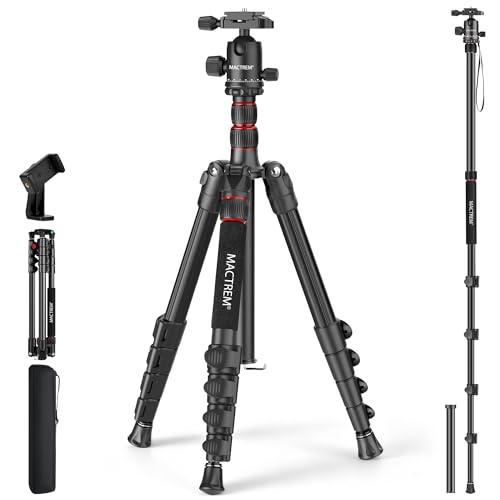
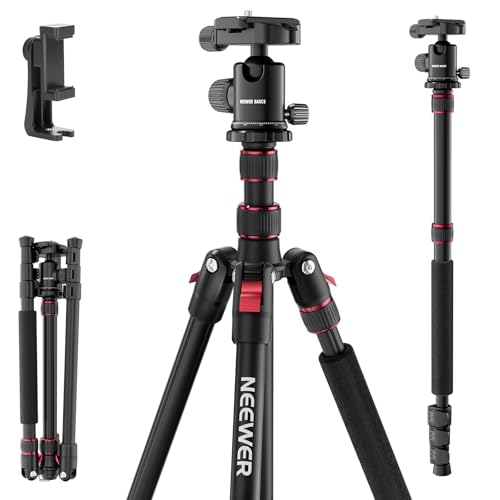
Convertible designs add more options. The MACTREM 90-inch, Victiv 85-inch, Victiv 82-inch, NEEWER TP15, and SIRUI Traveler VA can function as tripods and monopods. This is useful when one kit needs to cover static camera work and mobile one-legged support. The trade-off is that conversion systems include more components and may take longer to configure than a dedicated monopod.
The IFOOTAGE Cobra models use a different approach. Their poles sit on weighted round bases rather than relying mainly on a handheld foot. The RB-A500 has a 50cm base and a 79.4-inch maximum height, while the RB-A300-I has a 30cm iron base and reaches 59.44 inches. These are studio-oriented designs for cameras, microphones, lights, and streaming equipment rather than hiking-oriented support.
Check capacity and the head separately
A listed payload is useful only when it matches the complete mounted setup. The COMAN M1 lists 44 pounds, the MACTREM lists 33 pounds, and the Victiv 85-inch model lists 35 pounds. Those figures are higher than the Manbily A-222’s listed 15.5 pounds or the NEEWER TP15’s 17.6 pounds.
A kit’s head may have a separate limit. The SIRUI P-424FS includes a VA-5 fluid head and lists a 26.8-pound capacity for the monopod, while the VA-5 head itself is listed for 6.6 pounds. The SIRUI Traveler VA presents a similar distinction: the tripod is listed at 12kg, but its VA-5 head is listed at 6.6 pounds. Match the camera, lens, cage, microphone, and other mounted equipment to the limiting component rather than relying only on the largest figure in the listing.
Consider height in the working position
Tall monopods can help with overhead angles, standing portraits, and elevated video framing. The MACTREM reaches 90 inches in its listed range, followed by the Victiv 85-inch and Victiv 82-inch systems. The NEEWER TP15 reaches 74.4 inches in monopod mode, while the COMAN M1 and SIRUI P-424FS reach 62.8 and 66.3 inches respectively.
A shorter minimum height can matter just as much. The MACTREM starts at 23.6 inches, the Victiv 82-inch at 23.5 inches, and the COMAN M1 folds to a 23.82-inch length. The Manbily A-222 adjusts from 21 to 67 inches, giving it a useful lower position for seated or low-angle work. Compare both ends of the range with your camera position, not just the maximum number.
Support at the bottom changes how a monopod behaves. The COMAN M1 uses 190mm steel support feet and a detachable base. The Manbily A-222 includes rubber and metal foot options, which are specified for paved or softer surfaces. The NEEWER TP15 also lists convertible non-slip feet and metal spikes.
Tripod conversions provide three-leg support when needed. The Victiv models and SIRUI Traveler VA document independently adjustable tripod legs or multiple leg-angle positions. The SIRUI P-424FS adds a tripod base with 40-degree tilt in any direction. These designs can be useful when you need a monopod-like column but also want a temporary freestanding configuration.
Weighted bases are more specialized. The IFOOTAGE RB-A500 weighs 17.55 pounds and uses a felt-bottomed 50cm base, while the RB-A300-I lists a 2.5kg iron base. Their floor contact is substantial, but that stability comes with less convenient transport than a compact pole or travel tripod.
Review adjustment and mounting hardware
Fast adjustment is particularly relevant for changing camera height during video work. The COMAN M1 uses one-click adjustment, the Manbily A-222 uses 1/4-turn quick locks, and the SIRUI P-424FS uses flip locks. The IFOOTAGE models use quick-release fasteners or screw-knob adjusters. These are different control approaches, so choose based on whether speed, fine positioning, or a familiar locking style matters more to your setup.
Mounting flexibility also varies. The COMAN M1 provides both 1/4-inch and 3/8-inch screws plus three side accessory ports. The IFOOTAGE RB-A500 and RB-A300-I list 1/4-inch and 3/8-inch auto-switch screws, and the RB-A500 includes a light-stand adapter. The NEEWER TP15 includes a phone holder, while the SIRUI kits include video-oriented heads and quick-release hardware.
Carbon fiber appears on the COMAN M1 and SIRUI P-424FS, while the remaining selected models use aluminum or aluminum alloy in their listed construction. Carbon fiber can reduce listed weight in some designs, but the actual carrying experience depends on the base, head, and attached accessories. The COMAN M1 lists a 23.82-inch folded length and 3.16-pound weight, while the SIRUI Traveler VA folds to 18.5 inches and lists a 3.5-pound tripod weight without its video head.
For fixed studio positions, portability may matter less than a substantial base. For travel, look at folded length, listed weight, included bag, and whether the feet or head can be removed. The Manbily A-222, NEEWER TP15, and SIRUI Traveler VA each document travel-oriented features, but their formats remain different: dedicated monopod, convertible tripod, and fluid-head tripod-monopod respectively.
Final Recommendation
COMAN M1 Carbon Fiber Monopod ranks first overall in this specification-based comparison under the published weighted criteria.
The final choice among the best heavy-duty monopods depends on the documented features that match your intended use.
The COMAN M1 Carbon Fiber Monopod is the highest-scoring returned product and the first overall specification-based choice. Its listed 44-pound capacity, one-click adjustment, detachable steel support feet, compact folded length, and dual mounting screws give it the broadest documented balance for demanding camera and scope setups.
Choose the SIRUI P-424FS if a fluid video head and modular monopod, extension-rod, and tabletop-tripod modes are more important. For stationary studio work, the IFOOTAGE Cobra RB-A500 supplies the largest listed weighted base, while the RB-A300-I is the more compact floor-stand alternative. The MACTREM 90-inch is the height pick, and the Victiv 85-inch and Victiv 82-inch models suit users who want tall convertible systems.
The Manbily A-222 is a dedicated travel-friendly choice with two foot types. The NEEWER TP15 is oriented toward camera-and-phone creation, and the SIRUI Traveler VA adds a fluid head to a compact convertible kit. These are the top heavy-duty monopods here for different documented requirements rather than identical shooting situations. For any selection, compare the listed capacity of the complete head, camera, lens, and accessory combination before setup.
Frequently Asked Questions
What should I look for in the best heavy-duty monopods?
Start with the listed load capacity, then check the working-height range, bottom support, adjustment mechanism, mounting screw, and total configuration. A high capacity does not by itself show whether the monopod has a suitable foot, base, or head for your intended surface and equipment.
Are convertible tripod-monopods suitable for heavy camera equipment?
Several selected models document substantial capacities in their specifications. The MACTREM 90-inch lists 33 pounds, the Victiv 85-inch lists 35 pounds, and the Victiv 82-inch lists 30 pounds. Check whether the figure applies to tripod mode, monopod mode, or a separate head, and keep the complete assembly within the lowest applicable limit.
Which selected model is intended for studio floor use?
The IFOOTAGE Cobra RB-A500 and RB-A300-I are the clearest studio-oriented options. Both use round weighted bases, provide camera and accessory mounting, and document compatibility with equipment such as microphones or lights. The RB-A500 reaches higher and uses the larger base, while the RB-A300-I has a shorter working range and a smaller base.
Is carbon fiber necessary for a heavy-duty monopod?
No. Carbon fiber is documented on the COMAN M1 and SIRUI P-424FS, while several selected models use aluminum or aluminum alloy. Compare the listed capacity, weight, folded length, base design, and adjustment hardware instead of treating material alone as the deciding factor.
Which of the top heavy-duty monopods is easiest to adapt to phones and cameras?
The NEEWER TP15 includes a phone holder and is also specified for Canon, Sony, and Nikon DSLR cameras. The COMAN M1 provides 1/4-inch and 3/8-inch mounting screws, while the IFOOTAGE models list auto-switch screws and accessory compatibility. Check the included hardware and the equipment’s mounting thread before relying on a particular configuration.