Buying Guide
Choosing among the best latitude laptop docking stations starts with the Latitude model, not the number of ports on the dock. Latitude systems span standard office notebooks and rugged computers, and their connector arrangements can differ substantially. A dock that is appropriate for a Latitude Rugged 5414 may not be the right match for a newer USB-C Latitude. Treat the compatibility statement in each listing as a starting point, then confirm the computer’s exact model and available video features.
Match the dock to the Latitude connector
The selected products fall into two useful groups. The Dell Latitude Rugged DisplayPort Desk Dock and Havis DS-DELL-400 are model-specific rugged platforms. The first names the Latitude 12 Rugged Extreme 7214, Latitude 14 Rugged Extreme 7414, and Rugged 5414. Havis lists the 5414, 5420, 5424, 7414, and 7424, while also noting that it is not compatible with the Latitude 5430 Rugged or Dell Pro Rugged 14. These details matter more than a general brand match.
The other selected docks use USB-C, Thunderbolt, or a universal USB host connection. The Dell WD25, Dell WD19, Dell WD19TB, Dell WD19S, LENK 13-in-1 Dock, and UtechSmart UCN3270 all describe USB-C or Thunderbolt-related connectivity. A Latitude USB-C port must support the functions the dock needs, such as DisplayPort Alt Mode and Power Delivery. The supplied UtechSmart and Baseus listings make this requirement explicit. A charging-capable USB-C port without video support will not provide the same setup.
Decide how many displays you need
Display support is one of the clearest differences across the best latitude laptop docking stations. The Dell WD25 documents support for up to four high-resolution displays, while the Plugable UD-MSTH3 lists three HDMI displays with one 4K 60Hz screen and two 1080p 60Hz screens. Baseus also documents three extended displays on Windows, using a mix of HDMI and DisplayPort outputs. These are appropriate specifications for users who divide work across several screens.
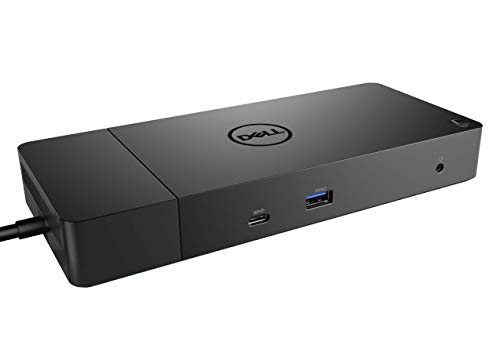
The Dell WD19 and WD19TB provide a more traditional mix of DisplayPort and HDMI outputs. That can be useful when a desk already contains different monitor inputs. The Dell Latitude Rugged DisplayPort Desk Dock is narrower in scope but clearly supplies dual DisplayPort outputs. UtechSmart adds HDMI and VGA, with triple-monitor support at 1080p 60Hz. Always compare the dock’s output type and stated resolution with the monitors you already have.
Operating-system behavior also matters. The Plugable UD-MSTH3 is documented for Windows 11 or newer and ChromeOS, and it is not recommended for Mac or ARM-based systems. Baseus specifies Windows triple-display support and says MacOS systems do not support the same extended-display behavior. The UtechSmart listing covers Windows, MacOS, and ChromeOS, but its video requirements still apply.
Check host charging and included power hardware
Power specifications are not interchangeable. Dell WD25 lists up to 100W, Dell WD19TB lists 130W power delivery with a 180W adapter, and Dell WD19 lists 90W power delivery with a 130W adapter. Plugable UD-MSTH3 lists 100W host charging. These figures describe the dock’s stated capability; the Latitude’s own charging requirements and the connected adapter still need to be checked.
Baseus lists up to 85W laptop pass-through but does not include a charger. Its listing recommends a 100W adapter for a fully loaded setup. Havis takes a different approach by including a Lind charger and specifying stable power for Dell 90W laptops. The UtechSmart dock lists 100W PD, while the supplied information does not say that a charger is included. Separate adapter requirements can affect how a complete desk is assembled.
Count the ports you will actually use
A good port layout reduces the need for extra adapters. Dell WD25 focuses on current workplace connectivity and faster USB and network speeds, although the supplied listing does not provide a full port inventory. Dell WD19 and WD19TB document USB-A, USB-C, Ethernet, audio, HDMI, and DisplayPort connections. Plugable UD-MSTH3 adds six USB ports, 2.5Gbps Ethernet, audio, and a dedicated 30W USB-C charging port for another device.
Baseus offers two 10Gbps USB-A ports, one 10Gbps USB-C port, Gigabit Ethernet, and a 3.5mm audio jack. UtechSmart adds SD and TF card readers alongside USB, Ethernet, HDMI, and VGA. For a rugged installation, Havis provides Ethernet, three USB 3.0 ports, USB 2.0, and mic/speaker input. List your keyboard, mouse, storage, displays, headset, network cable, and card readers before deciding which layout fits.
Consider physical placement and deployment
Desk footprint can be important when a Latitude dock remains connected in one place. Dell WD19-family models have a compact documented footprint around 8.1 inches long and 3.5 inches wide. Baseus uses a vertical form with a magnetic base, while UtechSmart describes a compact aluminum design suited to carrying. Plugable UD-MSTH3 can be positioned horizontally or vertically.
Rugged docks serve a different purpose. Havis includes mounting components and automobile bare wires, and its listed weight is 5.25 pounds. That specification points toward a fixed or vehicle-oriented installation rather than a lightweight home-office accessory. The Dell rugged desk dock also has a specialized Latitude model range. Choose these designs only when the computer and installation environment match the supplied evidence.
Methodology
This is a specification-based comparison using the supplied public listing data. The editorial criteria emphasize Latitude compatibility clarity, display connectivity, host power support, peripheral connectivity, network and audio access, and workspace or deployment fit. Products were grouped by non-empty parent identifier before selection, and only distinct eligible product groups were ranked. No hands-on testing or customer-opinion summary is represented here.
Final Recommendation
Dell Pro Dock WD25 ranks first overall in this specification-based comparison under the published weighted criteria.
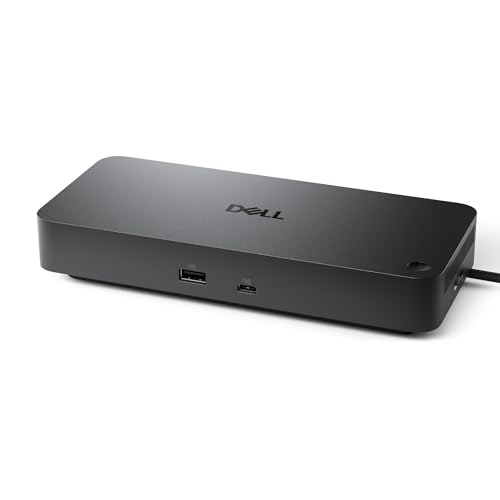
Dell Pro Dock WD25 is the first overall specification-based choice among these best latitude laptop docking stations. Its up-to-100W support, up-to-four-display capability, modern USB and network connectivity, cable-routing design, and clear Dell and non-Dell compatibility make it the most complete general workstation option in this comparison.
For three displays on a documented Windows or ChromeOS setup, Plugable UD-MSTH3 is the more targeted alternative, with 100W host charging, three HDMI outputs, and 2.5Gbps Ethernet. Dell WD19TB is a strong fit when Thunderbolt 3 and multiple display standards are central requirements. Baseus Spacemate is useful for a vertical Windows installation, while the Dell rugged dock and Havis DS-DELL-400 are the appropriate design types when the listed Rugged Latitude models are involved.
The top latitude laptop docking stations are not interchangeable. Confirm the exact Latitude model, USB-C or Thunderbolt features, operating system, monitor inputs, and charger requirements before selecting one. That check is especially important for multi-display configurations and for docks whose listing names only broad device families.
Frequently Asked Questions
Are the best latitude laptop docking stations compatible with every Dell Latitude?
No. Compatibility depends on the Latitude model and its connector capabilities. The Dell Latitude Rugged DisplayPort Desk Dock lists specific Rugged models, and Havis lists a different set of rugged systems with explicit exclusions. USB-C docks also require a suitable USB-C video and power configuration, so verify the exact Latitude model before connecting a dock.
Can a Latitude run three external monitors through a dock?
Some selected products document that capability. Plugable UD-MSTH3 lists three HDMI displays, Baseus lists three extended displays on Windows, and UtechSmart lists triple-display support at 1080p 60Hz. The Latitude must support the relevant USB-C or Thunderbolt video functions, and the monitor resolution may vary by output and operating system.
Do these docks charge a Latitude?
Several listings document host charging, including Dell WD25 at up to 100W, Dell WD19TB at 130W, Plugable UD-MSTH3 at 100W, and Baseus at up to 85W pass-through. The included hardware differs: Havis lists a Lind charger, while Baseus says its charger is not included. Check the Latitude’s charging requirement and the dock’s adapter provisions.
Which dock is suited to a rugged Latitude?
The Dell Latitude Rugged DisplayPort Desk Dock and Havis DS-DELL-400 are the most specialized choices in this group. The Dell dock lists the 7214, 7414, and 5414, while Havis lists the 5414, 5420, 5424, 7414, and 7424. Havis also includes mounting hardware and automobile wiring, supporting a more fixed installation role.
Do multi-display docks work the same way on Windows and MacOS?
Not necessarily. Plugable UD-MSTH3 is documented for Windows 11 or newer and ChromeOS and is not recommended for Mac or ARM-based systems. Baseus states that MacOS does not support its listed Windows extended-display behavior. Review the operating-system limitations and the Latitude’s video support before choosing a multi-display dock.