Buying Guide
The best liquid-tight electrical conduit fittings are selected by matching the fitting to the conduit, enclosure, route, and environmental demands. The products above are compared from supplied listing data rather than hands-on testing. That means the most useful evidence is the information the listings actually document: size, angle, body material, included hardware, stated certifications, resistance claims, and installation instructions.
Start with conduit size
Size is the first filter. The selected products cover 1/2-inch, 3/4-inch, 1-inch, and 1-1/4-inch formats. A fitting should be chosen for the conduit size specified by the project, not simply by the outside appearance of the connector. TAVONUXT, MAKERELE, Feotech, and LifCratms are 1/2-inch options. Gisafai and the 12-piece Wocloer set are 3/4-inch choices, while Joyangy covers 1 inch and Moicstiy covers 1-1/4 inch.
The listing information is not uniform across products. Some provide a clear size in the title and specifications, while others include additional dimensions or pack descriptions. Check the exact size and thread format before ordering, especially when replacing an existing connector.
Choose straight or angled routing
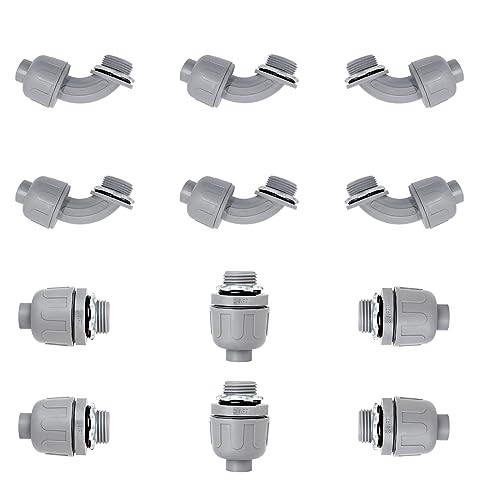
A straight fitting is useful when conduit approaches the enclosure directly. An angled fitting can help when the conduit must change direction near the box. The Wocloer 3/4-inch and 1/2-inch packs include both straight and 90-degree configurations. Feotech also lists straight and 90-degree fittings in its 1/2-inch pack.
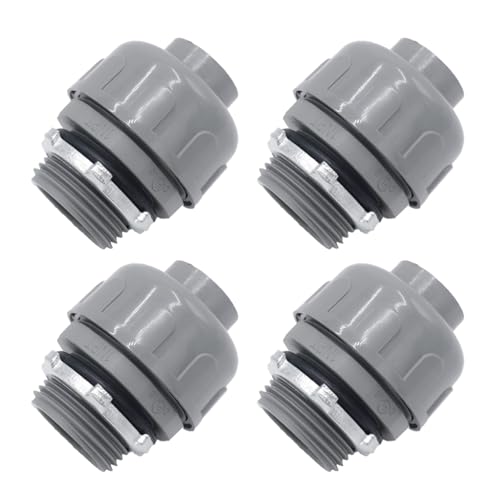
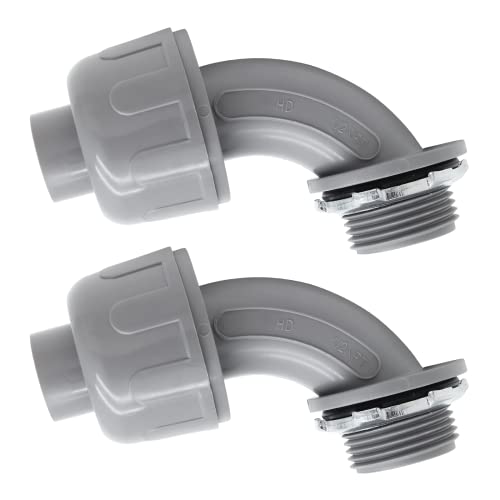
LifCratms provides a compact 90-degree pair. Gisafai, TAVONUXT, and Moicstiy are straight-format selections. Before choosing, sketch the route and count each type needed; a mixed pack may be more useful than a straight-only pack when the installation has several turns.
Compare fitting materials
Non-metallic PVC is common in this group. PVC is documented for TAVONUXT, Wocloer, Feotech, MAKERELE, Joyangy, Moicstiy, and LifCratms. VEVOR uses PA6 nylon, while Gisafai uses zinc die-cast metal. The material choice affects the documented design characteristics, but the supplied evidence does not support a universal claim that one material is best for every installation.
Gisafai is the clearest metal-construction choice in the selected group. Its listing identifies zinc die-cast alloy and an insulated throat. VEVOR provides the most specific nylon description, including stated resistance to impact, rust, oil, and abrasion. Several PVC listings mention resistance to water, oil, acid, corrosion, sunlight, or abrasion. Treat these as listing claims and confirm that the product’s certification and environmental limits match the project requirements.
Look for documented compliance and ratings
Compliance information is especially important for electrical components. Gisafai states that it passed a cULus test. TAVONUXT, Wocloer, MAKERELE, and Moicstiy include UL-listed language in their supplied descriptions. Other products may still be suitable, but their provided evidence does not establish the same certification claim.
TAVONUXT, VEVOR, and Feotech provide additional material or temperature information. TAVONUXT and VEVOR state a 94V-current listing information and 125°C temperature index, while Feotech gives the same figures. Those details are useful for comparison, but they should not be confused with a complete installation approval or a field performance test. Confirm the applicable electrical requirements for the enclosure, location, and conduit system.
Check what the package includes
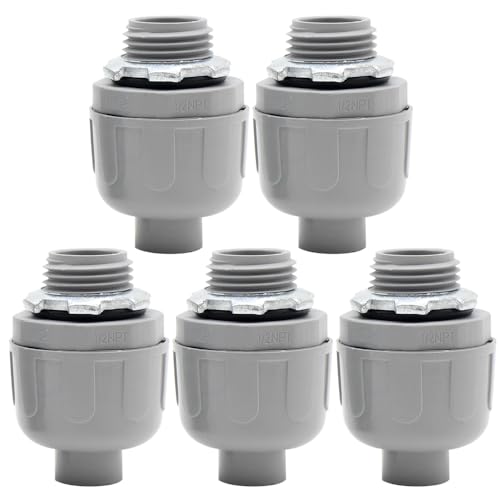
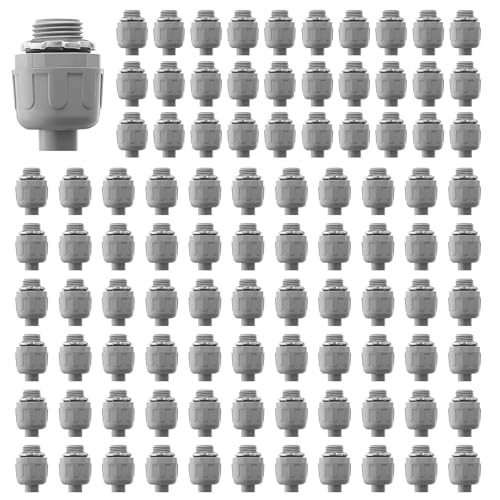
Package quantity changes the practical fit of a product. LifCratms supplies two connectors, Moicstiy supplies two, and MAKERELE supplies five. Gisafai supplies five straight connectors, while the Wocloer 3/4-inch set supplies twelve split evenly between straight and 90-degree fittings. VEVOR lists 100 connectors, and both Feotech and the 1/2-inch Wocloer set list 30-piece packs.
A small pack can reduce unused inventory for a repair. A larger pack may make sense for repeated work, but only if the size and configuration are correct. Do not assume a pack contains lock nuts or gaskets unless the listing says so. Joyangy, Moicstiy, LifCratms, and Gisafai specifically document some included sealing or locking components.
Consider installation details
Many selected listings describe the same basic process: push the conduit or tube onto the ferrule or collar, then tighten the dome sealing nut. TAVONUXT, Wocloer, Feotech, MAKERELE, Joyangy, Moicstiy, and LifCratms describe tool-free installation. This can be useful when the fitting, conduit, and enclosure are already compatible, but the supplied evidence does not establish installation time or ease through testing.
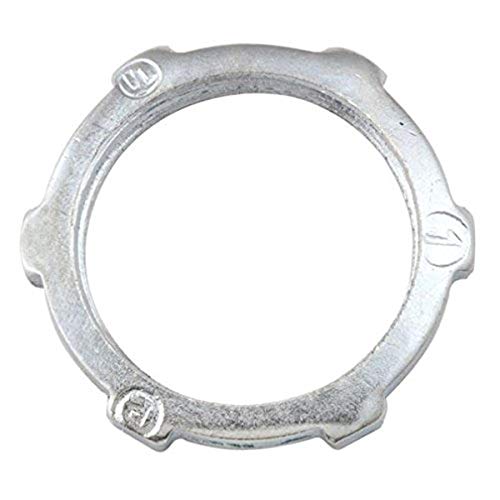
A gasket and lock nut can simplify component matching, as documented for Joyangy, Moicstiy, and LifCratms. Gisafai’s listing mentions sealing gaskets and an insulated throat. Review the package contents carefully before planning the job, and follow the applicable installation instructions rather than relying only on general product descriptions.
Final recommendation
1/2 inch Liquid Tight Connector PVC Flexible Conduit Connector UL Listed Liquid ranks first overall in this specification-based comparison under the published weighted criteria.
Gisafai 3/4-Inch Metal Liquid-Tight Connectors are the first overall specification-based choice among these best liquid-tight electrical conduit fittings because the listing combines zinc die-cast construction, sealing gaskets, an insulated throat, indoor and outdoor application language, and a cULus test claim. For 1/2-inch work, TAVONUXT is a strong alternative when its UL-listed claim and material ratings fit the project. Choose Wocloer when a mixed straight-and-90-degree pack is more useful, VEVOR when a large PA6 nylon supply is appropriate, and Moicstiy when the project requires 1-1/4-inch connectors.
The top liquid-tight electrical conduit fittings are not identical substitutes. Gisafai emphasizes metal construction, MAKERELE emphasizes a 180-degree format, LifCratms emphasizes a compact angled pair, and the larger Wocloer and Feotech packs emphasize quantity and routing variety. Verify size, angle, certification, and included hardware before purchase. The best liquid-tight electrical conduit fittings are the ones whose documented specifications align with the complete conduit system and installation conditions.
Frequently Asked Questions
Among the best liquid-tight electrical conduit fittings, what size should I choose for liquid-tight conduit fittings?
Choose the fitting size that matches the conduit size specified for the installation. The selected comparison includes 1/2-inch, 3/4-inch, 1-inch, and 1-1/4-inch products. Do not rely on a visual match alone; verify the listing’s size and the conduit manufacturer’s compatibility information.
Not automatically. Gisafai documents zinc die-cast metal construction, while many other selected products use PVC and VEVOR uses PA6 nylon. Material, thread, sealing arrangement, and certification can differ. Confirm that the connector is intended for the conduit and enclosure in your system before installation.
Should I buy straight or 90-degree connectors?
Use straight connectors for direct approaches and 90-degree connectors where the route turns near the enclosure. Wocloer and Feotech provide mixed straight-and-90-degree packs, while LifCratms is a 90-degree pair and MAKERELE is a 180-degree pack. Count each configuration required before selecting the package.
Several selected listings describe tool-free installation by pushing the conduit onto the ferrule or collar and tightening the dome sealing nut. That description does not replace the product instructions or establish a tested installation time. Confirm the correct assembly procedure for the specific fitting and conduit.
Which evidence should I verify before ordering?
Verify conduit size, connector angle, body material, package contents, sealing hardware, and any certification or environmental rating claimed in the listing. Certification language varies across the products in this comparison, so confirm the requirements for the intended location and electrical installation.