Buying Guide
The best flexible electrical conduit fittings are selected by matching the connector to the conduit, enclosure, environment, and route. The products here are not ranked from hands-on testing. They are compared from supplied public listing evidence, including stated dimensions, materials, connector angles, included hardware, certification information, and package scope. Because the pool includes both standalone connectors and kits that independently include connectors, first decide whether you need replacement fittings or a complete conduit run.
Match the nominal size first
Size is the first compatibility check. The selected products cover 1/2 inch, 3/4 inch, 1 inch, and 1-1/2 inch options. A 1/2-inch connector should be considered only for a matching 1/2-inch conduit system; the listing names alone do not establish compatibility with every manufacturer’s tubing. The HDHAODA 3/4-Inch Straight 5-Pack is the appropriate size-specific choice among the selected larger mid-size products, while LifCratms provides a documented 1-inch option. Moicstiy’s 1-1/2-inch pack addresses the largest stated size in this group.
Several conduit kits provide additional dimensional detail. DWALE lists a 1/2-inch inside diameter, 0.83-inch outside diameter, and 2.5 mm thickness. Those details can help with planning, but they should not replace checking the conduit manufacturer’s compatibility instructions.
Choose straight or angled geometry
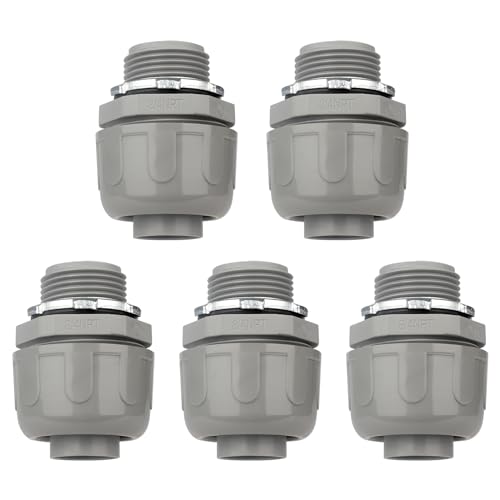
Straight fittings are best suited to direct entries where the conduit approaches the box or equipment without a sharp directional change. HDHAODA’s 1/2-inch and 3/4-inch packs, TAVONUXT, and Moicstiy’s 1-1/2-inch pack are straight-focused choices. Their advantage is a simple, predictable configuration for repeated direct connections.
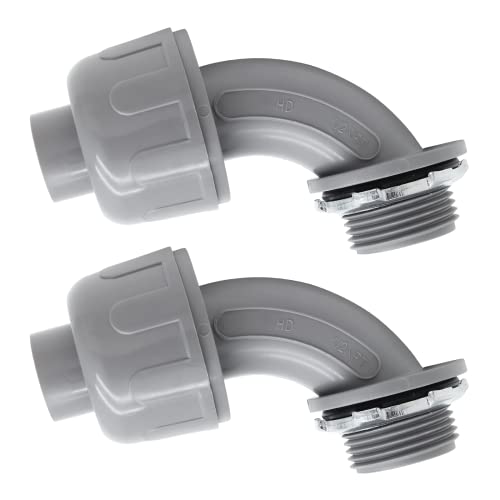
A 90-degree fitting can help route flexible conduit around an enclosure or equipment edge. LifCratms’ 1/2-inch 90-degree pack is the most focused standalone angled option in the selection. The DWALE, Ansgery, and Feotech kits add both straight and angle fittings, which may be more convenient when a project includes several route changes. Check the actual included quantity before ordering: the supplied Feotech listing gives inconsistent counts for its corner connectors.
Nonmetallic PVC and nylon designs appear throughout this comparison. The HDHAODA products specify nylon 6 and state resistance to impact, rust, oil, seawater, and mild acids. Several PVC listings also state resistance to corrosion, water, oil, abrasion, or acid. These are listing claims, not independent test results, so use them as documentation for comparison rather than as a guarantee for a particular installation.
For a project where certification and operating conditions are important, Neorexon’s listing is unusually specific. It identifies UL certificate numbers for the conduit and fittings and states dry, wet, oil, and temperature conditions. Moicstiy’s 1-1/2-inch listing also states UL-listed construction, while HDHAODA identifies UL File No. E359420. Always verify the current certification and the requirements of the installation before purchase.
Decide between fittings alone and a kit
Standalone packs make sense when the conduit is already installed or when a project needs extra connectors. The two-piece LifCratms angled pack is compact, while the 10-piece HDHAODA and TAVONUXT packs are better suited to multiple straight entries. Larger nominal sizes usually have fewer pieces in the supplied pool, so quantity planning matters.
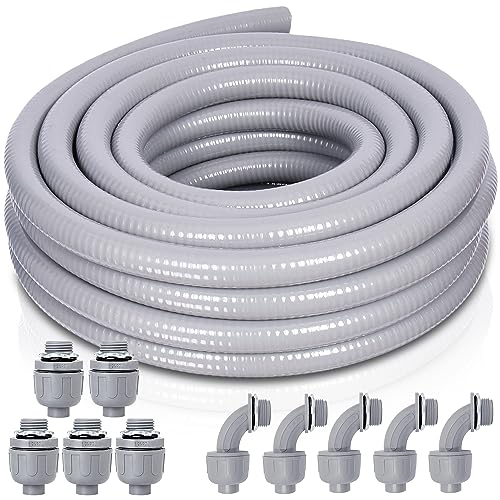
A kit is more useful when you need conduit and fittings together. Ansgery, DWALE, Feotech, and Neorexon supply 25-foot kits. Their included connector mixes differ, with DWALE listing eight straight and eight angle fittings, Ansgery listing five straight and three 90-degree fittings, and Neorexon confirming straight and angle fittings without stating exact counts.
Review the installation method and hardware
Most selected listings describe a similar connection process: push the conduit onto the ferrule, then tighten the dome sealing nut. Several state that no additional tools are required. That can simplify the mechanical connection, but the listings do not provide a hands-on assessment of sealing quality or installation time. Treat no-tool installation as a design description, not a performance promise.
Check whether the required parts are supplied. LifCratms lists a gasket and locknut with each angled connector and ferrules and locknuts with its 1-inch pack. HDHAODA lists the main body, dome nut, O-ring, and steel locknut. These details reduce uncertainty when buying replacement fittings. For kits, confirm whether the package contains enough connectors for every planned entry and whether the connector size matches the conduit dimensions.
Plan for the route and application
The listings mention HVAC equipment, pumps, motors and controls, refrigeration equipment, marine equipment, outdoor lighting, transformer connections, machinery, and household equipment. Those application examples show the intended breadth of the selected designs, but they do not approve a product for every electrical code or environment. Direct burial, sunlight exposure, wet locations, oil exposure, and temperature requirements should be checked against the current product documentation and local electrical requirements.
For a mixed project, a kit with both straight and angle fittings can reduce the need to buy separate configurations. For a repetitive enclosure layout, a straight pack may be easier to inventory. For a tight route, an angled fitting may avoid forcing the conduit into an unsuitable bend. The top flexible electrical conduit fittings are therefore not identical for every project; the most specification-aligned match depends on geometry and size before pack quantity.
Final Recommendation
DWALE 1/2-Inch 25-Foot Conduit Kit ranks first overall in this specification-based comparison under the published weighted criteria.
The final choice among the best flexible electrical conduit fittings depends on the documented features that match your intended use.
Neorexon 1/2-Inch 25-Foot Conduit Kit is the first overall specification-based choice among these selected products. It combines a useful 25-foot length, straight and angle fittings, no-tool installation, and unusually detailed UL, wet, dry, oil, and temperature information. For a 25-foot run needing many connectors, DWALE is a strong alternative because its listing states eight straight and eight angle fittings. Ansgery is another practical mixed-angle 25-foot option, while Feotech emphasizes flexible routing and cut-to-length handling.
For standalone fittings, HDHAODA’s 1/2-inch straight pack is the clearest certified repeated-connection option, and its 3/4-inch version serves a larger conduit size. TAVONUXT adds a stated 12-month warranty to a 1/2-inch straight pack. LifCratms is the focused choice for a compact 90-degree 1/2-inch connection or a four-piece 1-inch pack. Moicstiy’s 1-1/2-inch straight pack is the specialist choice for the largest stated size. These are specification-based recommendations, so verify size, certification, environmental conditions, and local code requirements before ordering. The top flexible electrical conduit fittings should be chosen by documented fit, not by marketplace popularity.
Frequently Asked Questions
What size should I choose for flexible conduit?
Choose a connector that matches the conduit system’s stated nominal size and confirm the manufacturer’s compatibility information. The selected listings include 1/2-inch, 3/4-inch, 1-inch, and 1-1/2-inch options. Do not infer compatibility from outside diameter alone, because connector and conduit systems can use manufacturer-specific dimensions.
Are straight or 90-degree fittings better?
Neither is universally better. Straight fittings suit direct entries, while 90-degree fittings help route conduit around an enclosure or equipment edge. If the project includes both kinds of entry, a kit such as DWALE, Ansgery, Feotech, or Neorexon may provide a more useful mix than a straight-only pack.
The supplied listings commonly describe a push-on installation followed by tightening the dome sealing nut, with no additional tools required. That describes the listed design; it does not verify installation speed or sealing performance. Follow the product instructions and applicable electrical requirements.
Which best flexible electrical conduit fittings include the conduit too?
Standalone options include the HDHAODA, TAVONUXT, LifCratms, and Moicstiy connector packs. Compare the included connector quantities and angles before deciding between a kit and replacement fittings.
What should I verify for outdoor or wet installations?
Check the current product documentation for the required environmental and certification conditions, including wet-location, oil, sunlight, burial, and temperature requirements. Some selected listings state resistance or ratings, but those claims should be matched to the actual installation and local code rather than treated as universal approval.