Buying Guide
Choosing among the best low-loss digital coaxial cables starts with identifying the signal system, connector family, and impedance requirement. A cable described as coaxial is not automatically interchangeable with every other coaxial cable. The selected products include a dedicated 75-ohm RCA digital-audio cable, 75-ohm F-type television and antenna cables, and 50-ohm RF cables using N, SMA, BNC, or PL-259 connectors.
Match impedance before comparing construction
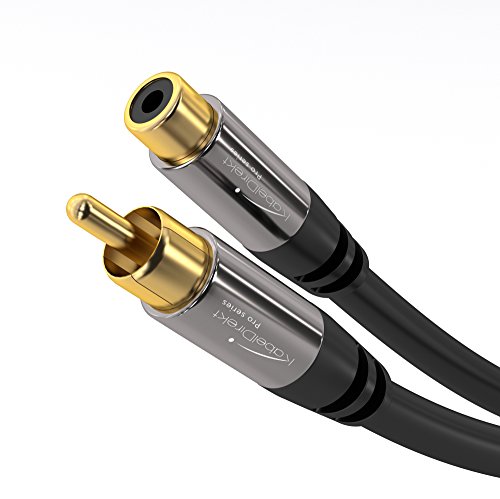
Impedance is one of the first specifications to verify. The TODN cable documents constant 75-ohm impedance and RCA male-to-male plugs, making it the clearest match for compatible SPDIF or other digital-audio equipment. HiFind RG6 and MOOKEERF RG11 also specify 75 ohms, but both use F-type connectors and are positioned for television, satellite, modem, projector, or antenna connections.
The remaining selected cables are primarily 50-ohm RF designs. Wilson Electronics WILSON-400, MOOKEERF KMR240, MOOKEERF RG8X, Superbat RG8X, and the MPD Digital LMR400 options are aimed at antennas, amplifiers, radios, analyzers, transmitters, or related equipment. A 50-ohm cable may physically connect through an adapter, but the connector and system specification still need to be appropriate for the application. Do not select a cable solely because its title includes “low loss.”
Choose the connector that matches the equipment
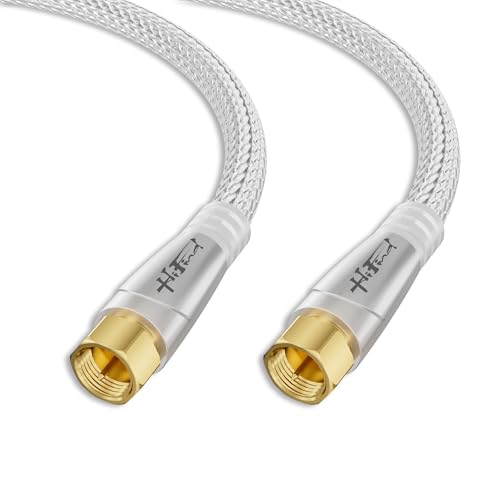
Connector fit is a practical dividing line between these cables. RCA male-to-male plugs on the TODN are intended for equipment with RCA digital-coaxial inputs and outputs. F-type connectors on HiFind RG6 and MOOKEERF RG11 are more typical for television, satellite, cable-modem, and antenna interfaces.
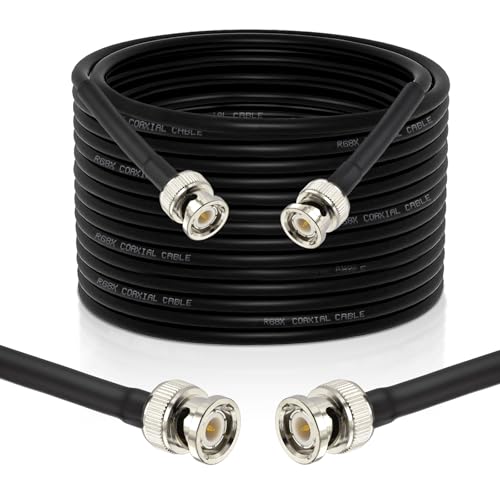
N-type connectors appear on Wilson Electronics WILSON-400, MPD Digital LMR400 N-male-to-N-male, and MOOKEERF RG8X N-male-to-N-male. The MOOKEERF KMR240 uses N-male to SMA-male connectors, which can be useful when a device and antenna use different RF connector families. BNC connections are available in both male-to-male and male-to-female formats from Superbat and MOOKEERF. The male-to-female version can function as an extension where the existing connection requires that orientation. MPD Digital LMR400 with PL-259 connectors is intended for compatible UHF radio and antenna hardware.
Look for evidence of transmission control
A useful listing should provide more than a general low-loss label. MOOKEERF KMR240 supplies a stated loss below 0.07 dB at 900 MHz. MOOKEERF RG8X BNC gives an attenuation claim of -2.65 dB at 25 feet and 1,800 MHz. Wilson Electronics WILSON-400 identifies a 30-to-5,800 MHz frequency range, while the MPD Digital N-male-to-N-male cable states coverage through 6 GHz.
Other products document their cable construction rather than a precise attenuation figure. TODN describes an OCC conductor and constant 75-ohm impedance. HiFind RG6 specifies a pure-copper core and foamed FPE dielectric. MOOKEERF RG11 identifies a 14 AWG conductor and positions RG11 for reduced attenuation on long runs. These details can help compare designs, but they are not substitutes for a measurement under your exact operating conditions.
Compare shielding for electrically busy locations
Shielding can matter when coaxial cable is routed near power supplies, wireless transmitters, computers, or other potential interference sources. TODN uses tinned-copper braid and aluminum foil. HiFind uses a four-layer composite shield. Wilson Electronics WILSON-400 is described as triple-shielded, and MPD Digital LMR400 uses dual shielding.
MOOKEERF KMR240 lists a dense tinned-copper braid, while MOOKEERF RG8X uses aluminum foil and tinned-copper braid. The BNC products also document copper-braid coverage. These construction descriptions support comparison, but they do not establish a fixed result in every installation. Routing, connector integrity, equipment grounding, and cable length can also affect a complete signal path.
Consider length, flexibility, and installation environment
Use the shortest length that reaches the equipment without placing strain on the connectors, while allowing enough slack for routing. The TODN is approximately 3.3 feet, the MPD Digital PL-259 cable is 4 feet, and MOOKEERF KMR240 is 1 foot. These formats suit compact setups. The 6-foot MOOKEERF RG8X N-to-N and 10-foot MPD Digital N-to-N provide more room around racks or antenna hardware.
For extended installations, Superbat RG8X reaches 50 feet, MOOKEERF RG11 reaches 75 feet, and Wilson Electronics WILSON-400 reaches 100 feet. Longer cables can simplify equipment placement but may be harder to route and secure. The RG11 and WILSON-400 listings specifically describe outdoor or weather-resistant construction. HiFind RG6 is also described for direct burial and outdoor use. Verify that the jacket and connector sealing suit the actual exposure before installing a cable outside.
Flexibility is another trade-off. MOOKEERF RG8X uses a stranded center conductor and is described as more flexible than a normal cable. The dedicated TODN cable uses a nylon braided jacket for abrasion resistance and easier routing. Larger LMR400 and RG11 formats may provide useful long-run characteristics but can require more space for bends and cable management.
Final recommendation
TODN HiFi Digital Coaxial Audio Cable ranks first overall in this specification-based comparison under the published weighted criteria.
TODN HiFi Digital Coaxial Audio Cable is the first overall specification-based choice among the best low-loss digital coaxial cables because its 75-ohm RCA format, OCC conductor, dual shielding, and audio-system positioning align directly with compatible digital-audio equipment. It is the most focused selection when the connection is SPDIF or another RCA digital-coaxial link.
For 75-ohm home AV or television equipment using F-type connectors, HiFind RG6 is the more appropriate design. Its pure-copper core and quad shielding provide detailed construction evidence, while MOOKEERF RG11 is better suited to a documented long television or antenna run.
The top low-loss digital coaxial cables for 50-ohm RF installations are more varied. Wilson Electronics WILSON-400 is the long-run N-to-N option, MPD Digital LMR400 N-male-to-N-male offers a 10-foot wideband jumper, and MOOKEERF KMR240 is the most specific choice when its N-to-SMA format and 900 MHz loss claim match the equipment. For BNC systems, MOOKEERF RG8X BNC-to-BNC provides a short extension format, while Superbat RG8X BNC-to-BNC covers a much longer run. MPD Digital LMR400 with PL-259 connectors is the dedicated choice for compatible CB, ham-radio, and UHF antenna hardware.
The correct final selection should therefore follow the equipment’s connector and impedance requirements first, then length, shielding, flexibility, and the level of transmission evidence supplied for that cable type.
Frequently Asked Questions
Are the best low-loss digital coaxial cables all suitable for SPDIF audio?
No. The TODN cable is the only selected product specifically presented as a digital-audio RCA cable with constant 75-ohm impedance. HiFind RG6 and MOOKEERF RG11 are 75-ohm designs but use F-type connectors. The 50-ohm N, SMA, BNC, and PL-259 products are primarily for RF, antenna, radio, measurement, or wireless equipment. Check both connector type and impedance before connecting a digital-audio device.
Is 75-ohm or 50-ohm coaxial cable correct for my system?
Use the impedance specified by the equipment and signal path. The TODN, HiFind RG6, and MOOKEERF RG11 listings specify 75 ohms. Wilson Electronics WILSON-400, MOOKEERF KMR240, MOOKEERF RG8X, Superbat RG8X, and the MPD Digital RF cables are presented as 50-ohm or RF-oriented products. Impedance is a system requirement, not simply a measure of whether a cable is labeled low loss.
Does more shielding always mean better transmission?
Not necessarily. More shielding can help limit coupling from nearby interference sources, but the complete installation also depends on impedance, cable length, connector quality, routing, and equipment. HiFind RG6 documents quad shielding, Wilson Electronics WILSON-400 documents triple shielding, and TODN and the MPD Digital cables document dual shielding. These are useful construction differences, not guarantees of identical results in every environment.
When should I choose RG11 instead of RG6?
The supplied MOOKEERF RG11 listing positions RG11 for longer 75-ohm CATV, satellite, VHF/UHF, radio, and television runs and identifies a 14 AWG center conductor. HiFind RG6 is shorter at 6 feet and uses a 1.02mm pure-copper core with quad shielding. Choose between them based on the required connector, route length, bend space, and equipment application.
What makes the top low-loss digital coaxial cables different from ordinary coaxial jumpers?
The selected designs provide application-relevant details such as impedance, conductor material, shielding, connector type, jacket construction, frequency range, or attenuation claims. MOOKEERF KMR240 and MOOKEERF RG8X BNC include numeric transmission information, while TODN identifies a constant 75-ohm audio format. These specifications make a cable easier to match to the intended signal path than a generic coaxial description.