Buying Guide
When comparing the best female digital coaxial cables, start with the connector standard rather than the jacket material. RCA male-to-female extensions are intended for digital coaxial audio and related AV equipment. F-type female-to-female or adapter-supported RG6 products are generally aimed at television, antenna, satellite, modem, or broadband connections. These are different physical interfaces, so an apparently similar coaxial cable may not connect to the equipment in your system.
Match the connector type
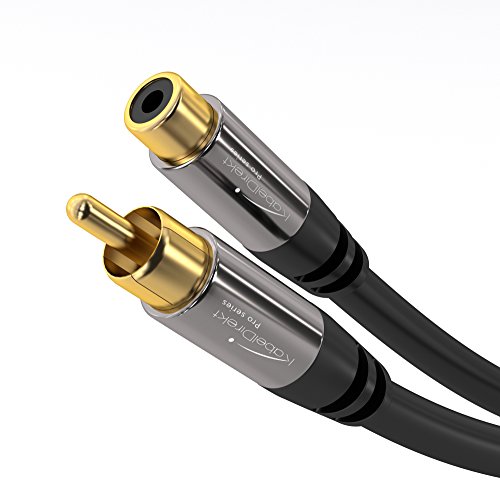
RCA is the relevant format for many digital audio connections between a television, disc player, receiver, amplifier, or subwoofer. KabelDirekt, VANAUX, Togconn, and Anu Limen explicitly describe male-to-female RCA extension layouts. This arrangement adds length to an existing RCA cable or changes the connection direction without requiring a complete replacement.
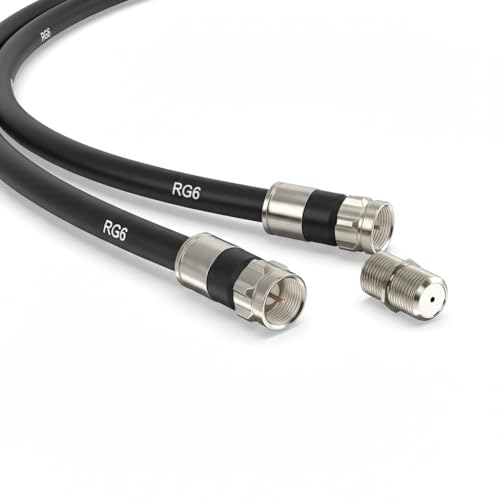
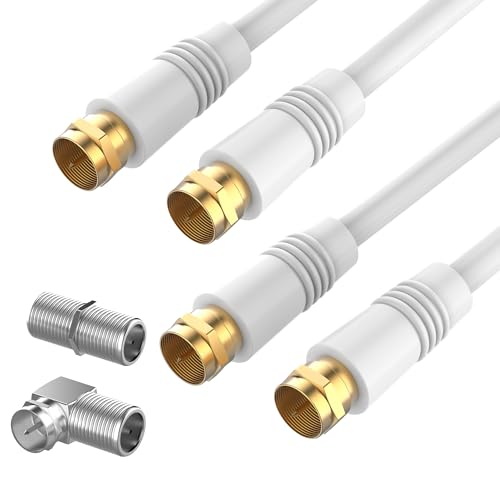
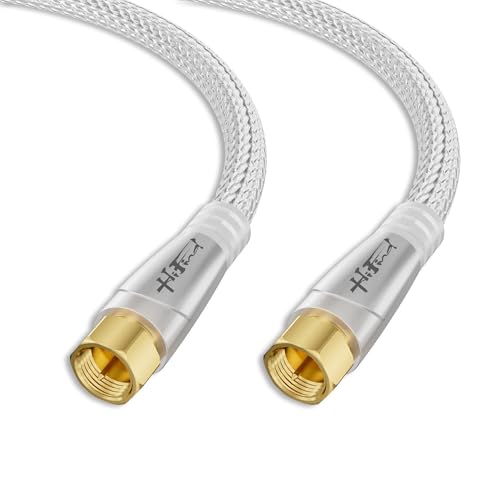
F-type products serve a different installation pattern. Fancasee documents female-to-female F-type connectors, while the pibidi, ecjtu, Adoreen, and Chaowei listings describe RG6 television or antenna cables with couplers or extender attachments. Check whether your equipment has an F-type threaded port and whether the supplied adapter is required to create the female connection.
Check digital coaxial specifications
For digital audio, a stated 75-ohm impedance is an important specification. KabelDirekt and Anu Limen explicitly identify 75 ohms, while the RCA listings from VANAUX and Togconn describe digital coaxial compatibility.
For TV and antenna installations, the selected RG6 products use 75-ohm designs or are described as digital TV coaxial cables. The correct impedance and connector family matter more than a generic claim about premium sound or picture quality. The supplied listings document compatibility categories, but they do not provide independent testing of signal performance.
Consider shielding
Shielding is useful when cables run near power supplies, electronics, or other possible interference sources. The selected products describe several approaches. KabelDirekt uses Alu-Mylar foil and a dense aluminum braid. Anu Limen and the VANAUX options describe double or multilayer shielding. Adoreen specifies quad shielding, and Chaowei specifies triple shielding.
Shielding descriptions should be compared with the actual installation. A highly shielded RG6 cable may make sense for a longer antenna or satellite route, while a short RCA extension may prioritize connector shape and flexibility. Fancasee is a special case: its flat profile is valuable for passing through narrow gaps, but the listing provides less detailed shielding information than the thicker RG6 products.
Choose the right length and shape
Measure the required route before choosing a cable. The nine-inch Togconn model is designed for a very short extension and a 90-degree change in direction. The two-foot VANAUX and pibidi options add modest reach. KabelDirekt, Anu Limen, ecjtu, and Adoreen cover medium-length routes, while Chaowei reaches 15 feet.
Right-angle designs can help when a television, receiver, or subwoofer is close to a wall. Togconn and the VANAUX 90-degree model specifically document this layout. Adoreen’s supplied adapter can change between straight and angled positions. A right-angle plug may reduce strain at the port, but it also needs enough clearance for the equipment’s particular socket and housing.
Review the jacket and connector construction
Jacket materials affect handling and physical protection. VANAUX and Anu Limen use braided outer coverings, while Adoreen documents a nylon-braided jacket. KabelDirekt uses flexible PVC and break-resistant metal sleeves. The Fancasee cable uses an ultra-thin flat form, and the RG6 options use PVC jackets intended for TV or antenna routing.
Gold-plated connectors appear in several selected listings, including both VANAUX models, Togconn, Anu Limen, ecjtu, and Adoreen. These are product-construction details, not proof of a measured performance advantage. Likewise, bend-test statements describe the manufacturer’s claimed durability and should not be treated as independent testing.
Decide whether an adapter or coupler is acceptable
A built-in female connector is the simplest arrangement, but many coaxial extension products use an included coupler or adapter. This can be practical when you already have a compatible cable and need to extend it. The trade-off is an additional connection point and another component to secure.
The Fancasee model has the clearest built-in female-to-female F-type design. The RCA selections from VANAUX, Togconn, Anu Limen, and KabelDirekt provide direct male-to-female cable layouts. The pibidi, ecjtu, Adoreen, and Chaowei choices use or include an attachment to provide the extension function. Confirm the package contents and connector direction before installation.
Final Recommendation
KabelDirekt RCA Extension Cable 6ft ranks first overall in this specification-based comparison under the published weighted criteria.
The final choice among the best female digital coaxial cables depends on the documented features that match your intended use.
KabelDirekt RCA Extension Cable 6ft is the highest-scoring returned product and the first overall specification-based choice. It combines a clearly documented male-to-female RCA layout, 75-ohm digital capability, double shielding, copper conductors, and reinforced plug sleeves. For a shorter run, the VANAUX 3.2-foot model offers a braided jacket and multilayer shielding, while the 90-degree VANAUX and Togconn products are better suited to tight spaces.
Among the top female digital coaxial cables for F-type television or antenna connections, Fancasee is the most direct female-to-female option. Adoreen is the more shielding-focused set, and Chaowei provides the longest documented route. The best choice depends on whether your equipment uses RCA or F-type ports, how much length is required, and whether a coupler-based connection is acceptable.
Frequently Asked Questions
What should I check first when choosing the best female digital coaxial cables?
Check the connector standard and direction first. RCA male-to-female products fit digital audio and AV extension tasks, while F-type RG6 products are aimed mainly at television, antenna, satellite, modem, or broadband connections. Then verify the required length and whether the female connection is built into the cable or supplied through an adapter.
Are RCA and F-type coaxial cables interchangeable?
No. RCA and F-type connectors have different physical designs and are intended for different equipment interfaces. The selected RCA products from KabelDirekt, VANAUX, Togconn, and Anu Limen are not direct substitutes for the F-type RG6 products from Fancasee, pibidi, ecjtu, Adoreen, or Chaowei.
Is 75-ohm impedance useful for digital coaxial connections?
A 75-ohm specification is relevant to digital coaxial and many video or antenna systems. KabelDirekt and Anu Limen explicitly document 75-ohm designs, while the selected RG6 listings also describe 75-ohm TV or coaxial signaling. Always match the cable to the interface and system documented by your equipment.
When is a right-angle female coaxial cable useful?
A right-angle design can help when a port is close to a wall or cabinet and a straight plug would force a sharp bend. The VANAUX 90-degree model and Togconn adapter are documented for this purpose. Adoreen also includes an adapter that can be positioned in several orientations.
Should I choose a coupler-based extension or a direct female-ended cable?
A direct female-ended cable has a simpler connection path. A coupler-based design can be useful when extending an existing cable or adapting an installation, but it adds another connection point. Fancasee provides a direct F-type female-to-female format, while several selected RG6 products include a coupler or extender attachment.