Buying Guide
Choosing the best nikon f camera lens caps starts with identifying which opening needs protection. Nikon F equipment can require a camera body cap, a rear lens cap, or a front cap sized to the lens’s filter thread. Those are different parts, even though listings sometimes group them together. A body cap covers the exposed camera mount and sensor area when no lens is attached. A rear lens cap covers the back of a detached lens. A front cap covers the front optical element and is selected by diameter, such as 55mm or 67mm.
This comparison is specification-based. It does not claim hands-on fit testing, durability testing, or customer sentiment. The ranking uses only compatibility wording, stated protective purpose, installation or handling features, pack contents, and material information supplied in the product listings.
Match the cap to the equipment
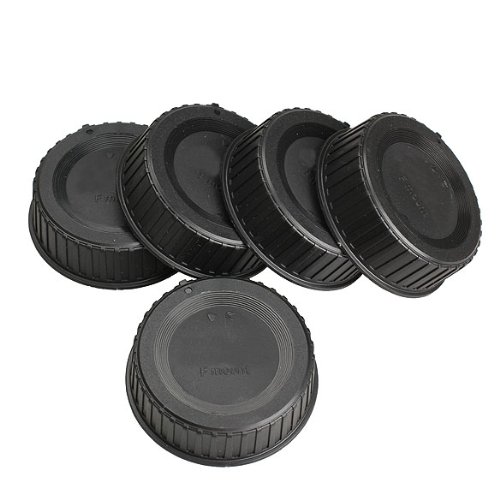
For a detached Nikon F lens, a rear cap with explicit F-mount compatibility is usually the least ambiguous choice. The Nikon LF-1, Vktech five-pack, Haoge kit, JJC sets, Fotasy set, PROfezzion kit, and ULBTERF kit all describe rear-lens coverage for Nikon F-related equipment. Their listings refer to protecting rear glass, electronic contacts, or both.
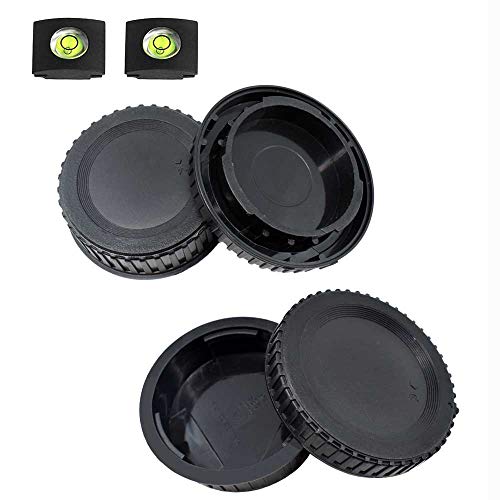
A body cap is selected for the camera mount, not for the lens’s front filter diameter. Kits such as the JJC L-R16 3-Pack, Fotasy NF_5 set, PROfezzion kit, Haoge KKG-NF, and ULBTERF cover this use. If you store several camera bodies without lenses attached, a kit with multiple body caps may be more useful than a rear-cap-only pack.
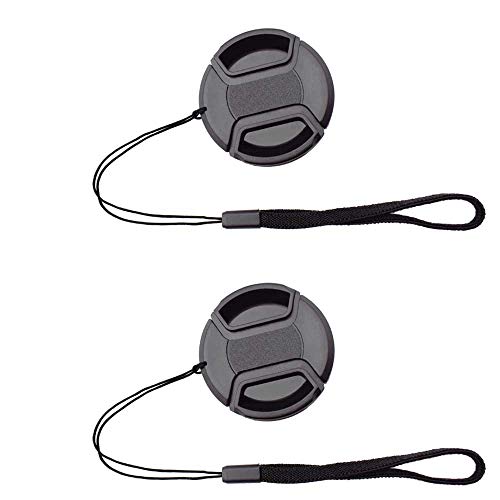
Front caps require a different check. The ULBTER 55mm set is associated with the AF-P DX NIKKOR 18-55mm lens and other 55mm lenses, while the ULBTER 67mm set is listed for selected Nikon lenses using a 67mm diameter. The camera model alone does not establish front-cap size. Look for the diameter mark, normally shown with a diameter symbol, on the lens barrel or existing cap before ordering.
Consider what the listing says about protection
A useful cap should cover the component it is designed for without confusing front, rear, and body functions. Body caps in the selected kits are described as shielding the sensor or camera interior from dust and damage. Rear caps are described as covering rear glass and electronic contacts against dust, moisture, fingerprints, scratches, or related handling exposure. These are listing claims about intended coverage, not independently verified results.
The broadest protection package is the PROfezzion kit or ULBTERF kit because each includes body and rear-lens caps plus hot shoe covers. The hot shoe cover is a separate accessory and does not replace either a body or lens cap. If your primary need is simply to keep detached lenses covered, the Vktech pack or Nikon LF-1 is more focused.
Choose a suitable attachment style
The Nikon LF-1 is described as screw-on, while the selected front-cap sets use front pinch attachment. Pinch caps can be convenient when a lens hood is mounted, according to the ULBTER listings. Body caps in the ULBTERF listing refer to bayonet rotation and alignment dots, and the JJC body caps document finger-grip edges. These details help distinguish handling designs, but the supplied evidence does not establish that one design is universally easier or more secure.
For a body or rear cap, verify that the listing names Nikon F, AF, or AF-S compatibility and does not refer only to Nikon Z equipment. For a front cap, verify the diameter and the exact lens designation. The ULBTER 55mm listing specifically separates an AF-P lens from an AF-S version, demonstrating why a model-level check matters even when two lenses look similar.
Decide between a single cap and a multipack
A single cap is sensible when one original cap is missing. The Nikon LF-1 is the clearest single-purpose option in this selection. Multipacks are more useful when you have several lenses, multiple bodies, or a habit of keeping spare caps in a camera bag. The Vktech pack concentrates on five rear caps, while the Fotasy and JJC sets combine body and rear-cap functions.
The JJC L-R16 3-Pack supplies three rear caps and three body caps, making it the most expansive selected combination for several F-mount components. Fotasy also supplies five pieces and identifies replacement references for common Nikon body and rear-cap types. PROfezzion adds hot shoe covers, which may matter to photographers who store bodies without lenses attached.
Inspect the material and included accessories
ABS or plastic construction is documented for most selected products. The listings describe the material as high quality, premium, durable, or high impact, but they do not provide standardized impact, weather-sealing, or longevity tests. Treat those terms as specification descriptions rather than performance guarantees.
Keepers are included with both selected ULBTER front-cap sets. They can be useful if a front cap is frequently removed during shooting, although the evidence does not prove that a keeper will prevent loss in every situation. A microfiber cloth is included with the ULBTERF kit? No: the supplied ULBTERF listing does not include one, so it is not counted as a feature here.
Final recommendation
JJC L-R16 3-Pack Body and Rear Caps ranks first overall in this specification-based comparison under the published weighted criteria.
JJC L-R16 3-Pack Body and Rear Caps is the first overall specification-based choice among these best nikon f camera lens caps. Its broad listed Nikon F compatibility, three body caps, three rear lens caps, finger-grip edges, and ABS construction give it the most specification-aligned combination of coverage and pack utility without relying on marketplace signals. It is best suited to photographers managing more than one body or lens.
For a single dedicated rear cap, the Nikon LF-1 is the most direct match because its listing explicitly identifies Nikon F-mount lenses and a screw-on design. For several detached lenses, the Vktech five-pack is more focused. For a mixed storage kit that includes hot shoe covers, PROfezzion and ULBTERF provide the broadest documented accessory coverage.
The top nikon f camera lens caps are not interchangeable in every situation. Select body or rear caps by mount terminology, and select front caps by diameter and exact lens model. The ULBTER 55mm and 67mm products are useful only when those measurements and listed lens compatibility match your equipment. This approach keeps the purchase grounded in the specifications rather than assumptions based on camera name alone.
Frequently Asked Questions
Among the best nikon f camera lens caps, what should I check before buying Nikon F caps?
Check whether you need a body cap, rear lens cap, or front lens cap. For body and rear caps, look for Nikon F, AF, or AF-S compatibility. For front caps, confirm the diameter printed on the lens. A Nikon F camera body does not determine the front-cap diameter of every lens attached to it.
Are body caps and rear lens caps the same thing?
No. A body cap covers the camera mount and protects the sensor or interior when a lens is removed. A rear lens cap covers the rear glass and contacts of a detached lens. Kits such as the JJC L-R16 3-Pack and Haoge KKG-NF include both types, but they serve different openings.
Are the ULBTER 55mm and 67mm caps interchangeable?
No. The ULBTER 55mm set is intended for lenses using a 55mm front diameter, including the listed AF-P DX NIKKOR 18-55mm lens. The ULBTER 67mm set is for selected lenses using a 67mm diameter. Confirm the diameter mark on your lens before choosing between them.
Is a multipack better than the Nikon LF-1?
It depends on the use. The Nikon LF-1 is a focused single rear cap for an F-mount lens. A multipack such as the Fotasy NF_5, Vktech five-pack, or JJC L-R16 3-Pack is more practical when you need several caps or a combination of body and rear protection. A multipack is not automatically preferable for a single replacement.
Do hot shoe covers replace body caps?
No. Hot shoe covers protect the camera’s accessory shoe, while body caps cover the camera mount when no lens is attached. The PROfezzion and ULBTERF kits list hot shoe covers in addition to body and rear-lens caps, not as substitutes for them.