Buying Guide
The best zoom underwater cameras are not interchangeable. A compact waterproof camera can be simpler for pool and beach photography, while a cased action camera is generally aimed at mounting, wide-angle video, and deeper water. Start by deciding how you will use the camera, then compare the listed depth, zoom type, video mode, stabilization, and power package.
Choose a camera type
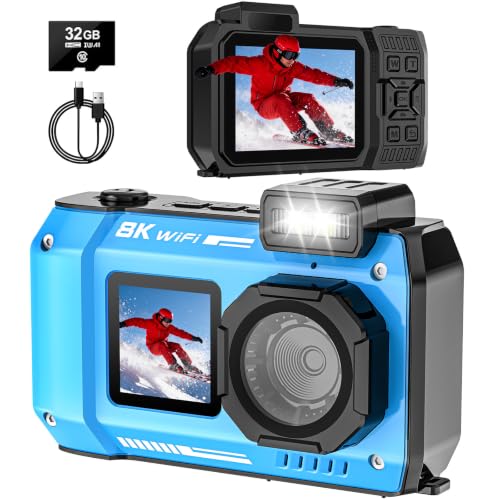
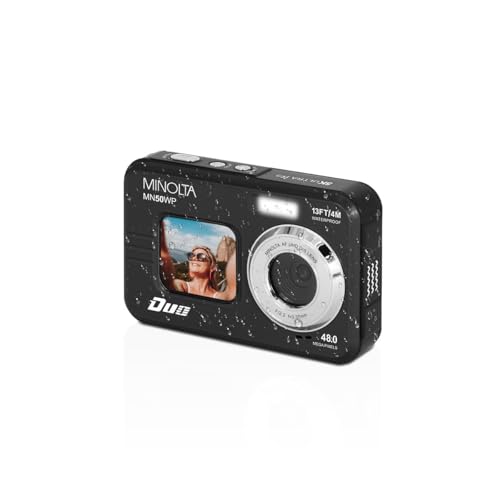
Compact waterproof cameras are represented here by the SPUNALP CM026, SiSuSy UP022, OM SYSTEM Tough TG-7, Minolta Duo MN50WP, and KODAK PIXPRO WPZ2. These designs document built-in or self-contained waterproof construction, and several offer front and rear screens. They are a practical fit for casual underwater photos, vacation use, and users who want a conventional point-and-shoot shape.
The OM SYSTEM Tough TG-7 is the most specialized compact choice because its listing documents five underwater modes and four macro modes. The KODAK PIXPRO WPZ2 is different again: its 4X optical zoom is explicitly stated, unlike the digital zoom claims on many other models. For close details such as reefs, shells, or pool toys, the TG-7’s macro specification may matter more than a large digital zoom number.
Cased action cameras include the ODDV Action1, icefox i7, SVBONY SVGo2, AKASO Brave 7 LE, and Camlance A16. These models emphasize video, electronic stabilization, remote control, Wi-Fi, mounting, and housing-based depth. They are better aligned with snorkeling footage, moving subjects, helmets, handles, and water sports.
Compare waterproof depth carefully
Depth claims are not uniform. The SPUNALP CM026 lists 33 feet, while SiSuSy UP022 lists 50 feet without a housing. The OM SYSTEM Tough TG-7 also lists 50 feet. The Minolta Duo MN50WP lists 13 feet, making it more suitable for shallow-water activities. The KODAK PIXPRO WPZ2 lists 15 meters, which is substantially deeper on paper.
Action-camera depth usually depends on a waterproof case. ODDV Action1 lists 132 feet with its rugged case, icefox i7 lists 98 feet with its case, SVBONY SVGo2 lists 98 feet with an IPX8 housing, and Camlance A16 lists a 40-meter housing. AKASO Brave 7 LE describes an IPX7 water-resistant camera and a waterproof housing, but the supplied feature text does not give a precise cased depth. Always check whether the rating applies to the camera body or the accessory housing before diving.
Understand zoom specifications
A high zoom number does not automatically mean optical reach. Digital zoom changes the framing by enlarging the captured image, while optical zoom changes the lens magnification. The KODAK PIXPRO WPZ2 is the selected model with a clearly stated 4X optical zoom.
Action cameras generally use wide-angle lenses and modest digital zoom. ODDV, icefox, and SVBONY list 5X zoom, while Camlance lists 8X. These figures may help frame a more distant subject, but the supplied evidence does not establish the resulting image quality. If your priority is a distant underwater subject, compare the zoom type and the camera’s intended shooting distance rather than choosing solely by the largest number.
Match video features to movement
For fast water sports, frame rate and stabilization deserve attention. ODDV, icefox, and Camlance list 4K60 video, which provides a higher capture rate than 4K30 models such as the AKASO Brave 7 LE and the OM SYSTEM Tough TG-7’s listed 4K mode. ODDV lists six-axis EIS, while icefox, SVBONY, and Camlance list electronic stabilization features.
The OM SYSTEM Tough TG-7 adds 120 fps high-speed movie recording and underwater HDR. Those features make its specification set more photography-oriented than the typical action-camera package. The SPUNALP CM026 and SiSuSy UP022 emphasize very high resolution, with 8K video listed for both. Resolution, frame rate, and stabilization serve different purposes, so choose based on whether you want detail, smooth motion, or steadier handheld footage.
Check screens, transfer, and control
Front screens help with selfies and vlogging. SPUNALP, SiSuSy, Minolta, ODDV, AKASO Brave 7 LE, and SVBONY all document dual-screen layouts. SiSuSy lists a rear touchscreen, while ODDV lists a touch-sensitive rear screen. These controls may be useful when changing settings without relying on a phone.
Wi-Fi appears on several selected models, including SPUNALP, SiSuSy, ODDV, icefox, SVBONY, AKASO Brave 7 LE, and KODAK PIXPRO WPZ2. The feature generally supports transfer or remote control, but SPUNALP specifically limits Wi-Fi use to above-water operation within five meters. Do not assume wireless functions work underwater.
Plan for battery and storage
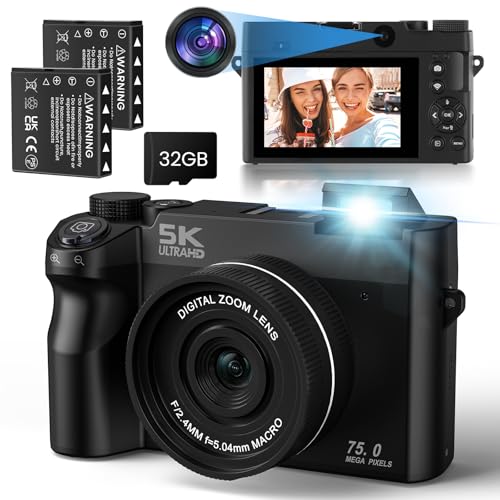
Long sessions favor replaceable batteries or multiple batteries. SiSuSy lists a replaceable battery, while icefox, SVBONY, and Camlance include two batteries. AKASO Brave 7 LE also lists two batteries. The SPUNALP CM026 lists a 2500mAh battery and a 32GB card, and SiSuSy lists a 32GB card. Minolta includes a 32GB card, while KODAK PIXPRO WPZ2 uses microSD and microSDHC cards.
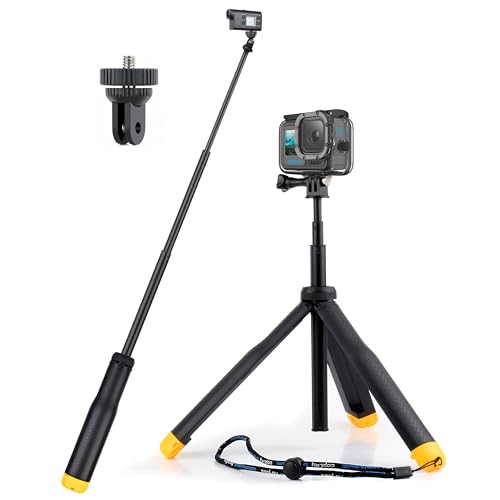
For the cased models, confirm that the card, charger, mounts, remote, and batteries match your intended trip. The SVBONY package is notable for its floating selfie stick, which can function as a grip or tripod. ODDV and icefox include remote-control features, but ODDV notes that its remote is not waterproof.
Final recommendation
SPUNALP CM026 8K Underwater Camera ranks first overall in this specification-based comparison under the published weighted criteria.
SPUNALP CM026 8K Underwater Camera is the first overall specification-based choice among these best zoom underwater cameras.
Its 33-foot waterproof design, 8K video, 70MP photos, autofocus, dual screens, 18X digital zoom, Wi-Fi, 2500mAh battery, and included 32GB card create a broad all-around specification package. Choose SiSuSy UP022 if the listed 50-foot self-contained depth is your main priority, or choose the OM SYSTEM Tough TG-7 for dedicated underwater and macro modes.
For action video, ODDV Action1 and icefox i7 provide 4K60 and stabilization, while SVBONY SVGo2 adds a floating accessory. KODAK PIXPRO WPZ2 is the clearest optical-zoom choice. These top zoom underwater cameras differ most in depth, zoom type, and intended shooting style, so those factors should determine the final purchase.
What to verify before buying
Check the exact waterproof method, especially for models whose depth requires a case. Confirm whether the advertised zoom is digital or optical, and review the included battery and storage arrangement. If you plan to use a remote or Wi-Fi, check its operating limitations above water. Finally, match the camera’s resolution and frame-rate claims to your editing and sharing workflow rather than assuming the highest number is always the best fit.
Frequently Asked Questions
What should I look for in the best zoom underwater cameras?
Prioritize the waterproof depth that matches your activity, then check whether zoom is optical or digital. Also compare autofocus, stabilization, screen layout, battery options, storage, and whether the camera needs a housing. A 4K60 action camera may suit moving footage, while a compact model with macro or dedicated underwater modes may suit still photography.
Which selected camera has the greatest listed waterproof depth?
SiSuSy UP022 lists a 50-foot self-contained waterproof design, and the OM SYSTEM Tough TG-7 also lists waterproofing to 50 feet. Several cased action cameras list greater depths, including ODDV Action1 at 132 feet, but those figures depend on their waterproof housings.
Is digital zoom useful underwater?
Digital zoom can help compose a more distant subject, but the supplied listings do not establish how much image detail remains after enlargement. KODAK PIXPRO WPZ2 explicitly lists a 4X optical zoom, while many other selected cameras list digital zoom. Compare the zoom type and your expected subject distance before deciding.
Which camera is suited to fast-moving water sports?
ODDV Action1, icefox i7, and Camlance A16 list 4K60 video and electronic stabilization. ODDV also lists six-axis EIS, while the other two list EIS features and include action-oriented accessories. These are specification-based matches for motion-focused recording, not results from independent testing.
Do Wi-Fi and remote controls work underwater?
Not necessarily. Wireless functions are generally intended for above-water transfer or control, and the SPUNALP listing specifically says Wi-Fi works above water within five meters. ODDV also notes that its remote is not waterproof. Check the individual listing and use a housing or control method appropriate to the activity.