Buying Guide
Choosing the best rubber gardening gloves starts with matching the coating and fabric to the work you actually do. Rubber- and latex-coated garden gloves can offer tool grip, dirt resistance, and flexible movement, but the listings vary substantially in water coverage, cuff length, shell material, and pack format. This comparison uses supplied product specifications and feature claims rather than hands-on testing or customer sentiment.
Match the coating to the job
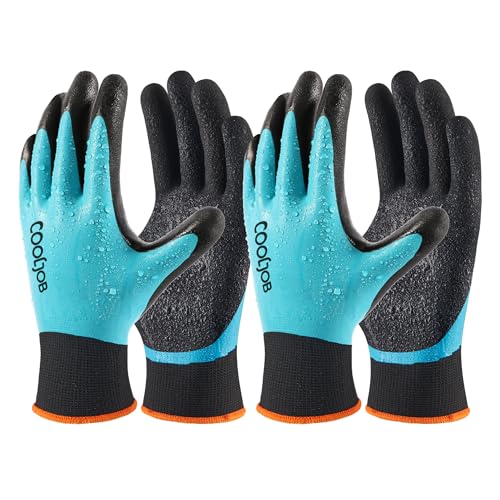
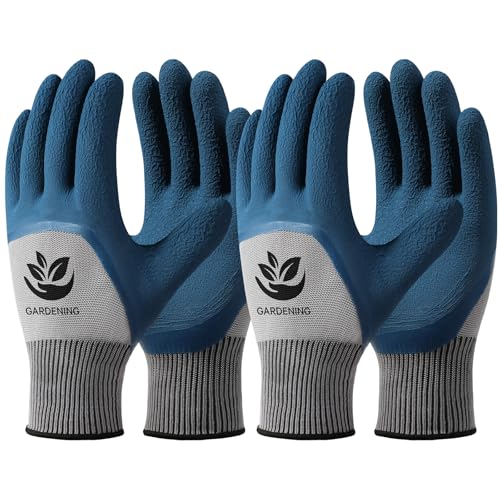
The coating is the main contact surface between your hand and a tool. A textured surface can help with control when handles or materials are damp. The COOLJOB Waterproof Double-Coated Gloves use a fully waterproof latex coating and sandy texture, making them the clearest choice here for wet-weather work. The G & F Products 3100L-DZ and Evridwear models also document textured latex palms, with the latter specifically describing wet-and-dry grip.
Single-coated options may feel less bulky during planting and weeding. COOLJOB’s Breathable Rubber-Coated Garden Gloves use a latex palm with soft micro-foamed coating, while Velway and Homeager describe rubber-coated palms and fingers for everyday handling. These designs are appropriate when flexibility and routine tool use matter more than maximum coverage.
Do not treat every coated glove as waterproof. A palm coating can resist some moisture without sealing the entire glove. Only make a full-waterproofness assumption where the listing explicitly supports it, as with the COOLJOB waterproof model.
Consider wrist and hand coverage
Wrist coverage is useful when loose soil, mulch, or debris can enter around the cuff. The two COOLJOB designs document long cuffs, while the Brigic model identifies extended wrist cuffs. Homeager and Velway use elastic cuffs intended to limit debris entry. These features can keep the transition between glove and sleeve cleaner, but they do not turn a garden glove into an elbow-length protective gauntlet.
For thorny pruning or highly abrasive brush, the evidence in this selection should be read conservatively. Some listings mention abrasion, scratch, cut, or thorn resistance, but none of those statements should be expanded into a guarantee of protection against every sharp plant or tool. The Nimalpal, Trifabricy, and Evridwear listings include broader protective language than the lightweight everyday options, while the G & F Products and COOLJOB double-coated models emphasize durable coverage.
Balance breathability and dexterity
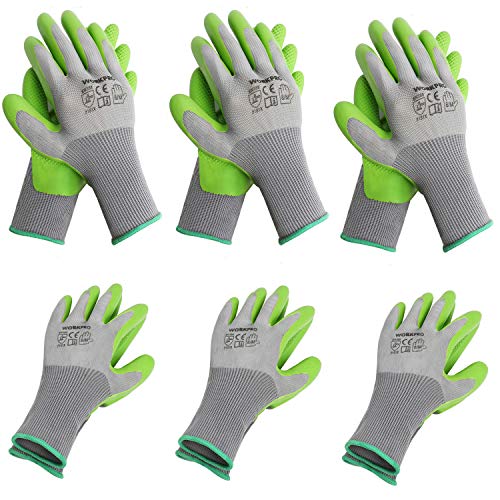
A breathable knit shell can be more comfortable for planting, sorting, and repeated hand movement. COOLJOB uses a polyester base in one model and a bamboo-blend shell in another. Brigic uses bamboo fiber, and the Velway and WORKPRO models describe breathable polyester construction. These materials are paired with flexible or stretchable designs in the supplied evidence.
Heavier or double-coated gloves may provide more coverage but can feel less nimble than thin single-coated styles. If you handle small seedlings or need precise finger movement, prioritize the listings that specifically mention dexterity, tactile sensitivity, snug fit, or flexible construction. COOLJOB’s waterproof model still documents dexterity, but its double coating suggests a more protective orientation than a minimal planting glove.
Rubber gardening gloves work best when the fingers and palm fit without excessive slack. Too much looseness can reduce tool control; too little room may make repeated work uncomfortable. Homeager provides palm and middle-finger measurement ranges, which is useful for shoppers willing to measure before choosing. WORKPRO advises consulting its size chart and selecting larger when between sizes. Other listings provide a size designation but less measurement detail.
Several products are supplied in only one listed configuration, such as Large, Medium, or X-Large. Do not assume that a brand’s other sizes have identical features unless the listing confirms it. Pack variants also deserve attention: Brigic mentions multiple size and pack choices, but the supplied product is the Large two-pair configuration.
Decide how many pairs you need
A two-pair package works well for keeping a spare pair available. Six- and 12-pair formats are better suited to frequent gardening, shared household use, or planned rotation after washing. WORKPRO, Nimalpal, and G & F Products provide larger sets, while the COOLJOB, Brigic, and Velway selections use smaller packs.
Large sets can be convenient, but pack quantity does not by itself indicate better construction. Compare the coating, cuff, shell, and fit information first. The same principle applies to color: multiple colors may help distinguish pairs or make gloves easier to spot, but color is not a protection feature.
Check washing and drying instructions
Several selected models document washable care. COOLJOB specifies gentle-cycle or hand washing and air drying. Velway identifies cold-water machine washing, while Homeager recommends a gentle cycle and avoiding high heat. Nimalpal also describes machine-washable construction. Follow the individual listing’s instructions rather than assuming all latex-coated gloves can tolerate the same treatment.
Air drying is a recurring instruction in the supplied evidence. High heat may affect the shell, coating, or shape, so avoid adding unsupported care methods. Rinsing off soil after ordinary garden work can be convenient, but the supplied data does not establish a universal cleaning or lifespan result.
Final recommendation
COOLJOB Waterproof Double-Coated Gloves ranks first overall in this specification-based comparison under the published weighted criteria.
The final choice among the best rubber gardening gloves depends on the documented features that match your intended use.
COOLJOB Waterproof Double-Coated Gloves are the first overall specification-based choice for shoppers who want the clearest combination of waterproof latex coverage, grip texture, breathability, dexterity, and long-cuff protection. For more general use, COOLJOB Breathable Rubber-Coated Garden Gloves provide a balanced alternative with a durable latex palm and washable two-pair format. The G & F Products 3100L-DZ is better aligned with repeated heavy routine work and larger household or crew use, while Homeager is the most fit-conscious option because its listing supplies measurement guidance.
Among the top rubber gardening gloves, choose based on task rather than pack size alone. Select a fully waterproof design for wet conditions, a breathable single-coated glove for planting and weeding, or a textured double-coated option for more demanding handling. Confirm the listed size, cuff design, coating coverage, and care instructions before ordering.
Frequently Asked Questions
Are rubber gardening gloves waterproof?
Some are, but not all. The COOLJOB Waterproof Double-Coated Gloves explicitly document a fully waterproof latex coating. Other selected products describe rubber or latex coating, grip, and performance in damp conditions without making the same full-waterproof claim. Treat partial palm coverage and full waterproof construction as different features.
Which best rubber gardening gloves are suited to wet soil?
The COOLJOB Waterproof Double-Coated Gloves are the clearest match because the listing specifies waterproof latex, double coating, a sandy grip surface, and a long cuff. Evridwear also documents grip in wet and dry conditions, but its supplied evidence describes resistance to light liquids rather than full waterproofing.
Do latex-coated garden gloves provide thorn protection?
Some listings use protective language, including the Nimalpal and Trifabricy models, while Evridwear describes light cut, abrasion, and puncture resistance. These statements are specification claims, not a guarantee against every thorn or sharp branch. For serious pruning, select coverage based on the specific hazard and follow the manufacturer’s instructions.
How should rubber gardening gloves be washed?
Care varies by product. COOLJOB documents gentle-cycle or hand washing with air drying, Velway specifies cold-water machine washing, and Homeager recommends a gentle cycle while avoiding high heat. Check the selected listing and let gloves air dry when that instruction is provided.
How can I choose the right size?
Measure your palm and, when available, your middle-finger length, then compare those measurements with the listing’s size information. Homeager provides explicit ranges, while WORKPRO advises consulting its chart and sizing up when between sizes. Do not rely only on the nominal size because fit can vary by shell material and coating design.