Buying Guide
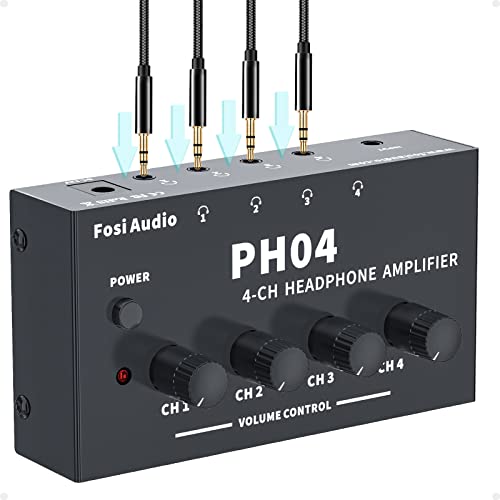
The best volume control headphone amplifiers differ mainly in how they distribute audio, match headphone loads, and handle power. Start by deciding whether the system is for one listener or several. Personal models such as the Fosi Audio SK01, Neoteck, YGiTK 16–300Ω model, and Donner EM1 place the controls close to the listener. Distribution amplifiers such as the Bolanle PH8000, YGiTK four-channel mixer, Superlux HA4D, Mackie HM-4, Fosi Audio PH04, and Pyle PHA40.3 send one source to multiple headphones.
Match the amplifier to the listening setup
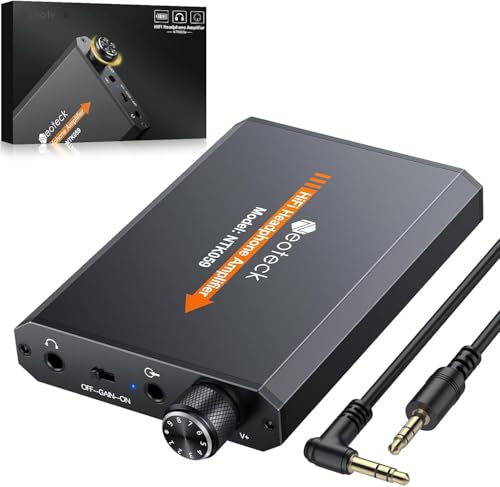
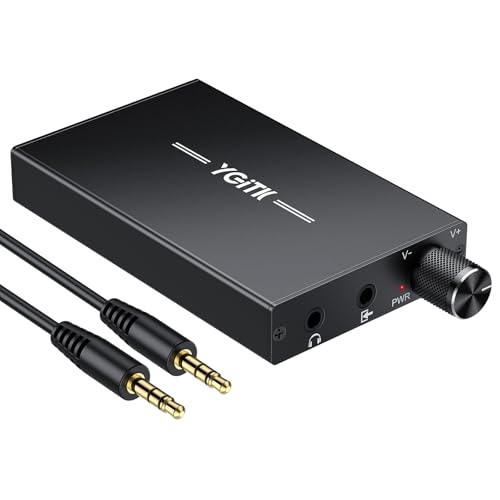
For a single headphone, prioritize a clearly documented volume knob and an appropriate output range. The Fosi Audio SK01 documents compatibility with 32–300Ω headphones and adds gain selection, while the Neoteck and YGiTK portable models document 16–300Ω support with two-stage gain. Gain selection can be useful when the same amplifier is used with both sensitive in-ear monitors and higher-impedance headphones, but the supplied listings do not establish a universal result for every headphone.
For personal performance monitoring, the Donner EM1 documents XLR and TRS inputs, a 3.5mm output, and stereo/mono switching. That connector mix is more aligned with professional monitor feeds than the 3.5mm-only connections on the portable Neoteck and YGiTK models.
Choose the right number of outputs
A four-channel amplifier is appropriate when several people need the same program mix with separate level adjustment. The Superlux HA4D, Mackie HM-4, Fosi Audio PH04, and Pyle PHA40.3 each document four-channel operation. The YGiTK four-channel mixer expands the connection count further with eight outputs: four 1/4-inch and four 1/8-inch jacks.
If a larger tracking or broadcast setup is planned, the Bolanle PH8000 documents eight independent headphone channels. Each channel has its own volume knob, signal indicator, and peak indicator. That arrangement gives an operator more visibility over a multi-performer monitoring system than a compact four-output box.
Simple shared listening usually needs one source input and multiple controlled outputs. The Mackie HM-4 and Pyle PHA40.3 document this simpler approach. It reduces the number of routing decisions and keeps the front-panel workflow focused on level adjustment.
More complex setups may benefit from multiple inputs and mute functions. The YGiTK four-channel model documents RCA, 3.5mm, and 6.35mm inputs, with dedicated mute switches for its input section. The Bolanle PH8000 documents a balanced or unbalanced XLR/TRS combo input plus a 6.35mm auxiliary line input.
A mono/stereo switch can be useful when the source or monitoring workflow requires a combined signal. The Donner EM1 and Bolanle PH8000 document mono/stereo or related channel-mode controls. Treat this as a connection and routing feature, not as a guarantee of a particular listening result.
Consider power and placement
Portable amplifiers use rechargeable batteries or compact USB power. The Donner EM1 documents up to 12 hours of battery operation and a belt clip. The Neoteck documents a 1500mAh battery and more than 12 hours of stated use, while the YGiTK portable model documents a 1500mAh battery and up to 10 hours. These designs are easier to carry than rack or desktop distribution units, but they are intended for one headphone output.
The Superlux HA4D uses USB-C power and can connect to a power bank, wall charger, or computer. Its listing specifically recommends separate USB power when seeking to avoid possible ground-loop hum or buzz. This is a setup consideration rather than a performance test result.
Desktop and rack units generally use an external adapter. The Pyle PHA40.3 documents a 12V supply, the Fosi Audio PH04 includes a 12V adapter, and the Mackie HM-4 uses an included 12V AC adapter. The Bolanle PH8000 uses a 1U rackmount format, making it the clearest fit for a permanent equipment rack rather than a travel bag.
Check connector compatibility before choosing
Connector fit is one of the easiest ways to narrow the field. The personal Fosi Audio SK01 documents both 3.5mm and 6.35mm headphone jacks. The Fosi Audio PH04 documents 3.5mm outputs and compatibility with 6.35mm headphones through an adapter. The Pyle PHA40.3 and Mackie HM-4 use 1/4-inch outputs, while the YGiTK mixer documents both 1/4-inch and 1/8-inch outputs.
Also confirm whether the source uses RCA, 3.5mm, 6.35mm, XLR, or TRS. The YGiTK mixer and Bolanle PH8000 offer the broadest documented source-input flexibility among the selected products. A model with fewer inputs can still be the better fit when the system has one fixed source and no need for mixing.
Final recommendation
Bolanle PH8000 8-Channel Headphone Amplifier ranks first overall in this specification-based comparison under the published weighted criteria.
Bolanle PH8000 is the highest-scoring returned product and the first overall specification-based choice among these best volume control headphone amplifiers. Its eight independently controlled channels, 32–600Ω documented support, balanced or unbalanced input operation, and rackmount format make it the most capable option for large fixed monitoring systems.
For four-person setups, the YGiTK four-channel mixer is the most flexible because it documents three input formats, eight output jacks, mute controls, and mono/stereo switching. The Superlux HA4D is a better fit for creators who want USB-C power and per-channel mute controls. For one listener, the Fosi Audio SK01 offers the broadest personal adjustment through gain, tone, loudness, and two headphone jack sizes. Together, these models represent the top volume control headphone amplifiers for distinct studio, portable, and shared-listening needs.
Frequently Asked Questions
What should I check first when choosing a headphone amplifier with volume control?
Check whether you need one output or several, then compare the documented connector types and impedance range. Personal models such as the Fosi Audio SK01 and Neoteck provide one headphone connection, while the Mackie HM-4 and Pyle PHA40.3 distribute one source to four listeners. If headphone impedance varies, look for a stated range and gain control, as documented on the Neoteck and YGiTK portable models.
Are four-channel headphone amplifiers suitable for recording sessions?
Yes, the selected four-channel designs document independent level controls for each listener. The Superlux HA4D and Fosi Audio PH04 are oriented toward collaborative monitoring, while the Mackie HM-4 and Pyle PHA40.3 use a simpler one-source distribution layout. The YGiTK mixer adds multiple inputs and mute switches for workflows that require more routing control.
Which best volume control headphone amplifiers are easiest to carry?
The Donner EM1, Neoteck, and YGiTK 16–300Ω portable amplifier are the clearest portable choices from the supplied specifications. The Donner EM1 documents a belt clip, while the Neoteck and YGiTK models document compact aluminum-bodied designs and rechargeable batteries. These are personal amplifiers rather than multi-listener distribution units.
When does a rackmount headphone amplifier make sense?
A rackmount design makes sense when the amplifier will remain in a studio, broadcast room, live-sound rack, or other permanent equipment system. The Bolanle PH8000 documents a 1U rackmount chassis, eight channels, individual volume controls, and signal and peak indicators. A compact desktop model is generally easier to relocate, but the supplied evidence does not establish comparative durability or performance.
Do all headphone amplifiers accept the same connectors?
No. The selected products document different combinations. The Fosi Audio SK01 includes 3.5mm and 6.35mm headphone jacks, the YGiTK mixer documents RCA, 3.5mm, and 6.35mm inputs plus 1/4-inch and 1/8-inch outputs, and the Bolanle PH8000 documents XLR/TRS and 6.35mm inputs. Confirm the source and headphone connectors before selecting a model.