Buying Guide
This guide compares the best wireless dehumidifiers using documented cordless operation, moisture capacity and coverage, renewability and recharge convenience, status monitoring, and placement flexibility.
Wireless dehumidifiers are best understood as cordless moisture absorbers for enclosed or compact areas. They are not interchangeable with full-size, continuously powered room dehumidifiers. The products in this comparison use renewable silica gel, desiccant beads, or crystals, so they can work without a power cord while absorbing moisture. Some use a wired heating base or cable only when it is time to regenerate the absorbing material.
Choose the right design type
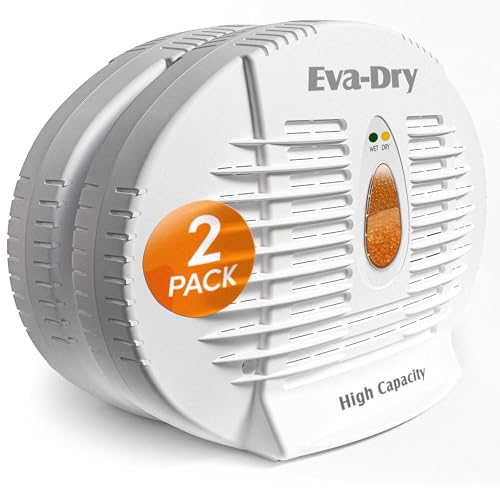
The first decision is whether you need a single absorber, a multi-pack, or a stick system. The Eva-Dry E-500 and E-333 are single-body renewable units. They can be placed in closets, safes, vehicles, boats, and similar spaces, with the E-500 listing coverage up to 500 cubic feet and the E-333 listing coverage up to 333 cubic feet.
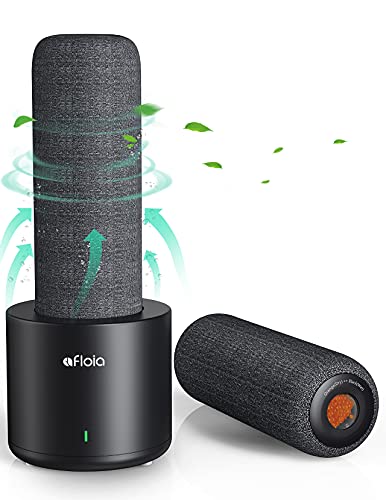
Multi-packs are useful when dampness affects several locations. The Eva-Dry E-500 2-Pack provides two independently operating units, while the Wisedry set supplies two spherical absorbers that can be used together or separately. Afloia’s TOPZ systems take a different approach: their sticks can be distributed across cabinets or safes and returned to a shared heating base for regeneration. This arrangement may be more adaptable than placing one larger body in each space.
Match documented capacity to the space
Coverage claims are among the most useful specifications for comparing the best wireless dehumidifiers, but they should be treated as product-listing guidance rather than a guarantee for every environment. The E-500 is listed for up to 500 cubic feet, MAXSafes for up to 450 cubic feet, and the E-333 and Lockdown models for up to 333 cubic feet. These figures make them better candidates for larger closets, safes, or storage compartments than models documented only for very small areas.
For tightly confined spaces, the ATKMAYI unit is listed for up to 35 square feet, while Afloia’s TOPZ 2+1 is listed for up to 54 square feet. Those specifications fit lockers, small cabinets, instrument cases, or similarly limited areas. The Kiorafoto units are described for camera gear, electronics, toolboxes, 3D filament, and vault cases, but the supplied listing does not provide a square-foot coverage figure. Use that model where its equipment-storage positioning matches your needs rather than assuming a broader room rating.
Consider the regeneration routine
Renewable operation reduces the need to replace disposable absorbers, but every design has a regeneration routine. Eva-Dry models use rechargeable silica gel. Afloia supplies a PTC heating base, and the listing for the TOPZ 2+1 describes approximately two hours on the base. Wisedry lists a two-hour recharge with automatic power-off when the process is complete. Kiorafoto uses USB-C reactivation in a stated two- to six-hour range.
The recharge step is not always identical to the dehumidifying step. MAXSafes includes a built-in plug and lists an eight-hour recharge, while Lockdown lists approximately 12 hours. ATKMAYI lists about 16 hours. Before choosing, check whether you have a convenient outlet, heating base, or USB-C source available near the storage area. Also follow the supplied safety directions; for example, the Kiorafoto listing says not to dehumidify while charging.
Look for a clear status indicator
A visual indicator helps show when a desiccant needs regeneration. Wisedry uses orange and green beads, Afloia describes orange-to-dark-green changes, and MAXSafes lists a blue-to-pink window. ATKMAYI uses blue and pink beads, while Lockdown provides an indicator window. These features are more useful than relying on a fixed calendar because moisture conditions vary by location.
The indicator does not measure room humidity unless the listing specifically says it does. It generally shows the condition of the absorber itself. Check the window periodically, especially after placing a unit in a new cabinet, vehicle, or safe.
Prioritize placement and noise
Cordless operation makes these products useful where an electrical appliance would be awkward. The Eva-Dry units are listed for closets, safes, cars, boats, RVs, cabinets, and gym bags. MAXSafes adds motion-activated lighting, which may help in dark storage areas. ATKMAYI has no moving parts and is described as operating with zero noise and vibration, making it a reasonable fit for bedrooms, offices, or study areas.
Stick systems can be arranged around stored items, while compact bodies may fit more easily on a shelf or inside a case. Review dimensions before buying and leave any required vents or charging areas unobstructed. Wireless does not mean waterproof, and none of the supplied evidence establishes outdoor weather resistance.
Final recommendation
Eva-Dry E-500 Renewable 2-Pack ranks first overall in this specification-based comparison under the published weighted criteria.
Eva-Dry E-500 Wireless Mini Dehumidifier is the first overall specification-based choice among these best wireless dehumidifiers. Its documented 500-cubic-foot coverage, renewable silica gel, cordless operation, and broad placement guidance give it the most specification-aligned balance for many enclosed storage applications. Choose the Eva-Dry E-500 2-Pack when two locations need simultaneous coverage, Wisedry when fast regeneration matters, or Afloia TOPZ when several sticks are easier to distribute.
For specialized use, MAXSafes adds motion-sensing light, ATKMAYI emphasizes silent fanless operation, and Kiorafoto targets equipment storage with USB-C reactivation. The E-333 and Lockdown are sensible smaller-space alternatives, while the Afloia TOPZ 2+1 offers a compact stick arrangement. These top wireless dehumidifiers should be selected by documented space, recharge access, and placement needs—not by assuming that one design suits every room or container.
Frequently Asked Questions
How do the best wireless dehumidifiers work without a cord?
The selected models use silica gel, desiccant beads, or crystals to absorb moisture during cordless operation. They must later be regenerated through a heating base, built-in plug, USB-C cable, or another documented recharge method. The cord is generally for renewal rather than continuous dehumidifying.
Are wireless dehumidifiers suitable for an entire room?
The supplied products are primarily intended for enclosed or small spaces such as closets, safes, cabinets, vehicles, cases, and storage areas. Several listings provide coverage figures up to 333, 450, or 500 cubic feet, but those specifications should not be treated as equivalent to the capacity of a powered whole-room appliance.
Which model is easiest to monitor?
Wisedry, Afloia, MAXSafes, ATKMAYI, and Lockdown all document visual indicators. Wisedry and Afloia describe color-changing beads, while MAXSafes and ATKMAYI provide color-window status cues. The indicator shows when the absorber needs attention; it is not presented as a standalone room-humidity meter.
Can a wireless dehumidifier be used in a gun safe?
Several selected products are specifically described for gun safes, including the Afloia TOPZ systems, MAXSafes, Lockdown, Eva-Dry E-500, and Eva-Dry E-333. Confirm the unit’s dimensions and stated coverage before placing it inside a particular safe, and follow the product’s regeneration and placement instructions.
What should I check before buying one?
Compare the documented coverage or capacity with the size of the target space, then check how the absorber is regenerated. Also consider whether you need a hook, stick format, two-pack, status window, motion light, or silent operation. These details determine how conveniently the unit will fit your storage setup.