Buying Guide
If you are choosing among the best braided instrument cables, the woven jacket is only one piece of the puzzle. The conductor inside, the shielding around it, the connector plating, and the cable geometry all shape how a cable behaves on stage or in the studio. The picks above are all 1/4-inch TS instrument cables with a braided outer jacket, so the differences come down to how each design balances signal clarity, durability, and handling.
Conductor Purity and Gauge
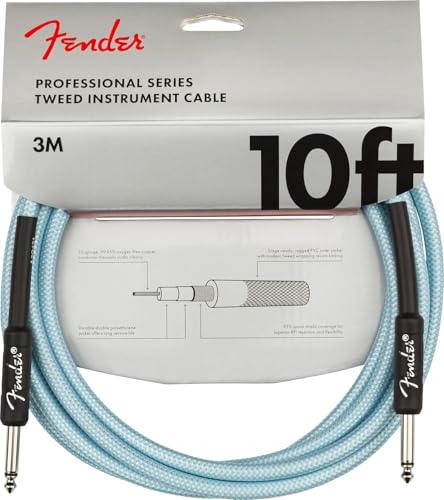
The conductor is the heart of any instrument cable. Higher-purity copper reduces signal loss and resists corrosion over time. The Ernie Ball braided cable in Pumpkin Pie lists 99.99% oxygen-free copper, which is the highest purity documented in the top 10. Fender Deluxe lists a 20 AWG conductor with high-purity copper, while Fender Professional Series uses 22 AWG with 95% OFC construction. Thicker gauges (lower AWG numbers) can carry signal with slightly less resistance, while thinner gauges may coil a bit easier. If you prioritize signal strength and corrosion resistance, look at both the OFC percentage and the gauge.
Shielding Coverage and Type
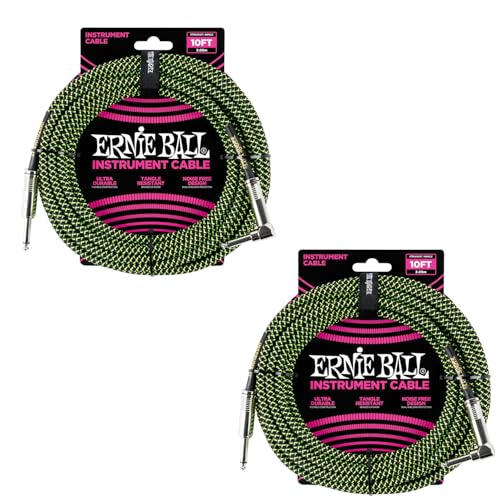
Shielding protects your tone from hum and handling noise. The Fender Deluxe uses 95% oxygen-free braided shielding, while the Fender Professional Series relies on 95% OFC spiral shielding. Ernie Ball braided cables use dual conductors with multiple shielding materials. Braided shielding tends to be more durable and lower resistance, while spiral shielding can be more flexible and may be tuned to reject handling noise. For high-noise environments like clubs or studios with lots of gear, dense shielding coverage matters more than the specific style.
Braided Jacket Durability
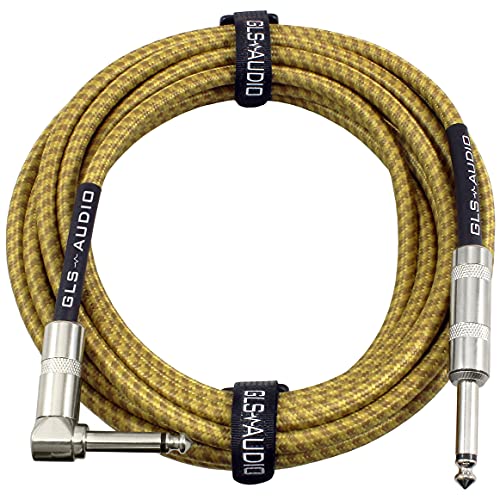
A braided sleeve is more than a style choice. It resists abrasion, helps the cable lay flat, and reduces tangles. The Fender Deluxe tweed jacket is described as kink-resistant at 8mm, and the Fender Professional Series adds an anti-kinking spiral-shield design. Ernie Ball braided cables are documented as tangle-resistant, while GLS Audio cables ship with a brown/yellow or black/grey braided tweed jacket. Thicker jackets can be more durable but stiffer, while thinner jackets may coil more easily but show wear sooner. Match the jacket thickness to your typical routing rather than buying the toughest-looking cable by default.
Connector Plating and Geometry
Connector plating affects both signal transfer and long-term wear. The Fender Deluxe uses 24K gold-plated connectors that resist tarnish, while the Fender Professional Series and GLS Audio cables use nickel-plated connectors. Gold plating is generally more corrosion-resistant, while nickel plating is usually more mechanically durable. Connector geometry also matters: a straight-to-angle cable is common for guitar-to-pedalboard runs because the angled end saves space, while a straight-to-straight cable is often used for amp-to-rack or rack-to-monitor connections.
Flexibility and Anti-Kink Handling
A cable that fights you on stage is a liability. Fender Professional Series cables are engineered to avoid twisting, kinking, and physical memory, which means they lay flatter after coiling. Ernie Ball braided cables focus on flexibility and tangle resistance, and the GLS Audio cables come with reusable cable ties to keep things organized. If you coil and uncoil your cables every gig, prioritize anti-kink engineering and a jacket that lays flat rather than a stiffer jacket that holds its coiled shape.
Most players start with 10-foot cables, but stage size, room layout, and pedalboard position all change the math. The top 10 includes 10-foot, 18-foot, 20-foot, and 25-foot options, in both single-cable and two-pack formats. Two-packs are useful for matching runs in stereo rigs or keeping a backup on hand. Longer cables offer reach but can pick up more stage noise if routed near power cables and monitors.
Matching Cable to Use Case
A short 10-foot straight-to-angle cable works well for guitar-to-pedalboard or pedalboard-to-amp on a small stage. For larger stages and rear-panel rack gear, a straight-to-straight 20-foot or 25-foot cable like the GLS Audio 20ft Black/Grey or the Ernie Ball 25ft Red/Black pair gives you reach. For studio sessions where you want low handling noise, the Fender Deluxe Tweed or Fender Professional Series are strong options thanks to dense OFC shielding. If you want a distinctive color for quick ID, the Ernie Ball Neon Green and the Fender Professional Series Daphne Blue Tweed are useful.
Final recommendation
Fender Deluxe Series Instrument Cable 10ft Straight-Angle Tweed ranks first overall in this specification-based comparison under the published weighted criteria.
Among the top braided instrument cables compared here, the Fender Deluxe Series Instrument Cable 10ft Straight-Angle Tweed stands out as the first overall specification-based choice, combining a 20 AWG conductor, 95% oxygen-free braided shielding, 24K gold-plated connectors, and a custom 8mm tweed jacket. If you need a longer run or a matching pair, the Ernie Ball 25ft Red/Black 2-Pack and the Fender Professional Series Tweed Daphne Blue are the most specification-aligned alternates. For studio rooms and rack gear, the GLS Audio 20ft Black/Grey straight-to-straight cable is a sensible complement, and it keeps the best braided instrument cables theme consistent across your rig. Any of the top braided instrument cables above will cover the same core brief: 1/4-inch TS connections, a braided outer jacket, and documented shielding and conductor design.
Frequently Asked Questions
What makes the best braided instrument cables different from regular instrument cables?
The best braided instrument cables use a woven outer jacket instead of a smooth PVC or rubber sleeve. That braid adds abrasion resistance, helps the cable lay flatter, and reduces tangles. The underlying conductor and shielding design still drive tone and noise rejection, so the braid is a durability and handling upgrade rather than a tonal one.
Are braided instrument cables better for stage or studio?
Both. On stage, the braided sleeve resists tangles, abrasion, and trip-hazard wear. In the studio, dense OFC shielding and low-capacitance construction help keep your signal clean. The picks above include stage-ready options like the Fender Deluxe Tweed and studio-friendly options like the Fender Professional Series.
Do I need gold-plated connectors on a braided instrument cable?
Gold plating resists tarnish and keeps contact resistance stable over time, which can matter if you store cables in cases or humid rooms. Nickel plating is mechanically tougher and is widely used in pro-grade cables. For most players, either works; choose gold if you want corrosion resistance, and nickel if you want a harder contact surface.
How do I choose the right length for a braided instrument cable?
Measure your typical guitar-to-pedalboard and pedalboard-to-amp distance, then add slack for stage movement and cable coiling. Ten feet covers most small-stage rigs, 18 to 20 feet handles medium stages and studio rooms, and 25 feet is useful for larger stages or amp racks that sit behind a drum kit. Two-pack formats like the Ernie Ball 25ft Red/Black pair let you run matched stereo or keep a backup.
Are two-pack braided instrument cable sets worth considering?
If you run stereo rigs, dual amps, or simply want a spare in your bag, two-pack sets like the Ernie Ball Neon Green/Black 10ft pair or the Fender Professional Series Tweed single cable plus a separate backup can save time. Packs also help with consistent cable length and color, which is useful when you want clean visual routing on stage.