Buying Guide
Choosing among the best 72-inch monopods starts with separating true single-leg supports from convertible tripod systems. A dedicated monopod is usually the simpler option: it folds into a narrow package, sets up quickly, and works well when a photographer needs vertical support without tripod legs. A convertible model can add a tripod base, fluid head, or center-column functions, but it may weigh more and its stated 72-inch height may apply to tripod mode rather than monopod mode.
Confirm what reaches 72 inches
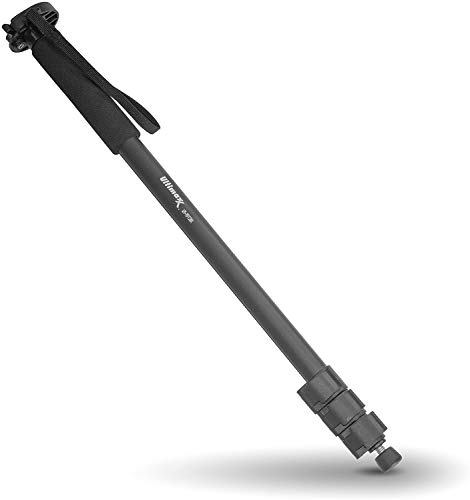
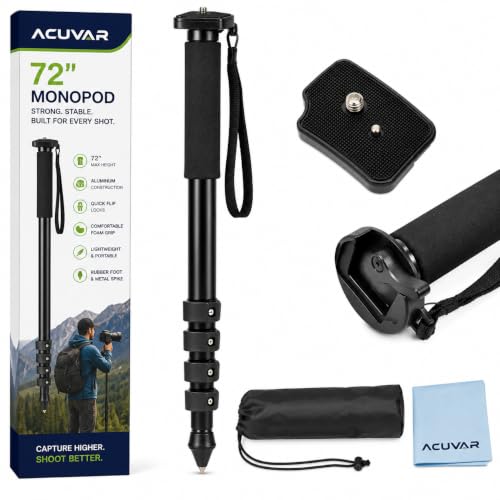
Read the height claim carefully. The Cayer CF34 is described as extending from 28.3 to 72 inches, while the Benro Adventure lists a 72-inch maximum height. Acuvar, KODAK, Ultimaxx, KLIOMAX, and Xit also identify 72 inches in their product descriptions or titles. These are the clearest matches for a buyer who wants a conventional support stick at the requested reach.
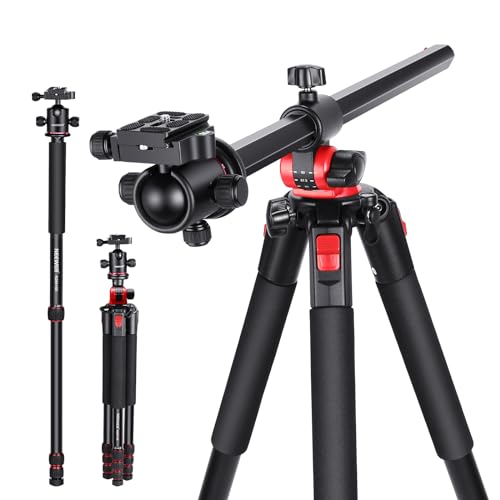
Convertible products need more scrutiny. The NEEWER TP72A explicitly describes a tall monopod that adjusts from 21 to 74 inches, so its monopod mode meets the target. By contrast, the NEEWER N284+G0 documents a 72.4-inch tripod height but does not state the height after conversion. These products can still be useful, but they should not be treated as identical to a dedicated 72-inch monopod.
Choose carbon fiber or aluminum
Carbon fiber appears in the Cayer CF34 and Benro Adventure. The supplied descriptions position it as lightweight and rigid, which can appeal to travelers, event photographers, and users carrying longer lenses. Benro also lists a 39.7-pound capacity, while Cayer lists the current price. Those figures are product claims, not independent test results, so match them to the equipment manufacturer’s requirements rather than assuming every setup is equally suitable.
Aluminum is more common in this group. Aluminum designs can offer a practical balance of cost, reach, and field durability, but listed weights vary substantially. KLIOMAX and Xit are notably light on the supplied specifications. The TP72A and other multi-function systems are heavier because they include heads, legs, or conversion hardware.
Match the mounting system to your gear
A standard 1/4-inch camera screw covers many cameras, camcorders, and accessories. Acuvar, KLIOMAX, and KODAK document this type of compatibility. KODAK additionally lists a 1/4-3/8-inch adapter and includes a smartphone adapter, which makes it more suitable for mixed phone-and-camera use.
The Benro Adventure goes further with convertible 1/4-20 and 3/8-16 threads for direct attachment or separate ball and video heads. Cayer includes 1/4-inch and 3/8-inch threads on its fluid head. The NEEWER TP72A documents quick-release modes compatible with DJI RS2, RS3, and RS3 Pro gimbals. If you already own a head or gimbal, verify the connection format before buying; a stated quick-release feature does not mean every plate or accessory is interchangeable.
Consider feet, spikes, and bases
A conventional monopod normally needs the photographer to provide balance, but the bottom design still affects field use. Acuvar and Ultimaxx list rubber feet with spikes. KODAK specifies a rubber foot and retractable spike, while KLIOMAX uses a rubber tip with a screw-out metal tip. These options can help the support contact indoor floors, grass, gravel, or uneven outdoor surfaces, although the listings do not provide independent traction testing.
Cayer’s pivoting foot and detachable mini tripod base make it different from a basic stick. The TP72A offers rubber feet and removable spikes in its tripod configuration. Such systems may be attractive for video, low-angle work, or situations where a little more ground contact is useful. They also add parts to carry and may increase setup time or packed weight.
Look at adjustment and handling details
Flip locks are documented on Cayer, Acuvar, KODAK, and the dedicated lightweight models. They can be convenient when several sections need to be changed quickly. The NEEWER N284+G0 uses twist locks, while other convertible systems use lever or ladder-style mechanisms. The listing evidence does not establish which lock type is universally better; the practical choice depends on whether you prefer rapid access or a particular adjustment feel.
A padded or foam grip is useful when the monopod is carried or held for a long session. Benro, Acuvar, KLIOMAX, Ultimaxx, and Xit document padded or foam grips. Wrist straps appear on Acuvar, KLIOMAX, and Ultimaxx. Carrying bags are supplied with Cayer, Ultimaxx, NEEWER, and some convertible systems. These accessories do not replace careful camera handling, but they can make field transport more convenient.
Check capacity and packed size together
Capacity is one of the most important specifications for a camera-and-lens combination. Benro lists the current price, the NEEWER N284+G0 lists the current price in tripod configuration, and Cayer and TP72A list the current price. KODAK lists the current price. Several other products do not state a capacity, so their absence should not be interpreted as a performance claim.
Packed length matters for backpacks and carry-on storage. KLIOMAX lists a 16.75-inch collapsed length, NEEWER Basics lists a 17-inch folded tripod format, and Acuvar and Ultimaxx list 21.5 inches. Xit lists 22 inches in its dimensions. Compare the packed size of the actual configuration you will carry, especially when a fluid head, mini base, or phone accessory is included.
Final Recommendation
Benro Adventure 8X Carbon Fiber Monopod ranks first overall in this specification-based comparison under the published weighted criteria.
Cayer CF34 Carbon Fiber Monopod is the first overall specification-based choice among these best 72-inch monopods because it combines a documented 72-inch reach, carbon fiber construction, fluid-head control, a pivoting foot, and a detachable mini tripod base. Benro Adventure is the better fit for users prioritizing a high stated capacity and dual mounting threads. The NEEWER TP72A is compelling for gimbal-oriented video, while Acuvar offers a simpler dedicated design with useful foot hardware.
The top 72-inch monopods are not interchangeable: some prioritize portability, some add tripod conversion, and some are designed around fluid movement. Before choosing, confirm the actual monopod height, equipment weight, mounting thread, folded length, and whether the supplied foot or head matches the way you shoot.
Frequently Asked Questions
Are all products listed as 72 inches actually 72-inch monopods?
No. Some listings describe a 72-inch tripod that converts to a shorter monopod. The Cayer, Benro, Acuvar, KODAK, Ultimaxx, KLIOMAX, and Xit listings provide clearer 72-inch dedicated-monopod claims. NEEWER TP72A explicitly lists a 21-to-74-inch tall-monopod configuration.
Are carbon fiber monopods better for travel?
Carbon fiber can offer a light, rigid construction, as described for Cayer and Benro. However, travel suitability also depends on folded length, head and base hardware, and listed weight. A lightweight aluminum model may be easier to carry than a carbon fiber system with a fluid head or conversion base. Compare the complete packed setup rather than material alone.
What mounting thread should a camera monopod have?
Many camera accessories use a 1/4-inch mounting thread, which is documented on products such as Acuvar and KLIOMAX. Benro provides convertible 1/4-20 and 3/8-16 threads, while Cayer’s included head lists both sizes. If you plan to use a ball head, video head, or gimbal, check that the monopod, head, and quick-release plate use compatible connections.
A rubber foot can suit hard indoor surfaces, while a spike may be useful on some outdoor ground. Acuvar, KODAK, Ultimaxx, and KLIOMAX document versions of these features. Cayer adds a pivoting foot and mini tripod base, and NEEWER TP72A lists rubber feet with removable spikes. These features are design options, not a guarantee of stability on every surface.
Which of the best 72-inch monopods suits video work?
Cayer is suited to video-oriented use because its listing includes a fluid pan-tilt head. NEEWER TP72A also emphasizes fluid movement and compatibility with DJI RS gimbals. Benro supports video heads through its convertible threads but does not include a fluid head in the supplied evidence. Choose according to the head and quick-release system your camera setup requires.