Buying Guide
Choosing the best copper roof flashings starts with identifying the roof detail rather than simply selecting the widest or thickest roll. Flat copper sheet is useful for edges, chimneys, sheds, gutters, and custom repairs, while a formed base flashing such as Oatey is intended for a pipe penetration. This is a specification-based comparison using public listing information, not a hands-on test, and it does not summarize customer opinions.
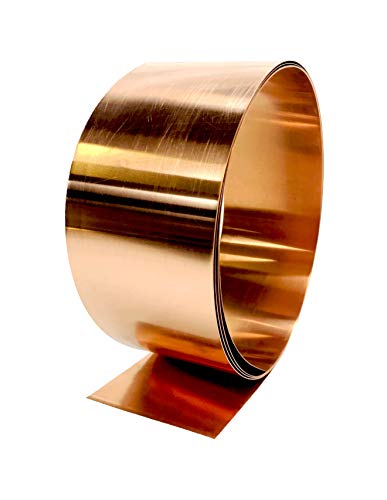
Flat rolls are the most adaptable format in this group. They can be cut into sections, bent around corners, or shaped for a repair when the listing documents those uses. uxcell’s 24-gauge roll is identified for roof edges, chimneys, gutters, and drainage systems. GOORY and ELECTRAPICK similarly describe use on metal roofing, sheds, shingles, chimneys, and drainage systems. These products are better suited to custom layouts than a formed pipe flashing.
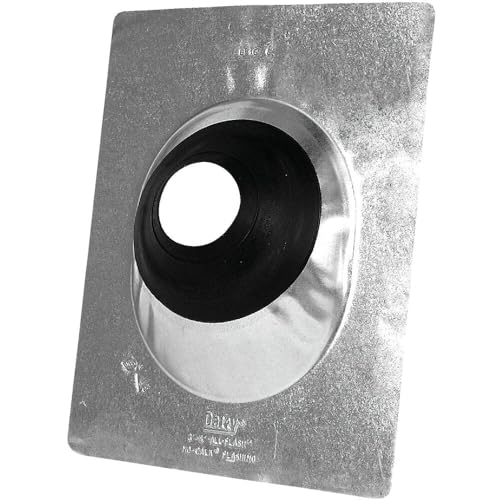
For a roof penetration, Oatey’s No-Calk design is the specialized choice. It is made for 1.5- to 3-inch pipes and has a metal base for pitches from 0 to 40 degrees. That makes it easier to compare with the penetration itself rather than with a generic sheet roll. It also carries stated heat and Type B installation information. The listing specifically excludes hot-mopped and built-up roofs, so the roof construction must be checked before selection.
Compare width and roll length
Width determines how much surface can be covered by one strip and how many seams may be needed. The 2-inch Royilink and Flashing Kings formats are appropriate when a narrow strip is desired for an edge, trim detail, or prebend. They may be easier to position in confined areas, but they provide less coverage than 4-, 6-, or 8-inch rolls.
A 4-inch roll, such as ELECTRAPICK or D.MATIALL, offers a middle ground. D.MATIALL is listed at 20 feet long, which is useful when a project needs extended coverage. The 6-inch uxcell and MTTHAHA formats provide more width for broader details. GOORY, Grip-Rite, and SHASKOKOEN document 8-inch widths, but their lengths differ. Grip-Rite is listed at 20 feet, GOORY at 10 feet, and SHASKOKOEN at 5 feet. Measure the required run before buying, and account for overlaps, bends, and cutoffs.
Consider gauge and handling
Gauge is a useful comparison point, but it should be read alongside the stated thickness. The selected products range from 24 gauge to 28 gauge, with the listings identifying approximately 0.5 mm for uxcell, 0.41 mm for GOORY and ELECTRAPICK, and 0.3 mm for D.MATIALL. The thicker documented sheets may be preferable where a more substantial strip is desired, while thinner material may be easier to manipulate in some details. The supplied listings do not establish field performance, so these are specification trade-offs rather than test conclusions.
Several sellers state that their rolls can be cut with tin snips, drilled, bent, or shaped. GOORY additionally mentions soldering, and Royilink describes its copper as flexible and malleable. Those details are useful for custom work, but the final installation still depends on the roof assembly, fastening method, and local requirements. Do not assume that a roll is interchangeable with a manufactured flashing assembly merely because both are described as copper.
Check material documentation and compatibility
The most detailed material documentation appears on Royilink, which identifies C110 copper, a 99.95% purity claim, ASTM B152, and RoHS references. GOORY identifies C11000 copper and ASTM B152, while ELECTRAPICK lists C11000 and ASTM-B152. D.MATIALL and several other rolls state a 99.95% purity claim and cite ASTM B152M or related material information. These statements help distinguish the listings, but they remain supplied product claims rather than independent verification.
Compatibility also matters. GOORY states that its copper should not be used with galvanized steel and does not work well with redwood and cedar. The MTTHAHA listing gives similar cautions. Royilink’s listing supplies copper nails, and Flashing Kings identifies pressure-treated-lumber compatibility. These details should be checked against the complete roof system, especially when copper will contact other metals or treated wood.
Plan the installation details
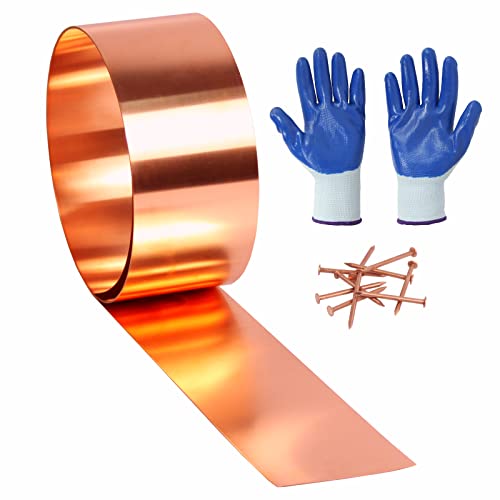
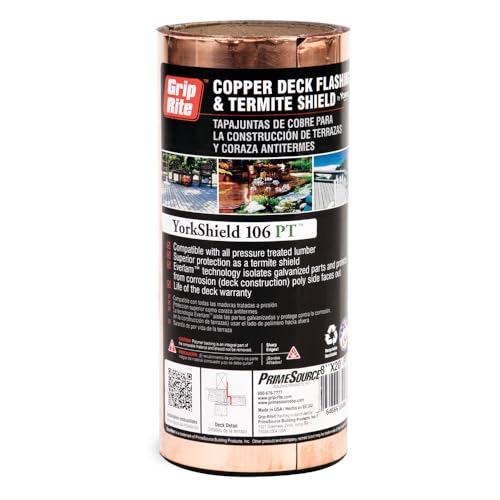
Review the product’s dimensions, included accessories, surface protection, and stated limitations before ordering. Royilink includes copper nails and gloves, while D.MATIALL lists gloves and copper nails. GOORY has a protective film on one side, which may help reduce scratches during handling. Grip-Rite is described as a laminated copper shield, making it a distinct format from exposed sheet rolls.
The best copper roof flashings are not necessarily the products with the largest dimensions. A narrow roll may fit an edge more neatly, a thicker sheet may suit a custom detail, and a formed pipe flashing may be the correct solution for a penetration. Confirm the required width, length, gauge, roof pitch, pipe size, compatible materials, and installation method before committing to a product.
Final recommendation
D.MATIALL 28 Gauge Copper Roll, 4 x 20 ft ranks first overall in this specification-based comparison under the published weighted criteria.
GOORY 26 Gauge Copper Flashing, 8 x 10 ft is the first overall specification-based choice among these best copper roof flashings. Its documented 8-inch width, 10-foot length, 26-gauge thickness, C11000 material, ASTM B152 reference, and listed shaping methods give it the highest weighted editorial result in this comparison.
uxcell is a strong alternative when a thicker 24-gauge sheet and a 6-inch width are more useful. ELECTRAPICK offers a balanced 4-inch format, while D.MATIALL stands out for its 20-foot length. Royilink is suited to narrow work with detailed material documentation, and Flashing Kings focuses on narrow edges and prebends. Oatey should be selected specifically for compatible pipe penetrations, not as a substitute for flat sheet.
Among the top copper roof flashings, the final choice should follow the roof detail and installation constraints. Verify dimensions and material compatibility rather than treating a general application statement as approval for every roof assembly.
Frequently Asked Questions
What are the best copper roof flashings for a general roof repair?
The uxcell 24 Gauge Copper Roll, 6 x 11 ft is the most specification-aligned general-purpose match because its listing combines substantial thickness, a useful width, and several direct roofing applications. ELECTRAPICK and GOORY are alternatives when a 4-inch or 8-inch width better suits the repair.
Is a copper roll the same as a pipe roof flashing?
No. A copper roll is flat material that can be cut and shaped for custom work. Oatey’s No-Calk flashing is a formed product designed around 1.5- to 3-inch pipes and roof pitches from 0 to 40 degrees. Choose the format that matches the roof detail.
Which copper flashing is best for a long run?
D.MATIALL is listed at 4 inches wide and 20 feet long, while Grip-Rite is listed at 8 inches wide and 20 feet long. These lengths may reduce the number of separate pieces needed, but the required width and installation layout should determine the final choice.
Does thicker copper flashing always make installation easier?
Not necessarily. The listings describe thicker 24-gauge products such as uxcell and SHASKOKOEN as bendable or cuttable, while thinner products may also be easier to manipulate in some details. Thickness is one trade-off among coverage, shaping, and the requirements of the roof assembly.
What compatibility issues should be checked?
Check contact with other metals and wood types before installation. GOORY and MTTHAHA specifically caution against galvanized steel and identify concerns with redwood and cedar. Also review the roof manufacturer’s instructions and local requirements, particularly for penetrations, treated lumber, and built-up roof systems.