Buying Guide
Choosing among the best window roof flashings starts with identifying the detail you need to seal. A window rough opening, a roof-to-wall transition, a curved sill, and a small emergency patch do not necessarily call for the same format. The products in this comparison fall into three practical groups: adhesive membrane tapes, flexible butyl or asphalt tapes, and cut-to-size metal rolls.
Adhesive acrylic tape is the most direct fit for many window and door rough openings. FrogTape Pro Grade Flashing Tape and ZIP System Adhesive Flashing Tape are both listed for windows, doors, and compatible building substrates. They arrive in roll form and are intended to create a continuous bonded layer. This format can be useful when the project needs a long strip rather than a separately shaped metal piece.
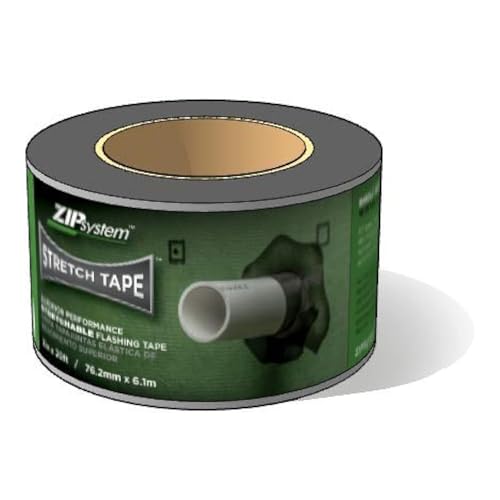
A flexible specialty tape is more suitable when the surface changes direction. ZIP System Flexible Stretch Tape is specifically described for curves, corners, sills, penetrations, and irregular surface flashing. XFasten Aluminum Butyl Tape is another flexible option, with an aluminum foil surface that the listing says can curve across textured areas. These designs may be easier to align on unusual details than a rigid sheet, although the roll width and total length still need to match the job.
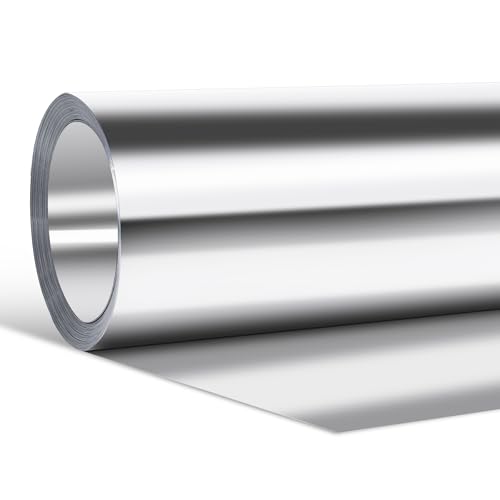
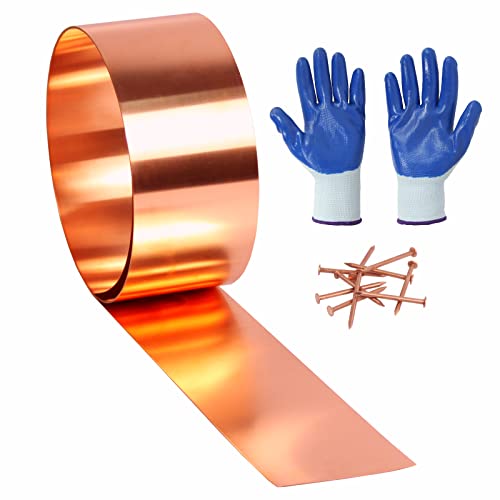
Metal rolls are a different approach. Tottist, Qimoo, and ELECTRAPICK use aluminum rather than a factory-applied adhesive membrane. Their listings describe cutting, bending, and securing the material with nails, screws, or tape depending on the application. This makes them useful for custom-shaped sections, trim, roof edges, and window areas where a formed strip is preferred. Because these products do not document an integrated adhesive layer, plan the attachment and sealing method separately.
Check width and total coverage
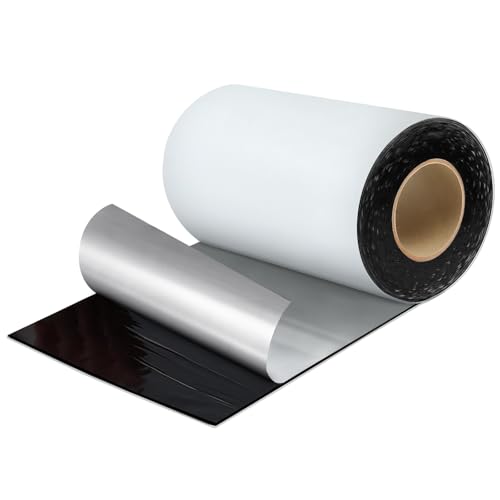
Width affects both overlap and handling. The 12-inch BXI membrane is suited to broad seams and larger repair areas, but it may be unnecessarily wide for a narrow window flange. The 3-inch ZIP stretch roll is more targeted to corners, sills, and penetrations. Four-inch products, including AMOGATO, XFasten, ELECTRAPICK, and Frienda, sit in the middle and can cover many ordinary repair details.
Length matters just as much. AMOGATO provides a listed 90-foot roll, while FrogTape lists 75 feet and Tottist lists 50 feet. Those formats are better candidates for multiple openings or a long continuous run. Qimoo and ELECTRAPICK each list 10-foot formats, which may reduce leftover material on a small repair but will require more planning on a larger installation. Frienda supplies two 32-foot rolls, allowing separate pieces for different locations without opening a second product.
Do not treat nominal roll size as the exact amount of finished coverage. Overlaps, corners, end laps, cuts, and material used around penetrations reduce usable length. Measure each run and include those transitions before choosing a roll.
Compare weather and temperature documentation
Weather claims vary in specificity. FrogTape provides one of the clearest documented ranges, from -40°F to 240°F, along with 12-month UV resistance. XFasten lists resistance to heat, UV exposure, freezing, and dust, with a stated range from -13°F to 250°F. ZIP System products state a 0°F to 120°F installation range and include warranty or exposure information in their listings.
Other products describe waterproofing, weather resistance, or outdoor use without supplying the same level of numerical detail. That does not automatically make them unsuitable, but it does mean the comparison should not assume identical conditions. BXI lists a -4°F to 158°F temperature range, while the aluminum products describe resistance to rain, snow, sun, corrosion, or temperature change. Use the documented range as a screening tool and follow the product’s installation instructions for the actual substrate and conditions.
Consider adhesive and backing design
FrogTape also describes initially repositionable adhesion, while ZIP Stretch emphasizes stretchable acrylic adhesive. These details can matter when alignment around a window or corner is more involved.
Butyl tape uses a different design. XFasten and similar aluminum-backed products are described as peel-and-stick, waterproof, flexible, and suitable for window gaps and roof repairs. Asphalt membrane tape, represented by BXI and Frienda, is described as filling or sealing cracks through an asphalt or modified-bitumen layer. Metal rolls such as Qimoo and ELECTRAPICK provide no documented adhesive backing, so they should be evaluated as flashing stock rather than as self-adhering tape.
Plan the installation surface
Adhesive products generally depend on a clean, dry, properly prepared surface. These are important practical details because a nominally suitable tape can still be difficult to place if the surface is dirty, uneven, or poorly aligned.
For metal flashing, account for cutting and fastening. Qimoo says ordinary scissors can cut its roll, while ELECTRAPICK says the material can be secured with nails, screws, or tape. Wear appropriate hand protection when cutting metal and avoid assuming that included tools or accessories are universal across products.
Use the evidence level appropriately
This list is not a hands-on test. It does not establish installation success, long-term field performance, or compatibility with every window frame, sheathing type, roof covering, sealant, or climate. Product pages also vary in how much technical information they publish. Give extra weight to specifications that are directly stated, such as width, length, thickness, adhesive type, material, temperature range, and named substrates.
Final Recommendation
FrogTape Pro Grade Flashing Tape 3.75 in x 75 ft ranks first overall in this specification-based comparison under the published weighted criteria.
FrogTape Pro Grade Flashing Tape is the first overall specification-based choice among these best window roof flashings because it combines a long 75-foot roll, broad documented temperature performance, UV information, acrylic adhesion, substrate compatibility, and self-healing around fasteners. ZIP System Adhesive Flashing Tape is a strong alternative for standard rough openings, while AMOGATO is attractive when a thicker, wider, long-roll tape is useful.
For specialized jobs, choose by geometry rather than by brand name. ZIP System Flexible Stretch Tape is the focused pick for curves and corners. XFasten is a flexible foil-backed butyl option for window gaps and repair surfaces. BXI offers unusually broad membrane coverage, while Tottist, Qimoo, and ELECTRAPICK provide cut-to-size aluminum formats. Frienda’s two-roll package is practical for multiple repair locations. Together, these top window roof flashings cover the main documented formats without treating them as interchangeable.
Frequently Asked Questions
What are the best window roof flashings for a standard rough opening?
FrogTape Pro Grade Flashing Tape and ZIP System Adhesive Flashing Tape are the clearest matches in this selection because their listings specifically mention windows, doors, rough openings, or window flanges. Compare the documented substrate compatibility, roll length, width, and installation temperature range before choosing.
Should I choose flashing tape or an aluminum roll?
Choose adhesive tape when you need a roll that bonds directly to a prepared surface and creates a continuous membrane. Choose an aluminum roll when you need to cut or shape a metal strip and are prepared to use the appropriate fasteners or tape. Qimoo and ELECTRAPICK document cut-to-size aluminum handling, while FrogTape and ZIP System document adhesive flashing designs.
Which best window roof flashings work around curves and corners?
ZIP System Flexible Stretch Tape is specifically listed for curves, corners, sills, penetrations, and irregular flashing areas. XFasten Aluminum Butyl Tape is also described as flexible across curved and textured surfaces. Their narrower formats may be easier to control around complex geometry than a 12-inch-wide membrane.
How much flashing roll coverage do I need?
Measure every straight run, corner, overlap, and penetration, then add material for cuts and laps. Longer formats such as AMOGATO’s 90-foot roll, FrogTape’s 75-foot roll, and Tottist’s 50-foot roll are suited to larger or multiple projects. Smaller 10-foot metal rolls may be more appropriate for focused repairs.
What surface preparation is documented for these products?
FrogTape recommends pressing the full tape length with a roller or squeegee and removing wrinkles, creases, and trapped air. In general, follow the selected product’s instructions and verify that the substrate is compatible before installation.