Buying Guide
Choosing among the best gaming access points starts with the network layout rather than the game itself. An access point adds wireless connectivity to an existing wired network, so the router, switch, Ethernet cabling, client devices, and placement all influence the final result. The products here are compared from supplied specifications and feature descriptions; this is not a hands-on performance test.
Choose the Wi-Fi generation
Wi-Fi 7 is represented by the TP-Link Omada EAP775-Wall, EAP723, Cudy AP3600, and Ubiquiti U7 Pro Max. These products document features such as 6 GHz operation, Multi-Link Operation, 240 MHz or 320 MHz channels, and higher wireless classifications. Those capabilities are most relevant when client devices also support Wi-Fi 7 and the network infrastructure can accommodate the associated wired connection.
Wi-Fi 6 remains a practical category for many homes and offices. The Festa F67, Zyxel NWA50AX Pro, ASUS ExpertWiFi EBA63, Deco X50-PoE, EAP650-Desktop, and EAP603-Outdoor document features including OFDMA, MU-MIMO, 160 MHz channels, roaming, or mesh. Wi-Fi 6 can also be a sensible match for a network containing mostly Wi-Fi 6 or earlier devices.
Match the Ethernet uplink
A wireless access point can be limited by its wired connection. The EAP775-Wall and Cudy AP3600 document 2.5G-class connections, while the EAP723, Festa F67, Zyxel NWA50AX Pro, and Deco X50-PoE also include 2.5G connectivity. These designs are straightforward matches for multi-gigabit switches or routers.
The ASUS EBA63 does not list a multi-gigabit port in the supplied evidence, and the EAP650-Desktop lists four Gigabit ports. The EAP603-Outdoor also has a more limited wireless class and should be evaluated as an outdoor coverage product rather than a high-capacity indoor unit. Check the port speed on the rest of the network before selecting a high-capacity wireless model.
Consider power and placement
PoE can simplify an access-point installation by carrying power and data through one Ethernet cable. The Festa F67 supports PoE+ and DC input, the Deco X50-PoE supports PoE+ or standard power, and the EAP650-Desktop supports PoE++ or included DC power. The EAP603-Outdoor supports PoE+ or passive PoE. The EAP775-Wall documents PoE input and output options, while the EAP723 listing emphasizes its 2.5G port without detailing an included power accessory.
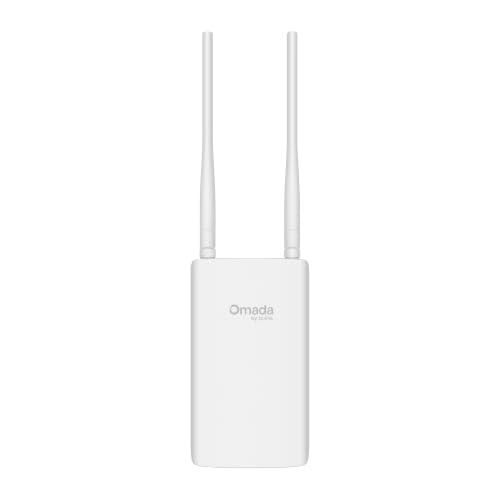
Placement types vary considerably. The EAP775-Wall is designed for wall-plate integration. The EAP650-Desktop can sit on a desk or mount on a wall. The Festa F67 is described as ultra-slim, and the EAP603-Outdoor supports wall or pole mounting. The Cudy AP3600, Deco X50-PoE, and U7 Pro Max are suitable for ceiling-oriented deployments according to their supplied descriptions. Select the form factor that matches the available cable drop and the area needing coverage.
Look at management and roaming
Multi-access-point networks benefit from coordinated management. Omada models such as the EAP775-Wall, EAP723, EAP650-Desktop, and EAP603-Outdoor document centralized or cloud management, mesh, or seamless roaming. The Festa F67 adds a self-organizing network platform, remote cloud access, and Zero-Touch Provisioning. Zyxel’s NWA50AX Pro can switch between standalone local management and Nebula cloud control.
The Deco X50-PoE is designed around compatibility with other Deco models and app management. The U7 Pro Max is intended for UniFi integration. ASUS provides self-defined networks, SSIDs, VLAN support, and AiMesh compatibility. These ecosystems are not interchangeable, so a multi-AP installation is easiest when all units use a management platform that fits the rest of the network.
Gaming traffic can share a network with work devices, guests, streaming equipment, and smart-home products. The Deco X50-PoE lists QoS and guest Wi-Fi, and the Festa F67 lists load balancing and airtime fairness. These are configuration features, not evidence of a specific gaming result.
Wi-Fi 7 features such as Multi-Link Operation and wide channels are documented on the EAP775-Wall, EAP723, and Cudy AP3600. The U7 Pro Max documents 6 GHz support and spectral scanning. On Wi-Fi 6 products, OFDMA, MU-MIMO, beamforming, and roaming are commonly specified. Choose features that match your devices and network controller instead of selecting solely by the wireless label.
Check compatibility before installation
Confirm the access point’s power method, Ethernet speed, mounting hardware, and controller requirements before deployment. Some products require existing PoE equipment, while others provide an alternative DC input. The Cudy AP3600 listing states that its adapter is not included, and the EAP603-Outdoor offers multiple PoE methods. The Deco X50-PoE listing notes that its PoE+ switch is not included.
Also verify client compatibility with 6 GHz, Wi-Fi 7, 160 MHz, 240 MHz, or 320 MHz operation. A high wireless specification is most useful when the router, switch, access point, and client devices can all support the intended path. For a single-room installation, a desktop or wall model may be easier to place; for a larger coordinated network, centralized management and roaming support deserve more attention.
Final Recommendation
TP-Link Omada EAP775-Wall ranks first overall in this specification-based comparison under the published weighted criteria.
The TP-Link Omada EAP775-Wall is the first overall specification-based choice among the best gaming access points in this comparison. Its tri-band Wi-Fi 7 design, 6 GHz support, two 2.5G ports, additional Gigabit ports, PoE flexibility, and Omada management give it the most comprehensive documented feature combination in the group.
The TP-Link Omada EAP723 is a more focused Wi-Fi 7 alternative with one 2.5G port and dual-band operation. Choose the Cudy AP3600 when OpenWiFi, PoE passthrough, or VPN functions matter. The Festa F67 and Zyxel NWA50AX Pro are well-equipped Wi-Fi 6 choices with business-oriented management tools, while the ASUS EBA63 emphasizes SSIDs and VLANs. For home mesh expansion, the Deco X50-PoE is the appropriate fit. The U7 Pro Max suits an existing UniFi environment, the EAP650-Desktop fits desktop or wall placement, and the EAP603-Outdoor is the choice for documented weather protection.
Together, these top gaming access points cover Wi-Fi 6 and Wi-Fi 7, indoor and outdoor placement, desktop and wall formats, PoE deployment, multi-gigabit uplinks, and several management ecosystems. The right selection depends on the wired network and the location where wireless clients will connect.
Frequently Asked Questions
What makes the best gaming access points different from a basic wireless device?
The selected access points document combinations of modern Wi-Fi standards, wired uplinks, multi-client technologies, roaming, mesh, VLANs, QoS, or centralized management. These features can help organize a busy network, but the supplied evidence does not establish a specific gaming result.
Should I choose Wi-Fi 7 for gaming?
Choose Wi-Fi 7 when your client devices and network infrastructure support features such as 6 GHz, Multi-Link Operation, or wide channels. The EAP775-Wall, EAP723, Cudy AP3600, and U7 Pro Max document Wi-Fi 7 capabilities. Wi-Fi 6 models may be a better specification match when most connected devices use Wi-Fi 6 or earlier.
Is a 2.5G Ethernet port important for an access point?
A 2.5G port can provide more wired capacity than a Gigabit port, but it only helps when the router, switch, cabling, and network service support the connection. The EAP775-Wall, EAP723, Cudy AP3600, Festa F67, Zyxel NWA50AX Pro, and Deco X50-PoE document 2.5G connectivity.
Can I power these access points with PoE?
Several selected models document PoE support, including the Festa F67, Deco X50-PoE, EAP650-Desktop, EAP603-Outdoor, EAP775-Wall, and Cudy AP3600. Requirements differ between PoE, PoE+, PoE++, and passive PoE, so match the access point with the correct switch, injector, or included power method.
Which access point is suitable for outdoor gaming?
The TP-Link Omada EAP603-Outdoor is the selected outdoor model. Its supplied evidence documents IP65 weatherproofing, a wide operating temperature range, 6 kV lightning protection, external antennas, and wall or pole mounting. The other products in this list are not documented with the same outdoor protection.