Buying Guide
The best indoor and outdoor weather stations differ mainly in what they measure, how they transmit readings, and how much information the console can show at once. This comparison uses public listing specifications rather than hands-on testing, so treat stated ranges and accuracy figures as manufacturer-provided information.
Choose the measurements you actually need
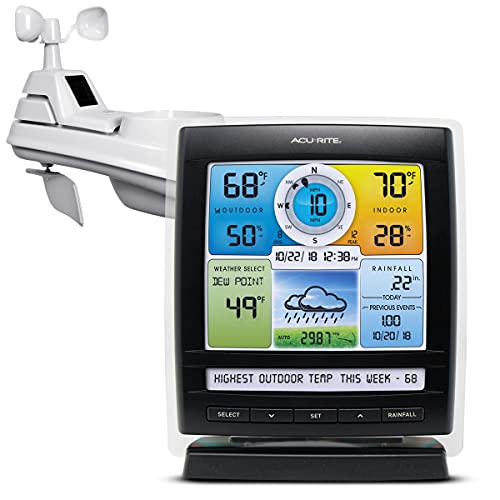
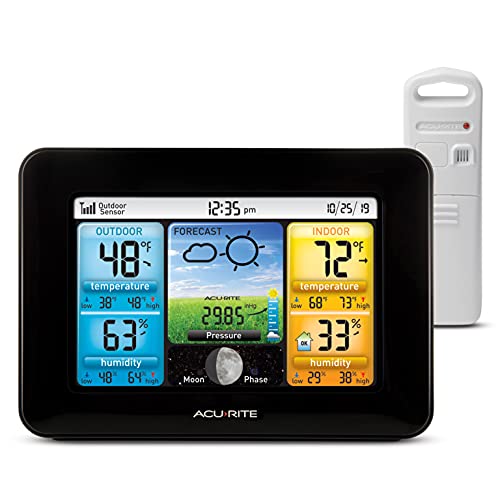
Basic stations can be useful when the main goal is checking indoor and outdoor temperature and humidity. The AcuRite 02077M is a clear example: it adds pressure trends, forecast icons, moon phase, and high/low records without documenting wind or rainfall. That simpler design may suit a bedroom, office, RV, or general household check.
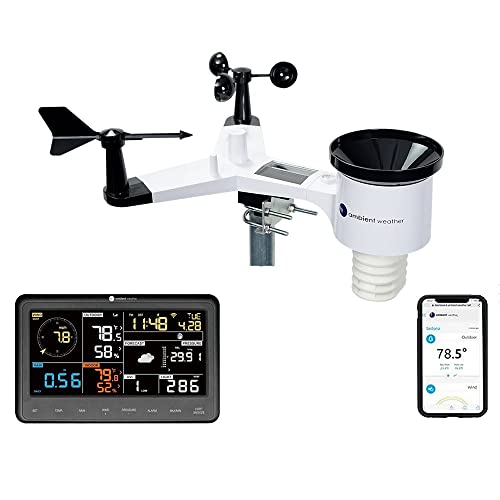
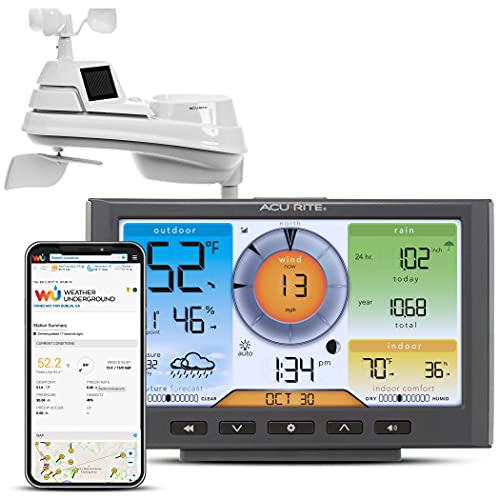
For outdoor planning, look for a sensor array that includes wind speed, wind direction, and rainfall. The AcuRite Iris 01512M, AcuRite Iris 01540M, Ambient Weather WS-2902, VEVOR YT60234, AIR ALFA AF007, Sainlogic station, InfiSync station, and GOYOJO station all document broader weather coverage. Measurement names can vary, so check whether the listing includes the specific readings important to you rather than relying only on a product label such as 5-in-1 or 7-in-1.
Decide whether Wi-Fi matters
A local console is enough if you want readings in one room. Wi-Fi becomes more useful when you want to check conditions away from home, share data, or trigger connected actions. Ambient Weather WS-2902 documents IFTTT, Google Home, and Alexa support. The AcuRite Iris 01540M connects with Weather Underground, while VEVOR supports Weather Underground and WeatherCloud. AIR ALFA and Sainlogic also document remote access through their respective services or apps.
Connected features can add setup requirements, accounts, and network dependencies. If you prefer a self-contained display, the AcuRite 01512M, AcuRite 01022M, InfiSync, and GOYOJO options provide wireless sensor-to-console monitoring without documented Wi-Fi access.
Compare displays and viewing arrangements
Display design matters because weather data is only useful when it is easy to read. Adjustable dimming is documented on several color consoles, including AcuRite 01022M, AcuRite Iris 01512M, AcuRite Iris 01540M, VEVOR YT60234, and InfiSync. InfiSync goes further with two 6.5-inch screens and oversized fonts, which may help when readings need to be visible from different areas.
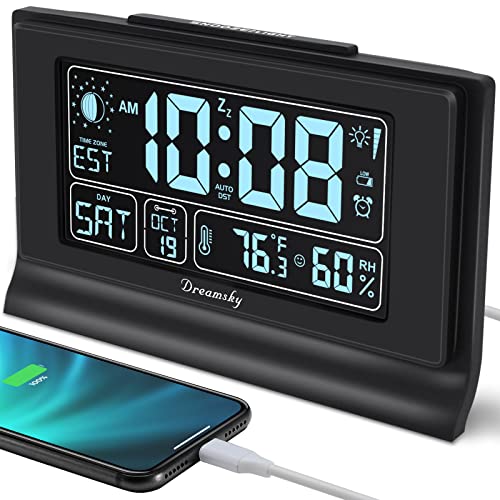
A large display does not necessarily mean every metric is visible simultaneously. Review the listed screen functions and consider whether you want a glanceable forecast, detailed pages, ticker alerts, or separate indoor and outdoor sections. Color can help distinguish information, while a monochrome or simpler console may reduce visual complexity.
Consider range and installation
Wireless range is normally stated for open or unobstructed areas. Ambient Weather WS-2902, AcuRite Iris models, VEVOR YT60234, AIR ALFA AF007, InfiSync, and GOYOJO include mounting or transmission details in the supplied evidence. AIR ALFA documents up to 4,900 feet in open areas, VEVOR lists 150 meters, InfiSync lists 443 feet, and GOYOJO lists 100 meters in open areas. Walls, trees, roofs, and other obstructions can change real-world placement, so avoid treating a maximum range as a guarantee.
Outdoor sensors also need an appropriate mounting location. The supplied listings describe brackets, posts, fences, walls, roofs, or tree-branch placement depending on the model. Follow the product instructions and avoid locations that could expose temperature or rainfall sensors to misleading conditions.
Review power and maintenance implications
Battery needs vary. The AcuRite 02077M, for example, uses batteries in the outdoor sensor, while VEVOR and AIR ALFA document solar-assisted outdoor sensor designs. AIR ALFA also describes an adjustable solar panel and a stated battery-life estimate under typical conditions. These features may reduce battery changes, but sunlight and installation angle still matter.
Console power is another consideration. Some stations support an adapter, batteries, or both. InfiSync, GOYOJO, and the other selected models have different display and power details, so check whether continuous backlighting requires wall power. Also note whether batteries are included; several supplied listings explicitly say they are not.
Match data history and alerts to your routine
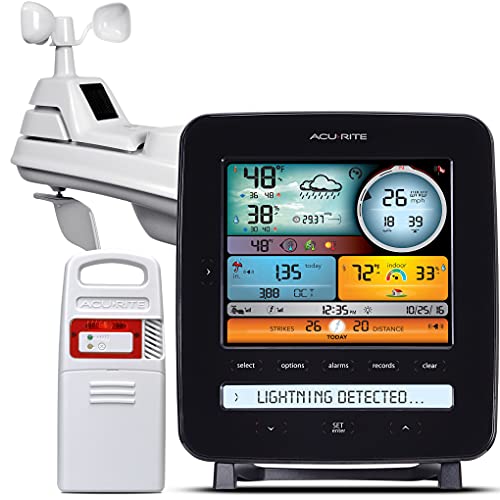
Alerts are useful when you want a prompt for temperature, humidity, wind, rainfall, or pressure changes. Sainlogic emphasizes app alerts and two-year exportable history. AcuRite Iris 01512M, AcuRite Iris 01540M, and AcuRite Iris with lightning detection document historical readings, thresholds, or notifications. AIR ALFA documents CSV reports, while the Ambient Weather WS-2902 supports alerts and connected automation.
If you only check current conditions, extensive history may not justify added complexity. If you garden, manage a greenhouse, monitor a farm, or compare seasonal patterns, export and historical features can be more important than a decorative forecast screen.
Final Recommendation
Ambient Weather WS-2902 Wi-Fi Smart Weather Station ranks first overall in this specification-based comparison under the published weighted criteria.
Ambient Weather WS-2902 is the highest-scoring returned product and the first overall specification-based choice among these best indoor and outdoor weather stations. Its combination of wind, rain, temperature, humidity, UV, and solar-radiation measurements with Wi-Fi, alerts, and smart-home support gives it the broadest connected feature profile in this selection.
The AcuRite Iris 01512M is a strong alternative for detailed local monitoring without documented Wi-Fi, while AIR ALFA AF007 is better suited to long-range or expandable installations. Choose VEVOR YT60234 for solar-assisted placement, Sainlogic for extended data export, and InfiSync when two readable screens are more useful than remote access. For simpler household checks, AcuRite 02077M offers a less complex measurement set and color-console format.
These top indoor and outdoor weather stations are not interchangeable. Prioritize the measurements, connection method, display arrangement, sensor range, and history tools that fit your location before choosing a model.
Frequently Asked Questions
What should I measure with an indoor and outdoor weather station?
Temperature and humidity cover basic comfort and condition checks. Add wind and rainfall if you garden, plan outdoor activities, or want more complete backyard information. UV, solar radiation, lightning, and air-quality expansion are more specialized features documented by selected models such as Ambient Weather WS-2902 and AIR ALFA AF007.
Do all of the best indoor and outdoor weather stations use Wi-Fi?
No. AcuRite Iris 01512M, InfiSync, and GOYOJO document wireless sensor-to-console operation without Wi-Fi access in the supplied evidence. Ambient Weather WS-2902, AcuRite Iris 01540M, VEVOR YT60234, AIR ALFA AF007, and Sainlogic document connected or app-based features. Choose Wi-Fi when remote viewing or smart-home integration matters.
Is a longer wireless range always better?
Not necessarily. A stated range usually applies to open or unobstructed conditions. Buildings, trees, roofs, and other barriers can reduce transmission distance. A station with a shorter stated range may still be suitable when the outdoor sensor is close to the console, while AIR ALFA AF007 or VEVOR YT60234 may be more relevant for larger properties.
Are solar-powered weather stations maintenance-free?
No. Solar assistance can reduce reliance on battery changes, but the panel still needs suitable light and the sensor may use backup power. VEVOR YT60234 and AIR ALFA AF007 document solar-assisted designs, yet placement, weather exposure, and the product’s instructions remain important.
Which display type is easiest to read?
Look for large numbers, adjustable brightness, high contrast, and a layout that separates indoor and outdoor readings. InfiSync documents two 6.5-inch displays with oversized fonts, while several AcuRite and VEVOR models document adjustable dimming. The best choice depends on viewing distance, lighting, and whether you want all readings visible at once.