Buying Guide
The best intel pentium gold laptops occupy a practical sweet spot in budget Windows computing: enough processing power for web browsing, documents, online classes, and 1080p streaming, without paying for performance most everyday users never touch. This guide compares ten current US models strictly on documented specifications—processor class, memory, storage, display, ports, battery, and warranty—because at this level the spec sheet tells most of the story. This is a specification-based comparison, not a hands-on test.
Understanding the Pentium Gold Chips in This Roundup
Two processors anchor this list. The Lenovo IdeaPad 3i runs the Pentium Gold 7505, a dual-core, four-thread design that boosts up to 3.50GHz with 4MB of Intel Smart Cache—the snappiest CPU here for everyday multitasking. The other nine picks all run the Pentium Gold 6500Y, a low-wattage Y-class chip (also dual-core, four-thread, up to 3.4GHz) engineered for cool, quiet operation. HPUMLSE puts its TDP at up to 7W, which explains why these machines stay slim without aggressive cooling. Neither chip targets video editing or modern 3D gaming; both are tuned for the daily rhythm of tabs, documents, email, and streaming.
Memory and Storage: Where Budget Laptops Are Decided
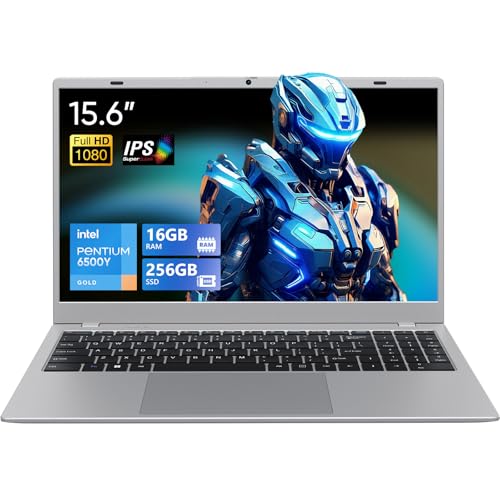
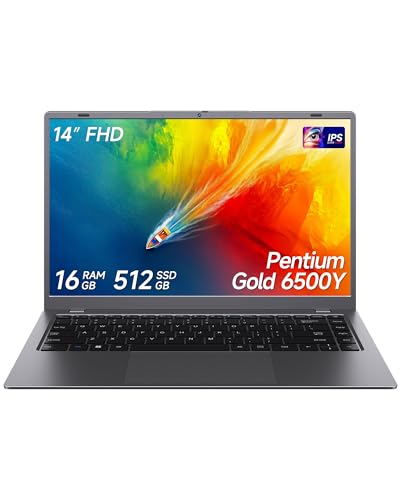
RAM is the clearest divider. Five models—the HYYUO, HPUMLSE, UOWAMOU, VIGSENUP, and Zrasu 14—ship with 16GB, which keeps dozens of browser tabs and office apps responsive. The IdeaPad 3i and RNRUO carry 12GB; the BNCF NewBook 10, MAXVELTH, and SHBIV start at 8GB, workable for lighter routines. Storage spans from 1TB of NVMe SSD on the IdeaPad 3i down to 128GB on the RNRUO and SHBIV. If you live in cloud storage, 128GB is survivable; if you keep photos and video locally, treat 512GB as the comfortable tier. Two useful details: SHBIV documents expansion support up to 2TB, and the Zrasu 14 exposes dual SO-DIMM slots, rare serviceability at this level.
Screen Size, Resolution, and Eye Comfort
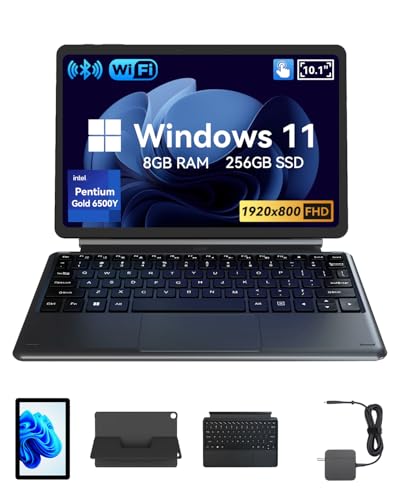
All but one pick reach at least 1920x1080, and most use IPS panels with wide viewing angles—the HYYUO, HPUMLSE, UOWAMOU, RNRUO, SHBIV, VIGSENUP, and MAXVELTH all fit that description. The Zrasu 14 squeezes the same resolution into a compact 14-inch frame for easier carrying. The exception is the BNCF NewBook 10, whose 10.1-inch touchscreen runs 1920x800: fine for its tablet-slate role, tighter for dense spreadsheets. Comfort extras exist too—SHBIV adds an anti-glare coating with 0.2-inch bezels, and HPUMLSE pushes slim bezels for a high screen-to-body look. For long writing or spreadsheet sessions, the 15.6-inch class remains the relaxed choice.
Weight, Battery, and Honest Portability
Batteries here cluster around 38Wh or 5000mAh packs. Zrasu is unusually candid, stating 4-5 hours of typical use—helpful honesty, but plan for midday charging. SHBIV pairs its 38Wh pack with USB-C PD charging for quick top-ups, and MAXVELTH uses the same 38Wh capacity. Weight ranges widely: the BNCF is about 585 grams, the RNRUO around 1.3kg, the Zrasu and HYYUO roughly 1.7kg, while the IdeaPad 3i reaches about the current price. Several listings publish no battery figure at all, which is a fair follow-up question for any seller.
Ports, Wireless, and Privacy Extras
Connectivity is generous across the board, but details differ. The IdeaPad 3i is the only pick with Wi-Fi 6; every other model that documents its wireless standard lists Wi-Fi 5, which remains fine for typical home broadband. USB-C appears everywhere with different talents: MAXVELTH splits a full-function Type-C port from a charging-only one, SHBIV supports PD charging, and the IdeaPad 3i adds a 4-in-1 card reader. Physical security shows up repeatedly—security lock slots on the UOWAMOU, Zrasu, VIGSENUP, MAXVELTH, and HYYUO, plus webcam privacy shutters or switches on the HPUMLSE, UOWAMOU, VIGSENUP, and SHBIV. For households and shared offices, those small hardware details carry real value.
Software, Warranty, and Out-of-Box Readiness
Readiness splits this field in two. The IdeaPad 3i, HPUMLSE, VIGSENUP, and BNCF document Windows 11; HPUMLSE and UOWAMOU bundle Office 2024, and RNRUO preinstalls its office applications. HYYUO, Zrasu, MAXVELTH, and SHBIV do not clearly name an operating system version—confirm before checkout. Warranty coverage runs one year as the norm, with UOWAMOU documenting two years, the longest here. That mix of documented and undocumented detail is exactly how we separated the top intel pentium gold laptops from lookalike listings: what is written on the spec sheet earns the score.
How to Choose Among These Ten
All ten of the best intel pentium gold laptops above handle everyday workloads; the differences are emphasis. Heavy multitaskers should start with the 16GB/512GB pairs (HYYUO, Zrasu 14); office-ready setups point to HPUMLSE or UOWAMOU; commuters gain the most from the BNCF detachable or the sub-3-pound RNRUO; bright-room workers should look at SHBIV’s anti-glare panel; peripheral-heavy desks suit MAXVELTH’s dual USB-C design; and anyone wanting the fullest single configuration should default to the IdeaPad 3i.
Final Recommendation
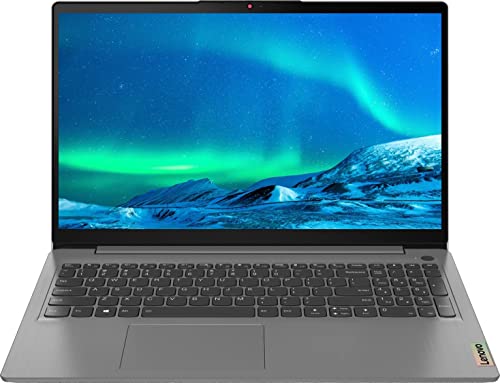
Lenovo IdeaPad 3i 15.6-inch FHD Laptop (Pentium Gold 7505) ranks first overall in this specification-based comparison under the published weighted criteria.
The Lenovo IdeaPad 3i 15.6-inch is our first overall specification-based choice among the best intel pentium gold laptops in this roundup, because the 7505 processor, 12GB of RAM, a 1TB NVMe SSD, and Wi-Fi 6 give it the clearest all-around lead on the evidence. If productivity software out of the box matters most, the HPUMLSE and UOWAMOU arrive with Office 2024, and the UOWAMOU adds the group’s only documented two-year warranty. The HYYUO and Zrasu 14 serve tab-heavy multitaskers with 16GB and 512GB each; the VIGSENUP layers on a privacy shutter with documented Windows 11 Home. For tablet-to-laptop flexibility, the BNCF NewBook 10 includes its keyboard and stand; the RNRUO is the light style pick; the SHBIV brings an anti-glare screen with a documented path to 2TB of storage; and the MAXVELTH stands out for its dual USB-C layout. Every one of the top intel pentium gold laptops here shares a common thread: enough documented hardware for everyday school and office work at a genuinely budget-friendly level.
Frequently Asked Questions
Are the best intel pentium gold laptops fast enough for everyday use?
Yes, for the workloads they are designed for: web browsing with many tabs, documents, spreadsheets, email, and 1080p streaming. The 7505 in the IdeaPad 3i boosts up to 3.50GHz, while the 6500Y models prioritize cool, efficient operation up to 3.4GHz. Demanding video editing or modern gaming sit outside this class. Pairing any of these chips with 16GB of RAM, as on the HYYUO or VIGSENUP, keeps everyday responsiveness comfortable.
How much RAM and storage should I look for?
For multitasking, 16GB is the sweet spot in this group, followed by 12GB; 8GB models like the MAXVELTH and SHBIV suit lighter, single-task routines. On storage, 512GB or more avoids constant housekeeping, while 128GB configurations lean on cloud storage or expansion—SHBIV documents support up to 2TB, and the Zrasu 14’s dual SO-DIMM slots make memory service straightforward.
Can a 2-in-1 like the BNCF NewBook 10 serve as a main laptop?
It can, if portability and touch input matter more than screen size. The BNCF ships with its magnetic keyboard and stand, runs Windows 11, and cools the 6500Y with a copper pipe and fan, so sustained tasks stay steadier than on passive designs. The trade-offs are a 10.1-inch 1920x800 display and a small 26.6Wh battery—excellent for travel and notes, tighter for all-day spreadsheet work.
Do these laptops come with Windows 11 and Office ready to go?
Some do. Windows 11 is documented on the IdeaPad 3i, HPUMLSE, VIGSENUP, and BNCF; Office 2024 is bundled with the HPUMLSE and UOWAMOU, and the RNRUO lists preinstalled office applications. Several other listings do not name an operating system version, so treat that as a checklist question for the seller before purchasing.
What battery life should I realistically expect in this category?
Documented capacities run from 26.6Wh on the BNCF up to 38Wh and 5000mAh packs on the Zrasu, HYYUO, RNRUO, SHBIV, MAXVELTH, and VIGSENUP. Zrasu’s stated 4-5 hours of typical use is the most specific claim in the group, and USB-C PD charging on the SHBIV helps with quick top-ups. If a listing gives no battery figure at all, ask before you buy and keep brightness moderate for longer unplugged sessions.