Buying Guide
Choosing the best metric hex keys starts with matching the wrench format to the fasteners and the working space. All selected products are metric hex-key sets, but they differ in coverage, arm geometry, material disclosures, and storage. This is a specification-based guide using supplied public listing information; it is not a hands-on test.
Check the metric size range
The most useful starting point is the actual size list. Many general-purpose sets cover 1.5, 2, 2.5, 3, 4, 5, 6, 8, and 10 mm. EKLIND 10509, Wiha 66980, and Bondhus 10999 document that common span clearly. It is a practical range for furniture, bicycles, equipment, and routine maintenance, but it does not cover every possible fastener.
A broader range can reduce gaps. LEXIVON LX-130H-MM and the ELEAD 15-Piece set both list sizes beginning at 1.27 mm and extending to 10 mm. Klein Tools 70550M reaches 12 mm, which may help when larger fasteners are part of the job. The CRAFTSMAN set is identified as 13-piece, although its supplied evidence does not enumerate the individual sizes.
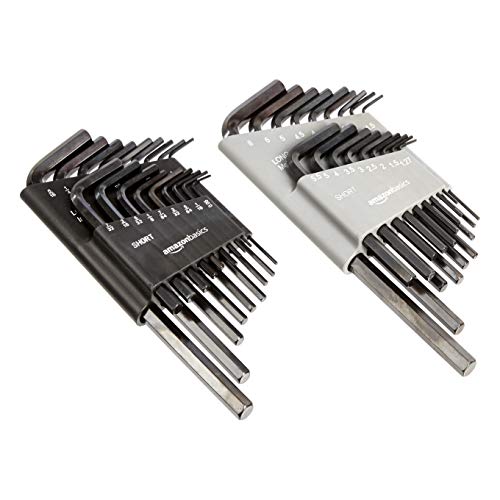
The Amazon Basics 36-Piece set includes both SAE and metric tools. That can be useful where a toolbox serves mixed-unit equipment, but it also means more pieces to store. If your work is exclusively metric, a dedicated metric set may be easier to audit before a job.
Decide whether ball ends fit your work
Ball-end keys are documented across many of the selected sets. They allow angled entry into a socket-head fastener, which can help when a straight approach is obstructed.
Ball ends are especially relevant for bicycle frames, furniture interiors, machinery, and automotive spaces where direct alignment is inconvenient. However, an angled ball end should not automatically be treated as the best choice for every task. A straight, square-cut end can be preferable when full-depth engagement is the priority. Klein Tools 70550M explicitly documents square-cut ends, and EKLIND 10509 is a standard short-series set without a documented ball end.
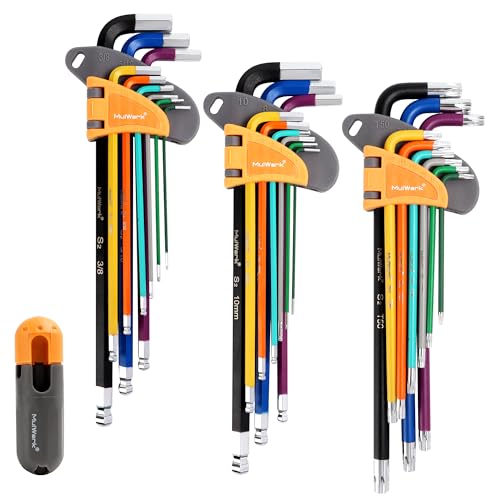
Long-arm L-wrenches provide reach and leverage options through their two sides. LEXIVON, ELEAD, Wiha, GEARWRENCH, Bondhus, and CRAFTSMAN use the L-key format.
Folding sets trade some independent-key flexibility for portability. Klein Tools 70550M has independently opening blades, a 270-degree range, extended blades, and adjustable key tension. It also includes a heavy-duty nylon handle. Those features can make a folding tool convenient in a vehicle or toolbox.
A short series such as EKLIND 10509 may be a sensible choice where compact keys are easier to position. It may provide less reach than a long-arm design, so consider whether fasteners sit deep inside a frame, housing, or cabinet.
Review material and finish claims
The supplied listings document several material choices. LEXIVON and ELEAD specify heat-treated S2 steel. EKLIND describes alloy steel that is heat treated, quenched, and tempered.
Finish claims also vary. Black oxide, manganese phosphate, chrome plating, ProGuard, and rust-resistant coatings are mentioned across the pool. These details are useful for comparing the listed specifications, but they should not be treated as proof of performance beyond what the listing states. A corrosion-resistant finish may be helpful for storage and maintenance, especially in a vehicle or workshop, but the supplied evidence does not establish service life.
Prioritize identification and storage
Clear identification can save time when sizes are close together. LEXIVON uses laser-etched markings, ELEAD lists clear markings, and Wiha and Wera use color-coding systems. EKLIND 10509 uses blue metric coloring and a marked holder.
Storage is equally important because separate keys are easy to scatter. The LEXIVON, ELEAD, and EKLIND listings mention holders or organized storage. Amazon Basics includes two hinged cases with dedicated slots. Folding tools such as Klein Tools 70550M keep the blades together in one body, while Wera lists a clip and wear-resistant clip material. Choose a holder when workshop organization matters, or a folding design when portability is the priority.
Match the set to the job
For bicycle and furniture work, a common 1.5-10 mm range with ball-end access is a directly supported configuration in this comparison. For automotive or machinery work, look for long arms, larger sizes, corrosion protection, and an extension option. For mixed-unit equipment, the Amazon Basics set adds SAE coverage. For compact emergency storage, Klein Tools 70550M offers a folding format and reaches 12 mm.
The best metric hex keys are not necessarily the set with the most pieces. They are the set whose documented sizes, access design, material, and storage format align with your fasteners. Use the specification scores as a structured comparison, then verify the size list and included accessories before ordering.
Final Recommendation
LEXIVON LX-130H-MM 13-Piece Metric Hex Key Set ranks first overall in this specification-based comparison under the published weighted criteria.
LEXIVON LX-130H-MM 13-Piece Metric Hex Key Set is the first overall specification-based choice in this comparison under the published weighted criteria.
LEXIVON LX-130H-MM combines broad 1.27-10 mm metric coverage with a ball end, chamfered edges, heat-treated S2 alloy steel, corrosion protection, laser-etched markings, a holder, and a lifetime limited warranty. It is a complete match for buyers seeking the best metric hex keys for varied repair and maintenance tasks.
Choose the ELEAD 15-Piece set instead when the extension bar and deep-reach emphasis are more important. Wera fits users who value detailed grip and color-identification features, while Klein Tools 70550M suits portable work and larger 12 mm fasteners. For a straightforward short standard set, EKLIND 10509 keeps the size list and holder easy to understand. These top metric hex keys differ by design, so the right choice depends on whether your priority is coverage, angled entry, portability, or organization.
Frequently Asked Questions
What sizes should a metric hex key set include?
A commonly useful range is 1.5, 2, 2.5, 3, 4, 5, 6, 8, and 10 mm. Wiha 66980, EKLIND 10509, and Bondhus 10999 document that group. LEXIVON and ELEAD add 1.27 mm, while Klein Tools 70550M reaches 12 mm. Check the exact list when a project specifies an uncommon fastener.
Are ball-end hex keys better for tight spaces?
They can be more convenient when the fastener cannot be approached straight on. The selected ball-end products document angled access, commonly up to 25 degrees, with CRAFTSMAN listing 28 degrees. That feature supports access, but it does not mean every task should be performed at an angle. A straight end may be preferable when full-depth engagement matters.
Are folding metric hex keys a good choice for bicycles or travel?
A folding design keeps the keys together and is convenient to carry. Klein Tools 70550M documents independently opening blades, a 270-degree range, a nylon handle, and sizes through 12 mm. Separate L-keys may offer more flexibility for deep access or unusual orientations, so compare portability with reach before choosing.
How should I compare the best metric hex keys without customer reviews?
Use the documented size list, arm design, ball-end or straight-end geometry, material, finish, markings, and storage. This comparison intentionally excludes customer sentiment and volatile marketplace indicators. The most specification-aligned option is the one that covers your fasteners and offers the access and organization your work requires.
What should I look for in storage?
Look for a marked holder, dedicated case slots, a clip, or a folding body. LEXIVON, EKLIND 10509, and Amazon Basics document organized storage, while Wera lists a clip. Storage does not change the wrench geometry, but it can make size selection and keeping the set together easier.