Buying Guide
Choosing among the best nylon climbing ropes starts with identifying the job the rope must perform. The listings in this comparison cover static climbing ropes, rescue-oriented ropes, arborist lines, and lighter utility designs. Those categories overlap in appearance, but diameter, construction, length, and stated strength can make a major difference in suitability.
Start with the rope type
Static construction is a recurring feature in the best nylon climbing ropes listed here. AOLEBA, NorthPada, X XBEN, and NTR describe their ropes as static or low-ductility designs. Static ropes are presented in the listings as useful for rappelling, rescue, caving, escape work, and other applications where limited elongation is desired. AOLEBA specifically warns that its static rope should not be selected when a dynamic rope with ductility and shock absorption is needed.
That distinction matters. A static rope should not automatically be treated as a replacement for a dynamic climbing rope. Match the rope type to the activity and to the requirements of the rest of the system. If the listing describes arborist, rigging, towing, or cargo work rather than conventional climbing, use those details to set realistic expectations.
Compare diameter and construction
Diameter affects handling, compatibility, and the amount of material in the rope. The selected products range from 5/16 inch to 1/2 inch, with 8 mm, 10 mm, and 10.5 mm options in between. AOLEBA’s 10.5 mm rope is a conventional climbing-oriented size in this group, while the 8 mm X XBEN and NTR ropes are narrower and more compact.
Construction is equally important. AOLEBA and NorthPada explicitly mention nylon, while NTR and ERFEI describe nylon cores beneath polyester outer layers. HUYEZybflt identifies polyester fiber. These distinctions are why material should be read from the full listing rather than inferred from the product title alone.
A sheath-and-core design can provide a balance between exterior wear handling and inner strength, but the supplied listings do not provide standardized comparative testing. Treat strand counts and material descriptions as specifications, not as proof of real-world performance.
Check the stated strength carefully
Breaking strength, fracture strength, maximum tensile force, and maximum pull force appear across the listings. AOLEBA lists 23 kN, NorthPada lists 15 kN, and both Kynara 200 ft and HUYEZybflt 30 m include 9,000-pound claims. Other options list the current price, the current price, the current price, or the current price.
These figures are not interchangeable with a recommended working load. The VEVOR listing, for example, separately suggests working within the current price while giving a 720-pound breaking-strength claim. A rope’s rated breaking figure is not a safe-use instruction, and the supplied data does not establish how any product performs when tied, worn, loaded dynamically, or combined with hardware. Follow the manufacturer’s instructions and the requirements of your activity.
Match length to the task
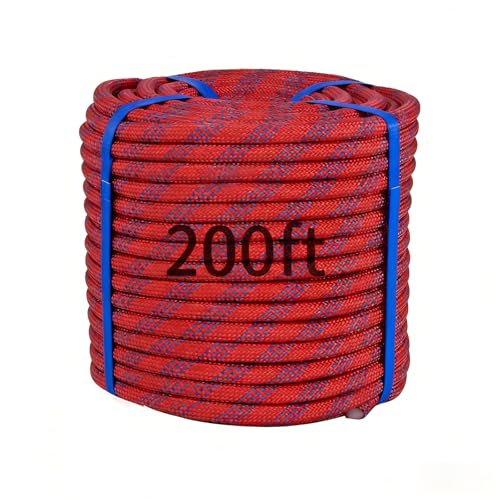
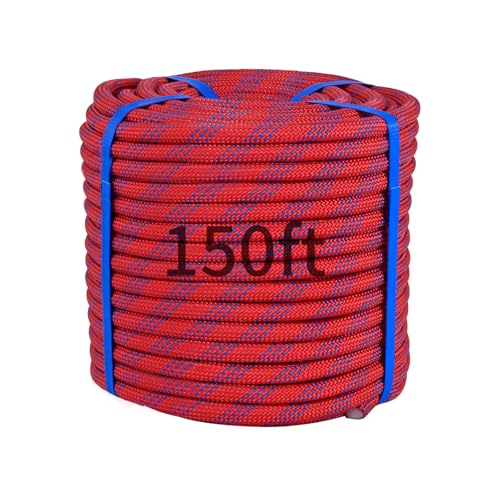
Length is one of the easiest ways to narrow the list. The selected ropes include compact 20 m and 30 m options, short 32-foot configurations, 120-foot and 150-foot ropes, and a 200-foot Kynara model. Shorter ropes can be easier to carry for practice, escape, or limited-height work. Longer ropes provide more reach for tree work and rigging but require more careful storage and inspection.
AOLEBA is especially flexible because the listing gives five length choices. X XBEN also lists multiple lengths from 10 m through 50 m. By contrast, Kynara 150 ft, Kynara 200 ft, ERFEI 120 ft, and VEVOR 250 ft target buyers who need extended runs. Confirm the actual selected length before ordering because some listings describe several configurations under one product page.
Consider handling and end treatment
Handling details can affect setup and storage. X XBEN describes moderate softness and low outer-skin sliding. Heat-sealed or thermally treated ends appear on NorthPada, NTR, X XBEN, Kynara, and HUYEZybflt listings and may help limit loose fibers, but the evidence does not establish a common durability standard.
Some products include accessories. AOLEBA lists a drawstring rope bag, VEVOR includes an ABS reel, and NTR and X XBEN list hooks. Accessories can make storage or setup more convenient, but they also introduce compatibility questions. Do not assume that supplied hooks or carabiners are appropriate for every climbing system.
Review environmental claims
For outdoor use, several listings mention resistance to moisture, ultraviolet exposure, chemicals, temperature changes, or freezing conditions. NorthPada specifically describes waterproof and anti-freezing construction. HUYEZybflt describes resistance to ultraviolet exposure, chemicals, humidity, salt spray, and temperature changes. Kynara and ERFEI also list weather-related resistance claims.
These are useful selection details, but they do not remove the need for inspection. Outdoor exposure, abrasion, contamination, knots, and storage conditions can affect rope condition. Keep the rope clean and stored according to the maker’s instructions, and retire it if its condition or history makes continued use uncertain.
Final recommendation
AOLEBA 10.5 mm Static Climbing Rope ranks first overall in this specification-based comparison under the published weighted criteria.
The final choice among the best nylon climbing ropes depends on the documented features that match your intended use.
AOLEBA 10.5 mm Static Climbing Rope is the highest-scoring returned product and the first overall specification-based choice. Its documented high-tenacity nylon construction, 23 kN maximum tensile force, climbing-specific diameter, multiple lengths, rope-bag inclusion, and certification claim give it the most complete specification profile in this comparison.
The top nylon climbing ropes are not interchangeable. Choose NorthPada when wet or cold-weather claims and a 30 m static format matter. Choose Kynara 150 ft or Kynara 200 ft when a longer arborist-oriented rope is the priority. HUYEZybflt 30 m provides a large-diameter, high-strength polyester alternative, while X XBEN and NTR offer more compact 8 mm configurations with hooks. For lighter utility work, VEVOR supplies a long nylon spool, but its lower listed strength makes it less suitable for demanding climbing systems.
Before use, verify diameter, length, material, strength terminology, end treatment, and hardware compatibility against the manufacturer’s instructions. A specification comparison can narrow the choices, but it cannot replace training, inspection, or an activity-specific safety system.
Frequently Asked Questions
Are all of the best nylon climbing ropes made entirely from nylon?
No. Some listings identify pure or high-tenacity nylon, while others describe nylon cores with polyester sheaths or polyester construction with nylon-like durability claims. AOLEBA and NorthPada explicitly mention nylon, NTR and ERFEI describe nylon-core designs, and HUYEZybflt identifies polyester fiber. Read the material details for the exact model rather than relying only on the title.
Are static ropes suitable for every climbing activity?
No. Static ropes are described for rappelling, rescue, caving, escape, arborist work, and similar applications. AOLEBA’s listing specifically distinguishes static rope from dynamic rope and notes that dynamic rope is the choice when ductility and shock absorption are needed. Select the rope type required by your activity and equipment system.
What diameter should I choose?
The supplied products range from 5/16-inch and 8 mm options to 10.5 mm and 1/2-inch ropes. A larger diameter may provide a different handling feel and higher listed strength, but diameter alone does not establish suitability. Check the manufacturer’s compatibility requirements for your hardware, knots, and intended use.
Is a higher breaking-strength number always better?
Not necessarily. Breaking or fracture strength is a specification, not a recommended working load. Construction, condition, knots, abrasion, loading behavior, and system compatibility also matter. Use the manufacturer’s stated limits and inspect the rope before use. Do not infer a safe working load from a breaking-strength number alone.
Which selected rope is easiest to store?
The compact 20 m HUYEZybflt rope, short X XBEN and NTR configurations, and the VEVOR spool are the most storage-oriented formats described in the listings. VEVOR specifically includes an ABS reel, while AOLEBA lists a drawstring rope bag. Longer Kynara and ERFEI ropes offer more reach but require more deliberate coiling and storage.