Buying Guide
Choosing the best heavy-duty ropes starts with matching the rope to the job, not simply selecting the largest number in a listing. A rope used for tree rigging, a recreational towline, and household bundling may all be described as heavy-duty, but those applications demand different construction, handling, and safety information. The products above are ranked from supplied listing specifications, not hands-on testing or customer sentiment.
Start with the application
For arborist rigging and controlled lowering, prioritize products that identify a static design, a defined braid, and a stated working-load or breaking-strength figure. Glfcai and SyKrinitual are specifically presented for arborist work, while HOKINETY and Kynara also document tree-work or pulling applications. These ropes are more relevant to rigging than a short household line because their listings describe construction intended for outdoor load handling.
A recreational towline is a different category of use. AIRHEAD documents a two-section configuration for towable tubes, so its extension section is useful for adjusting towing length. It should not automatically be substituted for an arborist bull rope, lifting line, or life-safety rope. NTR includes hooks and sewn protection rings, which can help with certain outdoor setups, but any climbing or rescue use requires careful review of applicable instructions and standards.
For general securing, boating, camping, or bundling, a shorter rope may be more practical. GOLDEN COCK supplies a 32-foot format, and MERIANE offers 100 feet for users who need more reach. These choices can be easier to store than a 220-foot rigging rope.
Compare diameter and strength
Diameter affects handling, fit, and the amount of rope available for a task. The 3/4-inch VEVOR line has the largest documented diameter in this selection and a 20,000-pound breaking-strength claim. That combination suits substantial rigging work, but it can be excessive for small tie-downs and may take more room to coil.
The 1/2-inch ropes form the main middle group. Glfcai and Kynara each state 9,000-pound breaking strength, while HOKINETY states the current price. MERIANE lists the current price, and GOLDEN COCK gives a 4,130-pound figure for the 1/2-inch size. The 3/8-inch YUZENET rope lists a 3,520-pound maximum tensile force. These figures are not interchangeable: breaking strength, maximum tensile force, safe working load, and working-load limit describe different measures. Use the manufacturer’s stated limit when one is supplied, and do not treat a breaking-strength number as a recommended operating load.
Choose the construction
Double-braided rope gives buyers a clearly described core-and-sheath structure. VEVOR, Glfcai, HOKINETY, and YUZENET document braided designs, with Glfcai, HOKINETY, and YUZENET specifying 48-strand elements in parts of their construction. These details help distinguish a purpose-built rigging or arborist line from basic cordage.
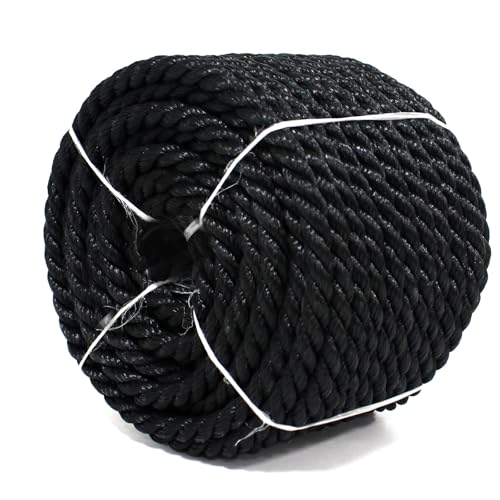
Twisted construction can still be useful. MERIANE uses twisted polyethylene, and the GOLDEN COCK listing describes twisted or braided options depending on the selection. Twisted rope may fit general-purpose work, but the exact configuration matters. Check the product variant rather than assuming every material or braid described on a broad listing applies to the selected size.
End treatment is another practical detail. VEVOR, HOKINETY, Kynara, and YUZENET describe heat-fused, heat-sealed, or hot-melt-cut ends. NTR adds sewn steel protection rings and heat-shrink tubing. These treatments are intended to control fraying or protect the termination, but they do not replace correct knots, compatible hardware, inspection, or safe working procedures.
Consider weather exposure
Outdoor ropes benefit from documented resistance to conditions such as UV exposure, moisture, abrasion, chemicals, or rot. Glfcai’s polyester construction is described as resistant to UV degradation, water absorption, and chemical rot. HOKINETY lists resistance to moisture, UV, chemicals, abrasion, and extreme weather. Kynara lists resistance to UV, moisture, and chemicals, while MERIANE emphasizes oil, acid, UV, and moisture resistance.
Material alone is not enough to determine suitability. Polypropylene can be useful where floating is relevant, and the GOLDEN COCK listing distinguishes polypropylene, polyester, and nylon behavior. AIRHEAD specifically identifies UV-resistant polypropylene for boating. NTR describes a water-resistant rope structure. Always inspect a rope after exposure to abrasion, sharp edges, chemicals, heat, or shock loading, even when the listing describes weather resistance.
Match length to the job
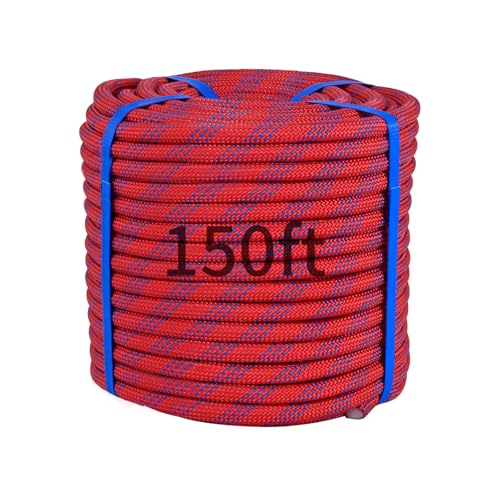
Length affects both reach and storage. VEVOR’s 220 feet is the longest selected format and is aimed at larger aerial or rigging tasks. Glfcai and Kynara provide 150 feet, which can help when a longer line is needed for tree work or outdoor projects. The 100-foot choices from SyKrinitual, HOKINETY, MERIANE, and YUZENET offer a more compact compromise.
A short rope is not automatically less useful. GOLDEN COCK’s 32-foot length can suit compact securing and household tasks, while AIRHEAD’s two-section 60-foot configuration is designed around recreational towing. NTR is offered in a 32-foot size in the supplied specifications. Measure the route, account for knots and attachment points, and leave enough length for the intended connection without assuming extra rope compensates for an unsuitable load rating.
Apply safety limits conservatively
Breaking strength is the point at which a rope may fail under a stated test condition, not a target operating load. Glfcai is the only selected product here with a supplied safe working load figure, and its listing explicitly accounts for knot strength reduction and dynamic shock loads. YUZENET warns against rapid drops because they can accelerate sheath wear.
For any job involving people, suspended loads, vehicles, or valuable property, verify the manufacturer’s working limit, inspect the rope, use compatible hardware, and follow relevant professional guidance. Do not infer certification from a product’s appearance or from a numeric strength claim alone.
Final recommendation
VEVOR 3/4-Inch x 220-Foot Polyester Rope ranks first overall in this specification-based comparison under the published weighted criteria.
The final choice among the best heavy-duty ropes depends on the documented features that match your intended use.
VEVOR 3/4-Inch x 220-Foot Polyester Rope is the highest-scoring returned product and the first overall specification-based choice for buyers needing the greatest documented capacity and reach. Its 20,000-pound breaking-strength claim, double-braided polyester construction, and heat-sealed ends make it a strong fit for substantial rigging tasks, provided the user confirms the appropriate working limit and can manage its larger format.
For arborist-specific work, Glfcai is the more documentation-rich alternative because its listing includes an ASTM F2116 certification claim, a stated safe working load, low-elongation static behavior, and abrasion-focused construction. Kynara is a flexible 150-foot option with a 9,000-pound stated breaking strength, while HOKINETY offers a detailed double braid at a lower stated capacity. Among the top heavy-duty ropes, the right choice depends on whether capacity, certification information, weather exposure, length, or compact handling matters most.
A buyer seeking a general outdoor line can consider MERIANE or YUZENET, while AIRHEAD is the specialized pick for towable tubes. GOLDEN COCK is better suited to shorter household, boating, or camping tasks than extended rigging. NTR is differentiated by its hooks and sewn protection rings, but safety-critical applications deserve especially careful verification.
Frequently Asked Questions
How do I choose the best heavy-duty ropes for tree work?
Look for a rope explicitly described for arborist rigging or tree work, then compare diameter, braid, stated breaking strength, working-load information, and static behavior. Glfcai, SyKrinitual, HOKINETY, Kynara, and YUZENET all document arborist or tree-related applications. Glfcai provides the most specific supplied rigging information, including an ASTM F2116 certification claim and a stated safe working load. Do not select by breaking strength alone; inspect the rope and follow the manufacturer’s instructions for knots, hardware, and load limits.
Is a higher breaking strength always better?
Not necessarily. A higher figure can be useful for a suitable heavy-load application, but diameter, length, flexibility, construction, and working-load guidance also matter. VEVOR has the highest documented breaking strength in this comparison, but its 3/4-inch, 220-foot format may be unnecessary for a compact household job. A smaller rope such as YUZENET may be easier to manage when its stated capacity matches the task. Breaking strength should never be treated as the recommended operating load.
What rope material works best outdoors?
There is no single best material for every outdoor use. The listings describe polyester as resistant to UV exposure and moisture in several selected arborist ropes, polyethylene as resistant to oil, acids, UV, and moisture in MERIANE, and polypropylene as UV-resistant in AIRHEAD. Material behavior also varies by construction and application. Consider whether the rope will face sunlight, water, abrasion, chemicals, stretch, or a need to float, then confirm the exact product variant and its instructions.
Are these ropes suitable for lifting people?
The supplied evidence does not establish that every selected rope is suitable for life-safety lifting or climbing. NTR is presented for climbing, rescue, and outdoor use and includes hooks, but safety-critical use still requires checking applicable standards and instructions. Arborist and rigging descriptions do not automatically authorize personnel lifting. For any use involving people, use equipment specifically rated and approved for that purpose, follow professional guidance, and do not rely solely on a marketplace strength claim.
How should I compare a working-load limit with breaking strength?
A working-load limit is an operating guideline, while breaking strength describes a failure threshold under stated conditions. They should not be treated as the same number. Glfcai supplies both a minimum breaking strength and a stated safe working load, making the distinction clear. Knots, shock loading, abrasion, damaged fibers, heat, chemicals, and unsuitable hardware can reduce usable capacity. Select based on the applicable working limit and inspect the rope before each demanding use.