Buying Guide
Choosing the best precision hand saws starts with the cut, not the brand name. The products here range from Japanese pull saws for joinery to compact razor saws for models and coping saws for curves. This specification-based comparison relies on listed blade materials, tooth arrangements, dimensions, handles, storage features, and intended applications. It is not based on hands-on testing or customer opinions.
Match the saw to the cut
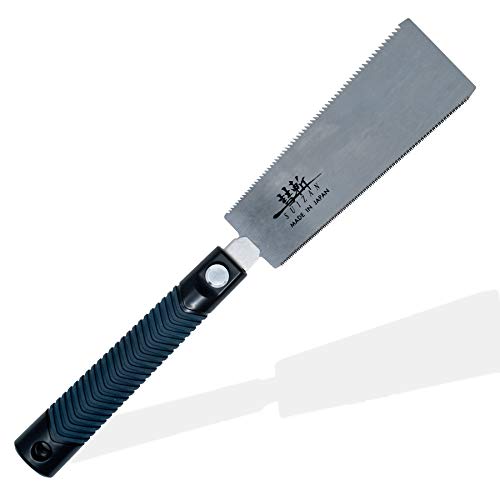
A double-edge ryoba is the most versatile design represented here. HIBINO, Temple Tool, and SUIZAN document separate rip and crosscut functions, allowing one blade to cut with the grain and the other across it. HIBINO lists 12 TPI rip teeth and 17 TPI crosscut teeth, while SUIZAN provides a 19 TPI specification along with blade-thickness and kerf measurements.
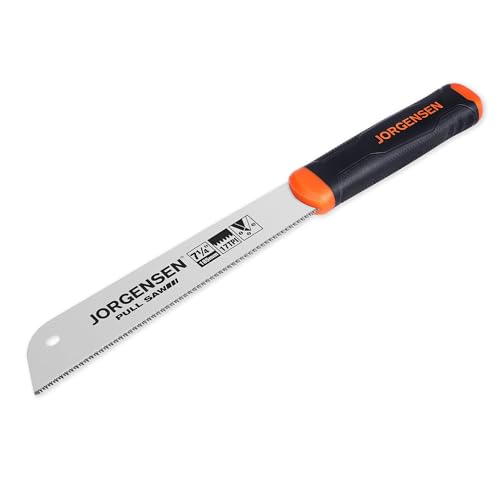
A single-edge or flush-cut saw is more focused. The JORGENSEN 7.25-inch model is listed for dowels, tenons, bamboo, timber, PVC, and ABS pipes. Its flexible 17 TPI blade is aimed at detail work. The smaller JORGENSEN 5-inch model lists 18 TPI for hardwood and 25 TPI for softwood, making it a practical option for trimming raised joints and finishing close to a surface.
For curved shapes, a coping saw is the documented choice. KATA uses a rigid, high-tension frame and includes blades with three tooth configurations. It is listed for scroll cuts, patterns, ornaments, wood, plastic, and soft metals, but not hard metal. This differs from the pull saws because the blade spans a tensioned frame.
Compare tooth count and blade details
Tooth count is one of the most useful listed specifications for precision work. WORKPRO lists a 23 TPI blade, a 0.017-inch thickness, and a reinforced spine, giving it a fine-joinery profile. Tamiya lists fine teeth and a 0.35 mm SK95 carbon tool steel blade for small model work.
Differentiated tooth counts can improve versatility. HIBINO’s 12/17 TPI arrangement divides rip and crosscut duties. KATA offers 14T, 18T, and 24T replacement blades for different curved-cutting needs. When a listing provides several tooth options, consider whether your projects need material removal, controlled shaping, or finer detailing.
Blade thickness and kerf information are helpful when available. SUIZAN lists both measurements, and WORKPRO identifies an ultra-thin blade. Thin blades may suit narrow, detail-oriented work, but they can require deliberate handling. A reinforced spine, such as the one listed for WORKPRO, is another control feature to consider.
Consider blade steel and flexibility
Several selected saws identify SK5, SK85, SK95, or Japanese steel. HIBINO uses SK-85 high-carbon Japanese steel, JORGENSEN uses SK5, and Tamiya lists SK95 carbon tool steel. These material descriptions help distinguish the products, but they do not establish a measured service life or cutting result.
Flexibility is another design choice. The JORGENSEN single-edge saw and 5-inch flush-cut saw describe flexible SK5 blades. Flexible blades can suit flush trimming and close finishing, where the blade needs to follow a surface. A reinforced spine or rigid frame takes a different approach by emphasizing guidance and tension. WORKPRO lists a reinforced spine, while KATA lists a high-tension frame.
Evaluate handle control and size
Handle design matters because precision depends on keeping the blade aligned with the intended cut. HIBINO lists an ergonomic non-slip handle, WORKPRO uses a non-slip beechwood handle, and JORGENSEN models describe soft or non-slip grips. Temple Tool uses a solid wood handle with brass components. These features indicate intended handling characteristics, but the supplied evidence does not establish comfort during extended use.
Blade length also affects maneuverability. The 5-inch JORGENSEN flush-cut saw and 6-inch WORKPRO model are compact choices for tight or detailed locations. HIBINO and SUIZAN use 7-inch blades, while Temple Tool extends to 9.5 inches for broader reach. Tamiya’s blades are measured in millimeters and are designed for much smaller model projects.
Look at replacement and storage features
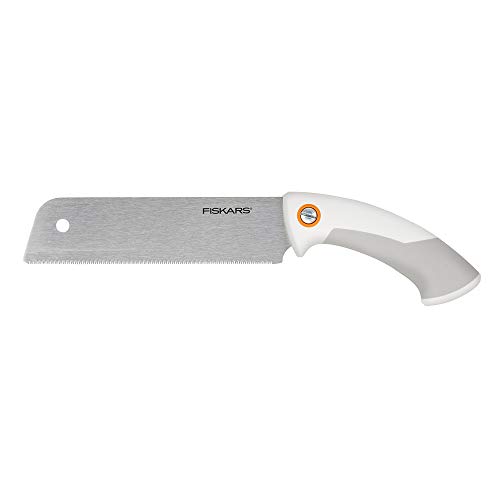
Replaceable blades can make a handle more useful over time. HIBINO specifies tool-free replacement, and both JORGENSEN saws list replaceable blades. Fiskars also identifies a replaceable blade. These features may reduce the need to replace the complete tool when the blade needs changing, although replacement availability should be confirmed.
Storage is most explicit on Fiskars and Tamiya. Fiskars includes a protective sheath with English and metric measurements. Tamiya includes a plastic case for storing its blades. KATA includes six replaceable blades, which is useful if you want different tooth choices immediately. For any exposed-tooth saw, plan a safe storage method even when the listing does not document a sheath or case.
Final recommendation
HIBINO Japanese Pull Saw 7 Inch Ryoba ranks first overall in this specification-based comparison under the published weighted criteria.
HIBINO Japanese Pull Saw 7 Inch Ryoba is the first overall specification-based choice among these best precision hand saws. Its double-edge 12/17 TPI layout, SK-85 steel, thin-kerf description, ergonomic handle, and tool-free blade replacement give it a broad documented feature set. The top precision hand saws are not interchangeable: choose Temple Tool for a longer ryoba format, WORKPRO for fine dovetail work, either JORGENSEN model for flush trimming, KATA for curved cuts, or X-ACTO and Tamiya for model-focused tasks. Fiskars is a practical DIY option when a sheath and measurement markings matter.
Frequently Asked Questions
What should I look for in the best precision hand saws?
Start with the intended cut, then compare blade length, tooth arrangement, thickness, handle design, and material. A ryoba with two edges is useful for rip and crosscuts. A flush-cut saw is better for trimming dowels or tenons close to a surface. For model work, compact blades and material-specific listings are more relevant than a full-size woodworking format.
Are Japanese pull saws suitable for detailed woodworking?
The selected Japanese pull saws are listed for joinery, dovetails, flush cuts, or general woodworking. They cut on the pull stroke and commonly use thin or flexible blades. HIBINO, SUIZAN, WORKPRO, and the JORGENSEN models each document features associated with controlled detail work, but the best choice depends on whether you need dual-edge versatility, fine teeth, or flush-cut flexibility.
Which selected saw is best for curved cuts?
KATA is the clearest fit because it is a coping saw with a high-tension frame and replaceable blades in 14T, 18T, and 24T configurations. The listing specifically describes curved and scroll cuts, patterns, and shaped craft work.
Which saws are intended for models and plastic?
X-ACTO is listed for models, railroad tracks, metal, balsa wood, and plastic. Tamiya is designed for plastic models and Mini 4WD kits and includes wide and narrow blades. Those two are more specialized for small-scale craft work than HIBINO, Temple Tool, or SUIZAN, which are documented primarily for woodworking and joinery.
Do replaceable blades matter?
They can matter if you want to maintain the handle instead of replacing the complete saw. HIBINO, JORGENSEN, and Fiskars explicitly list replaceable blades, while KATA includes six replaceable blades with its coping-saw frame. Confirm that replacement blades are available and compatible with the exact model before relying on this feature.