Buying Guide
Choosing the best tungsten carbide joinery router bits starts with the joint, not the number of pieces in a package. A biscuit slotter, dovetail cutter, rabbeted-miter set, and straight bit solve different problems. The listings in this comparison include dedicated tools as well as mixed sets, so the right choice depends on whether you need one repeatable profile or a broader woodworking selection.
Match the bit to the joint
For biscuit joinery, the YONICO 14383 is the most broadly documented dedicated option because it cuts slots for #0, #10, and #20 biscuits and includes three bearings. That is useful when a project changes thickness or biscuit size. The YONICO 14183q is more focused: it is identified specifically for #10 biscuits and uses a 1/4-inch shank. Choose the single-size bit when your plans already standardize on #10 biscuits; choose the three-size set when flexibility matters more.
Dovetail work calls for an angled profile rather than a straight slot. The HARFINGTON bit specifies a 14-degree angle, 1-inch cutting diameter, and 1-inch cutting depth. Those details make it easier to compare against a drawer or box design before routing. The YONICO 14111q documents a smaller 10-degree profile with a 1/2-inch width and 1/2-inch length. It is a more compact alternative for cabinet and drawer corner joints. Neither should be treated as interchangeable without checking the intended joint dimensions.
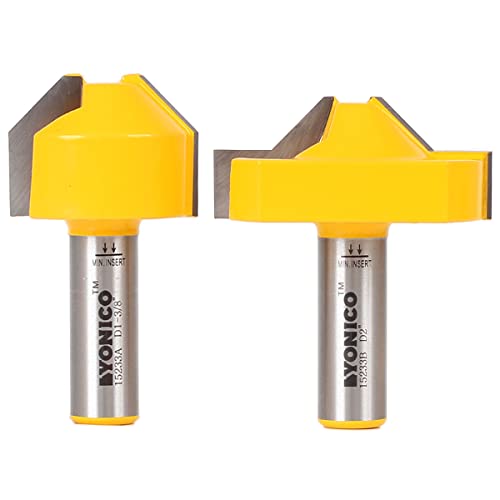
A rabbeted miter is a separate design. The YONICO 15233 set is stated to cut 45-degree miter joints with rabbets in 7/16- to 25/32-inch stock. The rabbet can provide alignment and additional glue surface according to the listing, but the product is specifically described for table-mounted router use. That makes it a targeted selection rather than a universal replacement for a standard miter cutter.
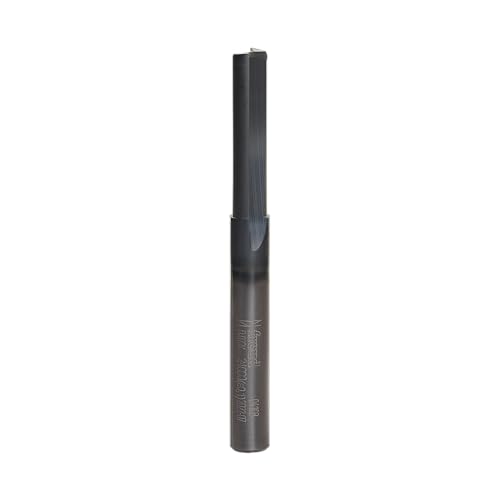
For grooves and dados, review both width and depth. The YONICO 14184 cuts a 1/4-inch-wide by 3/8-inch-deep slot, while the YONICO 14016q is a much narrower 3/16-inch straight bit with a 1/2-inch cutting length. The POWERTEC 73046 offers a larger 3/4-inch cutting diameter and 1-1/4-inch cutting depth for straight slots, grooves, and trimming. These documented dimensions matter more than a general claim that a bit is versatile: a cutter must physically match the joint or panel detail.
Check carbide construction and cutter design
The products use different carbide descriptions. Several YONICO listings specify premium C3 micro-grain tungsten carbide blades, while the POWERTEC listing identifies YG6X tungsten carbide and the Hiltex set identifies YG8 tungsten carbide blades. The HARFINGTON listing describes premium tungsten carbide and a two-flute design. These are useful specification distinctions, but they do not constitute a hands-on durability test.
Flute and cutter construction can also affect how a product fits a task. The HARFINGTON bit is described as a two-flute cutter for chip evacuation. The POWERTEC bit is double-flute and includes an anti-kickback design that limits cutting depth according to its listing. The YONICO 14016q uses a solid tungsten carbide insert welded to a hardened steel shank. Treat these as documented design features, not guarantees of a particular finish or service life.
Confirm shank size and router type
Shank compatibility is a basic requirement. The dedicated YONICO 15233, YONICO 14184, and POWERTEC 73046 options use 1/2-inch shanks. The YONICO 14383, YONICO 14183q, YONICO 14111q, HARFINGTON, and YONICO 14016q use 1/4-inch shanks. The TREND and Hiltex sets are also organized around 1/2-inch and 1/4-inch shanks respectively.
Do not assume that a smaller shank makes a bit universally compatible. The listing for the POWERTEC model names handheld, trim, palm, fixed-base, plunge, table, and CNC routers with a 1/2-inch collet. The HARFINGTON and YONICO 14111q listings also name CNC, handheld, and table-mounted use. In contrast, the YONICO 15233 listing specifies table mounting. Always compare the stated shank with the router collet and follow the router maker’s operating instructions.
Decide between a dedicated bit and a set
A dedicated bit is usually easier to match to a known joint. The biscuit and dovetail options provide a narrower purpose with stated profile information. That can reduce unused cutters when a project has a fixed design. A set is more useful when you are assembling a general workshop selection or expect to alternate among straight, dovetail, mortising, edging, and grooving tasks.
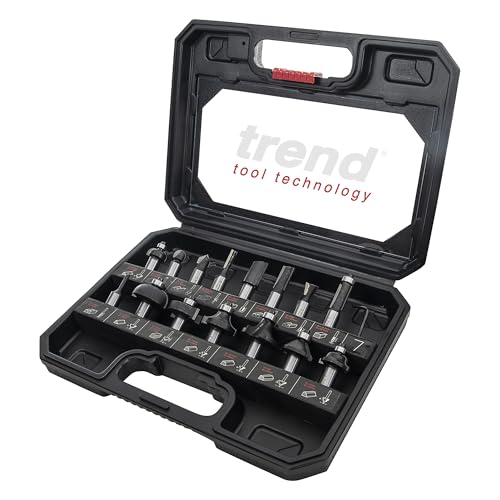
The TREND set includes 15 tungsten carbide-tipped cutters, bearing-guided and non-bearing designs, and a storage case. The Hiltex set also contains 15 pieces, uses 1/4-inch shanks, and lists straight, dovetail, mortising, and decorative profiles with an index case. Those sets provide breadth, but the supplied listing information does not identify every TREND profile, and not every Hiltex cutter is joinery-specific. A set should therefore be selected for its documented range and storage convenience rather than assumed to contain a particular specialty bit.
Plan setup and safe use
Several listings recommend controlled setup practices. HARFINGTON advises securing the workpiece, making test cuts on scrap, and maintaining a steady feed rate. For the selected products, the supplied evidence supports the general principle of checking dimensions on scrap and confirming router compatibility before cutting.
Measure the stock before choosing a profile. The YONICO 15233 specifies a stock range, the YONICO 14184 specifies slot width and depth, and the POWERTEC 73046 specifies cutting diameter and depth. Those figures help identify whether the cutter can address the planned joint, but they do not replace test cuts, sound workholding, or the router manufacturer’s instructions. Avoid treating carbide construction as permission to cut unsuitable materials or to ignore feed and depth guidance.
Final recommendation
YONICO 14383 Biscuit Cutter Joint Slot Set ranks first overall in this specification-based comparison under the published weighted criteria.
The final choice among the best tungsten carbide joinery router bits depends on the documented features that match your intended use.
The YONICO 14383 Biscuit Cutter Joint Slot Set is the highest-scoring returned product and the first overall specification-based choice. It combines C3 micro-grain tungsten carbide blades, three biscuit sizes, three bearings, a 1/2-inch shank, and handheld or table-mounted use. For a dedicated 45-degree rabbeted-miter application, the YONICO 15233 is the more appropriate match. For dovetails, compare the fully specified 14-degree HARFINGTON bit with the compact 10-degree YONICO 14111q. Among the top tungsten carbide joinery router bits, the best choice remains the one whose documented profile and shank match your stock and router.
The TREND and Hiltex sets are better suited to shoppers building a wider cutter collection, while the POWERTEC 73046 is a practical straight-bit choice when grooves, slots, and trimming share the workload. The YONICO 14184 and 14016q serve more specific groove dimensions. In every case, treat this as a specification-based comparison, not a hands-on test or a summary of customer opinions.
Frequently Asked Questions
What should I check first when choosing the best tungsten carbide joinery router bits?
Start with the joint profile and the required dimensions. Check whether you need a biscuit slot, dovetail, rabbeted miter, slot, dado, or straight cut. Then confirm cutting width, depth, angle where applicable, shank size, and router compatibility. A bit with excellent material specifications is still unsuitable if its geometry does not match the joint.
Are 1/4-inch and 1/2-inch shank bits interchangeable?
No. The shank must match the router’s collet. In this selection, the YONICO 15233 and POWERTEC 73046 use 1/2-inch shanks, while the YONICO 14183q, YONICO 14111q, HARFINGTON, and YONICO 14016q use 1/4-inch shanks. The TREND and Hiltex sets are also separated by their stated shank formats. Verify the router specification before purchase.
Is a dedicated joinery bit better than a multi-piece set?
Neither is automatically better. A dedicated bit offers a clearly defined profile for a known joint, such as the YONICO 14383 for three biscuit sizes or the HARFINGTON bit for a 14-degree dovetail. A set such as TREND or Hiltex offers more profile variety and storage, but some included cutters may be decorative or general-purpose. Choose based on the work planned and the profiles actually documented.
Can a dovetail bit replace a straight or slot cutter?
No. A dovetail bit creates angled interlocking sides, while straight and slot cutters create rectangular grooves or slots. The YONICO 14184 and POWERTEC 73046 are documented for slot, groove, or straight-cut tasks, whereas the HARFINGTON and YONICO 14111q are documented for dovetail joints. Their profiles and dimensions serve different joinery designs.
What does tungsten carbide documentation tell me?
It identifies the cutter material or cutting edge described in the listing, such as C3 micro-grain, YG6X, YG8, or premium tungsten carbide. It does not by itself prove a particular cutting life, finish, or performance level. Use the material information alongside the joint profile, dimensions, flute design, shank, and router compatibility when comparing the best tungsten carbide joinery router bits.