Buying Guide
Choosing the best carbide straight router bits starts with matching the cutter to the router, the required groove width, and the material. The products in this comparison are straight-cut designs or straight-bit sets, but their dimensions and construction differ enough to affect their suitability for a particular project. Treat the specifications as selection information, not as proof of hands-on performance.
Match the shank to the router
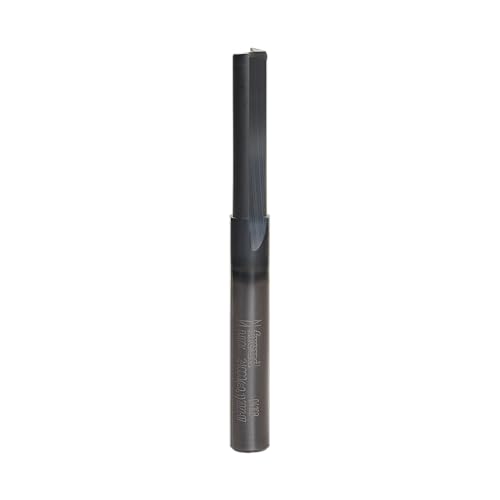
Shank diameter is the first compatibility check. Many selected products use a 1/4-inch shank, including the Freud 04-108, Diablo DR04132, Whiteside 1014, Yonico 14016q, Amana 45210, and the Feanron, Crosstar, RURITKIT, and Hiltex sets. That common size is convenient for routers with 1/4-inch collets, but it does not mean every router accepts every bit. Check the collet specification before buying.
The cutting diameter and shank diameter are separate measurements. For example, the Diablo DR04132 has a 1/2-inch cutting diameter but a 1/4-inch shank. Confirm both dimensions rather than choosing by cutter width alone. Use a bit only when the router and collet are designed for it, and follow the machine and bit instructions.
Choose the cutting diameter and height
Diameter controls the width of a groove or dado. Narrow work favors the Yonico 14016q at 3/16 inch, while the Amana 45210, Whiteside 1014, and Freud 04-108 provide 1/4-inch cutting diameters. The Diablo DR04132 supplies a larger 1/2-inch diameter. These single-bit choices are easier to match when a project calls for one defined width.
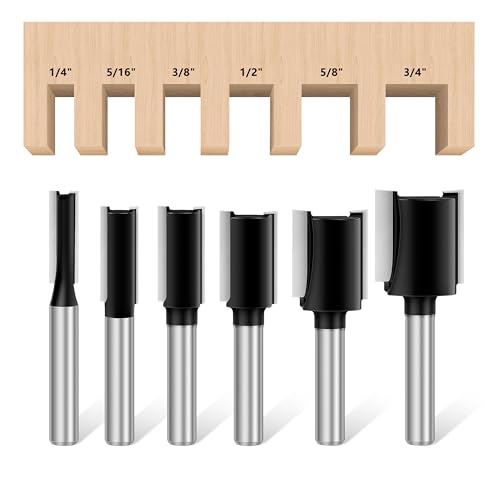
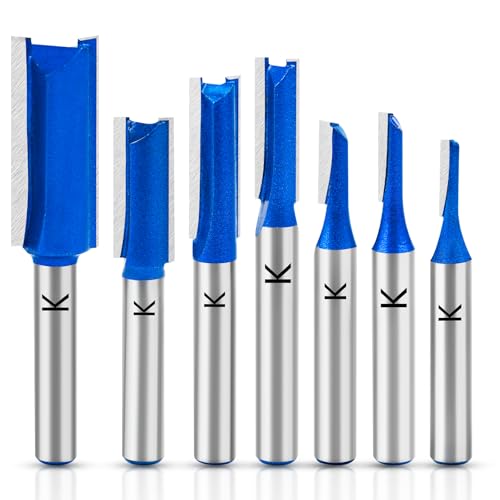
Sets are more flexible. The RURITKIT set runs from 1/8 to 1/2 inch, the Hiltex set covers 1/4 to 1/2 inch, the Feanron set spans 1/4 to 3/4 inch, and the Crosstar set covers 1/8 to 3/4 inch. A set can reduce the need to buy separate sizes, but the supplied listings do not provide cutting-height details for every set member. If depth is critical, favor a listing with explicit cutting-height data, such as the Hiltex set or the individual Whiteside and Amana bits.
Cutting height matters when the bit must reach through thicker stock or make a deeper groove. The Amana lists a 1-inch cutting height, the Whiteside lists a 1-inch cutting length, and the Yonico lists a 1/2-inch cutting length. Compare those figures with the planned cut while following the bit maker’s guidance.
Consider flute design
Double-flute construction appears throughout the selected products. It is documented on the Freud 04-108, Bosch 85224MC, Diablo DR04132, Amana 45210, Whiteside 1014, Feanron, Crosstar, and Hiltex products. Multiple listings describe chip evacuation or smoother finishes as benefits of their flute designs. Those are supplied product claims, not independent test results, so they should be read as design intent rather than a guarantee.
The Feanron and Hiltex sets are described as plunge or straight-cut tools for grooves, dados, rabbets, and related work. The Whiteside 1014 explicitly identifies a plunge-capable tip. If a project requires entering material from the surface rather than starting at an open edge, select a product whose listing documents plunge capability. A straight profile should not automatically be treated as plunge-capable.
Compare carbide construction
Carbide wording is not identical across the category. Freud and Diablo specify TiCo high-density carbide. Bosch identifies micrograin carbide, Yonico specifies a solid C3 micrograin tungsten carbide insert, and the Feanron and Crosstar sets identify C3 tungsten carbide. Amana and Whiteside are listed as carbide-tipped, while Hiltex specifies YG8 tungsten carbide and RURITKIT specifies YG6 tungsten carbide blades.
These terms help distinguish construction, but they do not establish a universal durability ranking. Solid carbide, carbide-tipped, and carbide-insert designs may suit different manufacturing approaches and price positions. Focus on the type documented for the exact product, then consider the diameter, cutting height, and intended material. The best carbide straight router bits are selected by matching documented features to the task rather than by terminology alone.
Check materials and equipment
Material coverage varies in detail. The selected products document use with combinations of hardwood, softwood, plywood, MDF, laminates, particleboard, composites, plastic, acrylic, or other listed boards. The Bosch 85224MC includes wood, plastic, and laminate. The Yonico 14016q names dados and straight cuts for general use, while the Diablo DR04132 includes hardwood, plywood, and composites. Sets such as Crosstar, RURITKIT, Feanron, and Hiltex are aimed at multiple woodworking materials.
Equipment compatibility is also important. The Yonico 14016q, Whiteside 1014, Feanron, Crosstar, and RURITKIT listings mention CNC use, while several also name handheld and table-mounted routers. Treat that information as a compatibility claim for the listed product, not as permission to exceed the machine’s collet, speed, or capacity limits. Secure the workpiece and use the protective equipment specified for the operation.
Individual bit or set?
Choose an individual bit when the required width and depth are already known. The Freud 04-108, Bosch 85224MC, Diablo DR04132, Whiteside 1014, Yonico 14016q, and Amana 45210 make that approach straightforward. Individual bits can also simplify replacement when one frequently used size becomes unsuitable.
Choose a set when a project list includes several groove widths or when you are building a basic woodworking assortment. Crosstar offers nine listed diameters, Feanron offers six, RURITKIT offers seven, and Hiltex offers four. Sets provide breadth, but they may leave some dimensional information unspecified. Review every included size and its documented cutting height before assuming the assortment covers a particular joint.
Final Recommendation
Freud 04-108 Double Flute Straight Bit ranks first overall in this specification-based comparison under the published weighted criteria.
The final choice among the best carbide straight router bits depends on the documented features that match your intended use. Freud 04-108 is the first overall specification-based choice because its listing identifies TiCo high-density carbide, a double-flute format, a 1/4-inch cutting diameter, a 1-inch cutting height, a coating, and compatibility across CNC, handheld, and table-mounted routers.
For a broad assortment, Crosstar is the leading set because it lists nine diameters from 1/8 to 3/4 inch and identifies C3 micrograin carbide. Feanron is another strong set option with six diameters reaching 3/4 inch. For narrow joinery, Yonico’s 3/16-inch size is more targeted. For a clearly documented compact plunge bit, Amana is a practical match. These top carbide straight router bits still require a final check of shank fit, cutting depth, material, and machine guidance before use.
The right choice depends on the job. A single 1/4-inch bit is sensible for repeated standard dados, while a set is more useful when widths vary. A 1/2-inch cutter may suit a wider groove, but it requires attention to router capacity and setup. Use the supplied dimensions as a planning aid, and do not infer performance beyond the published specifications.
Frequently Asked Questions
Among the best carbide straight router bits, what makes a router bit a straight bit?
A straight router bit uses a straight cutting profile intended to produce flat-bottomed grooves, dados, slots, rabbets, or similar cuts. The selected products include single bits and sets described for those tasks. A straight profile does not by itself specify diameter, cutting length, flute count, or plunge capability, so those fields should be checked separately.
Which shank size is most common in this comparison?
The selected products predominantly use 1/4-inch shanks. That includes the Freud 04-108, Diablo DR04132, Whiteside 1014, Yonico 14016q, Amana 45210, and the Feanron, Crosstar, RURITKIT, and Hiltex sets. Compatibility must still be confirmed against the router’s collet. The shank should be correctly secured according to the router and bit instructions.
Are carbide-tipped and solid-carbide bits the same?
No. The listings distinguish carbide-tipped, solid-carbide, and carbide-insert construction. Whiteside 1014 and Amana 45210 are described as carbide-tipped, while Yonico 14016q identifies a solid C3 micrograin tungsten carbide insert. These construction terms should be compared with the intended work, dimensions, and compatibility rather than treated as interchangeable labels.
Should I buy a single bit or a set?
Buy a single bit when one known diameter and cutting height meet the project requirement. Choose a set when you need several groove widths. Crosstar lists nine sizes, Feanron lists six, RURITKIT lists seven, and Hiltex lists four. Before choosing a set, confirm that its included diameters and any documented cutting heights match the joints or dados you plan to make.
Can every selected bit be used for plunge cuts?
No. Plunge capability should be selected only when the listing documents it. Whiteside 1014 explicitly describes a plunge design, and Amana 45210 and several set listings use plunge terminology. Other straight bits may be intended for edge-entry or general routing. Confirm the product instructions and router guidance before entering material from the surface.