Buying Guide
Choosing the best phone signal boosters starts with the place where the booster will operate. Home systems and vehicle systems solve different installation problems, so a product that fits a large building may be unsuitable for a car or RV. The listings in this comparison consistently describe boosters as amplifiers: they need an existing cellular signal outside or near an antenna and do not create service in a zero-coverage area.
Match the booster to the location
For a home office or one smaller area, the HiBoost Home Office 2,000 Sq Ft Booster documents a compact coverage target and includes a directional outside antenna, LCD, app, and AGC. The SureCall Flare 3.0 is another small-home option, but its coverage description is more conditional. It states approximate indoor areas based on the signal available at the outdoor antenna, which is useful when the outside signal varies substantially.
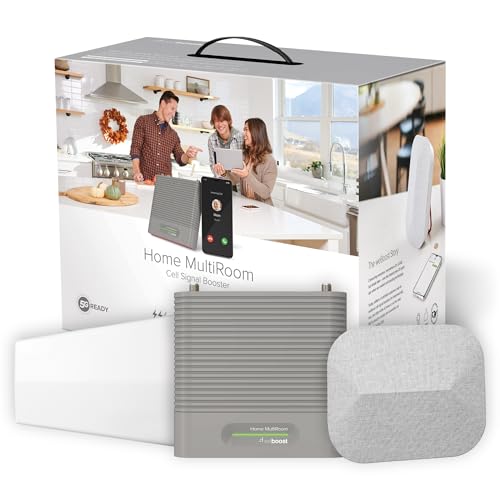
Larger homes and offices need more attention to indoor antenna distribution. The HiBoost 15K Mate 12,000 Sq Ft Booster lists two indoor antennas, including one built into the unit, while the HiBoost MultiRoom 10K PRO also describes a two-antenna arrangement. These designs are documented for broader interior coverage than a single-room system. The weBoost Home MultiRoom takes a different scale, listing up to 5,000 square feet or three to four rooms.
Vehicle selection should follow the vehicle type. The weBoost Dash is aimed at cars, trucks, SUVs, and vans and adds Qi2-compatible wireless charging. The weBoost Drive Reach uses a magnetic roof antenna and is described for multiple devices. For a truck-specific installation, the weBoost Drive 4G-X OTR includes a 17-inch weather-resistant omnidirectional antenna and mounting hardware. The ANNTLENT V50 is positioned for trucks, RVs, campers, trailers, and off-road vehicles, including stationary or mobile use.
Check carrier and band support
“All carriers” language is useful, but the listed frequency bands provide more actionable detail. The HiBoost Home Office model names bands 12/17, 13, 5, 2/25, and 4. The HiBoost MultiRoom 10K PRO lists bands 2, 4, 5, 12, 13, 17, and 25. Phonetone N50-PO lists bands 2, 4, 5, 12, 13, and 17, while ANNTLENT V50 lists 2, 4, 5, 12, 13, 17, and 25.
The vehicle listings also document broad band coverage. For the selected vehicle products, the supplied evidence confirms all-carrier compatibility and 5G support for Drive Reach and Dash; Drive 4G-X OTR is described as an all-network truck booster without an explicit 5G claim in its feature list.
Do not treat a 5G label as universal support for every 5G frequency. The supplied home listings describe 5G compatibility in the context of deployed cellular bands, and the equipment still depends on the bands captured by its outside antenna. Check the carrier bands used in your location before installation.
Decide between directional and omnidirectional antennas
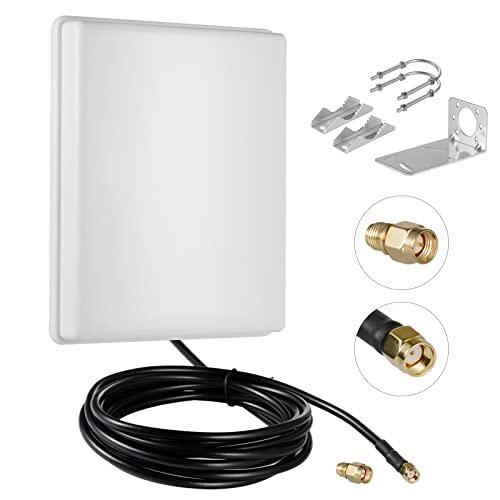
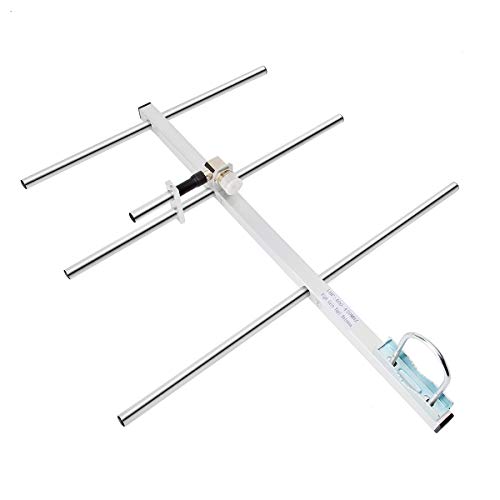
A directional antenna is designed to focus reception toward a signal source. The HiBoost Home Office booster and SureCall Flare 3.0 both document directional outdoor antennas. This can be useful when the tower direction is known, but it introduces an aiming step. The SureCall app is specifically described as helping users aim and optimize the installation.
An omnidirectional antenna receives from all directions, reducing the need to identify or aim at one tower. Phonetone N50-PO lists a 360-degree omnidirectional outdoor antenna, and Drive 4G-X OTR lists a weather-resistant omnidirectional antenna for trucks. That approach may be more convenient for moving or changing environments, while a directional design can be preferable when the signal source is known and stable.
Vehicle mounting also matters. Drive Reach uses a magnetic roof antenna, Dash uses a magnetic mount, and ANNTLENT V50 emphasizes an all-in-one antenna design. These are different physical approaches, so consider whether you need quick removal, exterior durability, or more control over antenna placement.
Signal monitoring can make installation more repeatable. The HiBoost 15K Mate includes a color touchscreen and app, and the HiBoost MultiRoom 10K PRO combines an LCD with app monitoring. The HiBoost Home Office model also provides an LCD and app. These tools are described as showing signal or installation information rather than as guarantees of a particular result.
Automatic gain control appears across several selected products. It is listed on the HiBoost systems and Phonetone N50-PO, and it helps the equipment adjust its operating level according to the incoming signal. Phonetone also lists manual gain control and standby mode. For the ANNTLENT V50, the app provides real-time signal strength and tower-direction information. These controls are most useful when the installation requires checking antenna placement or managing changing signal conditions.
Confirm installation limits and compliance
Every design has physical requirements. Directional systems need aiming, while omnidirectional systems still need a suitable outdoor location and cable routing. Home kits may need separation between outside and inside antennas, and vehicle kits need a stable exterior antenna position. The supplied SureCall listing explicitly says its coverage depends on the signal at the outside antenna, and the ANNTLENT listing requires existing carrier bands that match the phone.
FCC approval or certification is documented for all selected products, including the FCC IDs supplied for weBoost Home MultiRoom, SureCall Flare 3.0, and the HiBoost 15K Mate. Support terms also vary: the selected listings mention manufacturer warranties ranging from two to three years and, for some products, U.S.-based technical assistance. Treat these as documented service features, not as evidence of hands-on performance.
Final recommendation
HiBoost 15K Mate 12,000 Sq Ft Booster ranks first overall in this specification-based comparison under the published weighted criteria.
The HiBoost 15K Mate 12,000 Sq Ft Booster is the first overall specification-based choice among the best phone signal boosters because it combines the largest stated home coverage, two indoor antennas, 72dB maximum gain, a touchscreen, AGC, and app support. It is best suited to a large home or office rather than a single room.
For a slightly smaller multiroom layout, the HiBoost MultiRoom 10K PRO offers two indoor antennas and both LCD and app controls. The weBoost Home MultiRoom provides a clearly defined three- to four-room format, while SureCall Flare 3.0 is attractive when the outside signal level needs to be considered carefully. For a smaller office, the HiBoost Home Office model supplies a focused 2,000-square-foot design with detailed monitoring features.
Phonetone N50-PO is the selected home/RV option with a 360-degree antenna. On the road, Drive Reach is a flexible magnetic-antenna system, Dash adds Qi2 charging, Drive 4G-X OTR is purpose-built around truck hardware, and ANNTLENT V50 targets RV and off-road use. Together, these are the top phone signal boosters for the specific spaces and antenna arrangements documented in the supplied listings.
Frequently Asked Questions
Do the best phone signal boosters work without any outside service?
No. The supplied listings state that a booster needs an existing cellular signal to amplify. SureCall Flare 3.0 ties its stated indoor coverage to the signal available at the outside antenna, and the vehicle listings similarly describe the need for usable outdoor signal. A booster is not a replacement for carrier coverage where no signal is present.
Should I choose a directional or omnidirectional antenna?
Choose based on the installation environment. A directional antenna, such as the one documented for SureCall Flare 3.0, needs aiming but can focus on a known signal direction. An omnidirectional antenna, such as the one listed for Phonetone N50-PO or Drive 4G-X OTR, receives from all directions and avoids precise tower alignment. Moving vehicles and locations with uncertain tower direction may benefit from the latter design.
What does 5G compatibility mean for these boosters?
In the supplied listings, 5G compatibility refers to supported deployed cellular bands rather than every possible 5G frequency. The HiBoost and weBoost home listings describe 5G alongside specific LTE-related bands, and carrier-band support remains important. Confirm that the product’s listed bands match those used by your carrier in the installation area.
Which selected model is suited to a large building?
The HiBoost 15K Mate lists coverage up to 12,000 square feet and two indoor antennas, including one built in. The HiBoost MultiRoom 10K PRO also documents two indoor antennas and a larger multiroom format. Actual results depend on the signal available to the outside antenna and the building layout.
Which model is designed for a truck or RV?
Drive 4G-X OTR is the most specifically truck-oriented selected model because its listing includes a weather-resistant 17-inch omnidirectional antenna and truck mounting hardware. ANNTLENT V50 is explicitly positioned for trucks, RVs, campers, trailers, and off-road vehicles, while Drive Reach is a broader vehicle option with a magnetic roof antenna.