Buying Guide
The best carbide trim router bits are selected by matching the guidance method, cutter geometry, and shank to the workpiece and router. A bit that is excellent for countertop laminate may be a poor choice for an internal template cut. Start with the job, then check the technical details that determine fit.
Choose the guidance method
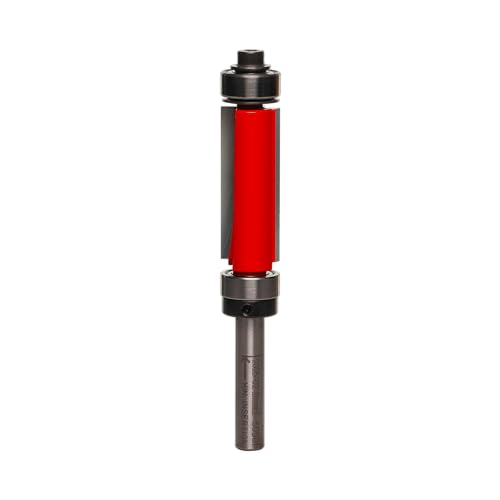
Bearing-guided bits follow a template, an existing edge, or a laminate surface. The Freud 50-501 is unusually flexible because it documents both top and bottom bearings. That arrangement can help when the pattern sits above or below the workpiece, and it can support cutting from different directions without moving the template.
A single bearing or pilot is simpler. The Freud 42-104, Bosch 85269M, and Amana Tool 45487 each use a documented guiding element, but their designs serve different purposes. The Amana bit is specifically a plunge-cutting template bit, making it more relevant to internal cuts and joints. Bosch’s compact ball-bearing pilot is aimed at veneer and laminate trimming. The Freud 42-104 is a conventional option for a broader mixture of composition materials and wood products.
The Freud 64-100 takes a different approach with a self-piloting tip. Since the listing says it removes the need for a bearing, it can be attractive for focused plastic-laminate work. However, self-piloting and bearing-guided designs should not be treated as interchangeable without considering the edge or template being followed.
Match the cutting design to the material
Straight two-flute bits are familiar and versatile. The Freud 42-116 and 42-104 both document two-flute or two-cutter designs, while the Bosch 85269M lists two flutes. These formats are sensible starting points for laminate, veneer, plywood, and ordinary hardwood or softwood trimming when the diameter and cutting height fit the job.
A three-flute design, such as the Diablo DR44100, gives buyers another configuration to consider. Its listing connects the triple-flute layout with balance and cutting efficiency, and it supports hardwood, softwood, plywood, laminates, and composites. The supplied evidence does not establish that one flute count is universally better, so treat this as a design preference tied to the intended work rather than a guarantee of results.
Spiral compression designs deserve attention when chip evacuation and edge quality are priorities. The SpeTool compression bit combines up-and-down cutting with a bottom bearing and a 1-1/8-inch cutting length. Its documented compatibility includes MDF, oak, plywood, laminate, hardwood, and softwood. This makes it one of the more specialized choices in the group.
Check shank, diameter, and cutting length
Shank size is a hard compatibility requirement. Most selected bits use a 1/4-inch shank, including the SpeTool, Diablo, Freud 64-100, Freud 42-104, Whiteside SC28B, and Bosch-related options where the listing identifies that fit. The Freud 42-116 uses a 1/2-inch shank, so it belongs with routers equipped for that larger collet. Do not assume an adapter is appropriate; verify the router and collet requirements before buying.
Cutting diameter affects access and the shape of the path. Smaller diameters such as the Whiteside’s 1/4-inch format can suit narrower trimming tasks, while 1/2-inch bits such as the Freud 50-501, Freud 42-116, and Diablo DR44100 cover a broader edge area. Cutting length matters when the template or material is thick. The SpeTool’s 1-1/8-inch cutting length and the Amana bit’s plunge-oriented design address different needs, so compare the workpiece thickness and entry method rather than choosing by diameter alone.
Consider materials and router position
For plastic laminate, the Freud 64-100, Freud 42-116, CMT 806.095.11, and Bosch 85269M have especially clear laminate-oriented evidence. For mixed woodworking stock, the Freud 42-104, Diablo DR44100, and SpeTool list combinations of hardwoods, softwoods, plywood, laminates, or composites. The Amana 45487 is the more specialized pattern and internal-cut choice.
Router position also matters. Several products list handheld and table-mounted use, but the CMT 806.095.11 explicitly says it is for router tables only. That limitation is not a minor detail: a table-only bit should not be selected for a handheld trim-router workflow. The SpeTool and Diablo listings document both handheld and table-mounted compatibility, giving them more placement flexibility.
Use coatings and carbide claims carefully
Coatings and carbide density can help distinguish otherwise similar bits in a specification comparison. Freud products in this list document TiCo high-density carbide, with Black I.C.E. on the 64-100 and Perma-SHIELD on the 42-104 and Diablo model. CMT lists SinterHip high-density industrial chrome carbide and an Orange Shield coating. Whiteside and Amana identify solid or carbide-tipped construction.
These are useful documented features, but they are not a substitute for correct feed direction, secure bearing hardware, proper collet engagement, and suitable operating limits. The listings describe capabilities and intended uses; they do not establish identical results in every material.
Final Recommendation
Freud 50-501 Top & Bottom Bearing Flush Trim Bit ranks first overall in this specification-based comparison under the published weighted criteria.
The final choice among the best carbide trim router bits depends on the documented features that match your intended use.
The Freud 50-501 is the highest-scoring returned product and the first overall specification-based choice. Its top-and-bottom bearing arrangement, two cutters, TiCo carbide, and broad material coverage make it the most adaptable option for general template and flush-trim work among this selection.
For a more specialized job, the SpeTool compression bit is a strong alternative when its spiral design, bottom bearing, and 1-1/8-inch cutting length match the project. Choose the Amana Tool 45487 when plunge entry or internal pattern cuts matter more than maximum specification detail. Users working mainly with plastic laminate may prefer the self-piloting Freud 64-100, while owners of compatible 1/2-inch-collet routers should consider the Freud 42-116.
The top carbide trim router bits are not identical substitutes. Confirm the shank, bearing position, cutting diameter, cutting length, and router placement before ordering. That checklist is more useful than choosing by brand name alone.
Frequently Asked Questions
What should I check first when choosing the best carbide trim router bits?
Check shank diameter first, because the bit must fit the router collet. Then compare bearing position, cutting diameter, cutting length, and the materials named in the listing. For example, the Freud 50-501 uses a 1/4-inch shank with top and bottom bearings, while the Freud 42-116 uses a 1/2-inch shank.
Are compression flush trim bits useful for woodworking?
They can be, when their documented dimensions and bearing position suit the project. The SpeTool compression bit is listed for softwoods, hardwoods, plywood, laminate, oak, and MDF, and it uses a bottom bearing. Its spiral design makes it a specialized choice rather than a universal replacement for a straight bit.
Can I use the CMT 806.095.11 in a handheld router?
The supplied listing says the CMT 806.095.11 is for router tables only, not handheld routers. That is a specific compatibility restriction, so handheld users should select one of the returned products whose listing documents handheld use, such as the Diablo DR44100 or Freud 42-104.
Which selected bit is suited to laminate trimming?
Several are documented for laminate, including the Freud 64-100, Freud 42-116, Freud 42-104, Bosch 85269M, and CMT 806.095.11. The Freud 64-100 is the most focused option because its listing describes a self-piloting tip specifically for plastic laminate trimming. The Bosch model is another focused choice for laminate and veneer work.
What makes the best carbide trim router bits different from one another?
The main differences are guidance method, cutting geometry, shank size, and application range. The Amana Tool 45487 supports plunge template work, the Diablo DR44100 uses three flutes, the Whiteside SC28B offers adjustable cut length, and the Freud 50-501 provides top-and-bottom bearings. These design differences determine which bit best matches a particular routing setup.